
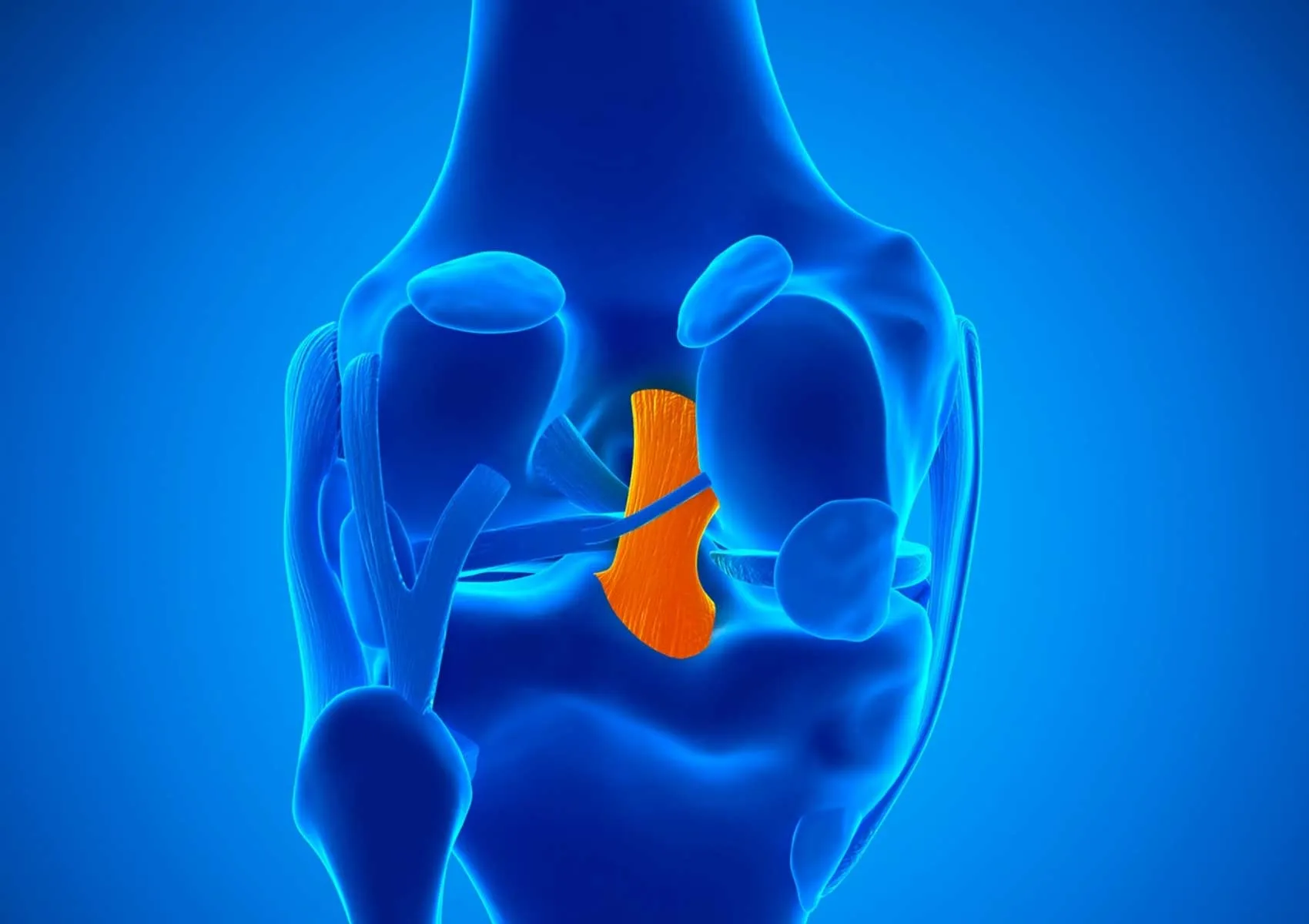
An anterior cruciate ligament (ACL) injury is a partial or complete tear of the ligament that controls forward sliding and rotation of the knee, and it usually happens during a sudden twist or change of direction in sport. Treatment ranges from physiotherapy to arthroscopic ligament reconstruction, depending on the type of tear, age, activity level and associated injuries.
Below you will find how the ligament works, how it is injured, symptoms, diagnosis, treatment options, surgery, rehabilitation and possible risks.
What is the Anterior Cruciate Ligament? What is its function in the knee joint?
The anterior cruciate ligament (ACL) is an approximately 3-3.5 cm long ligament located in the central part of the knee joint. Its primary function is to prevent the knee from sliding forward or rotating.
How does the Anterior Cruciate Ligament get injured?
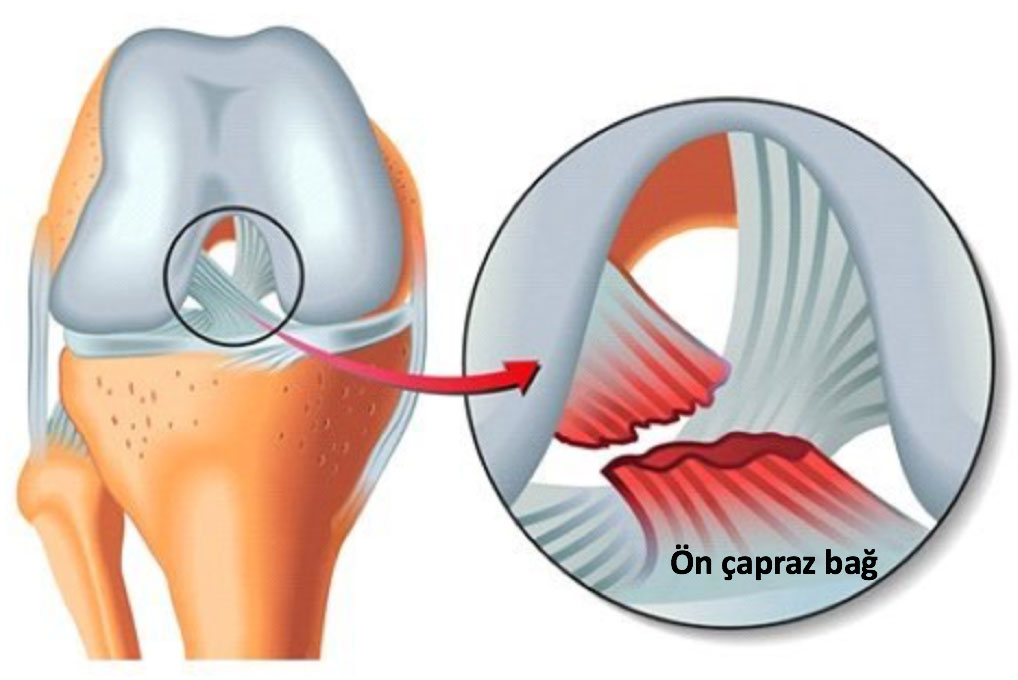
The anterior cruciate ligament is typically injured following a rotational movement of the knee joint while the foot is fixed (indirect trauma). During the injury, a popping sound may be heard from the knee joint. In the acute phase following the injury, swelling and pain in the knee develop due to bleeding. The athlete is unable to continue playing.
In patients who do not receive treatment during the acute phase, knee swelling and pain typically subside within 2-3 weeks. However, in untreated patients, during the chronic phase, particularly during sports activities requiring sudden turns such as football or basketball, recurrent feelings of the knee giving way, weakness, or complaints due to repeated rotations may occur. This condition is referred to as anterior cruciate ligament insufficiency. In these clinical situations, new meniscal tears and cartilage injuries, which were not present in the acute phase, may develop.
Football, basketball, volleyball, handball and skiing, which involve sudden stops, landings and cutting movements, are among the most common causes. For first aid and the early days after injury, see knee twist injuries in sports: first aid, symptoms and diagnosis.
What are the symptoms of an ACL injury?
- A pop felt or heard at the moment of injury
- Marked swelling within the first hours
- Pain and difficulty bearing weight
- Inability to fully straighten or bend the knee
- In the following weeks, a feeling of instability or giving way, especially when twisting
Because pain and swelling can ease within a few weeks, the injury may seem minor, yet instability can persist if the ligament is torn. Read ACL injury: causes, symptoms and treatment options for more detail.
How is it diagnosed?
Physical examination is the key step. Tests such as the Lachman test, anterior drawer test and pivot shift test assess forward translation and rotational instability. As swelling and pain can make the acute examination difficult, it may be repeated a few days later.
X-rays check for an associated fracture or bony avulsion. MRI shows the ligament tear and any accompanying injury to the meniscus, cartilage or other ligaments. The diagnosis and treatment plan are based on examination and imaging together.
How is an Anterior Cruciate Ligament injury treated?
The treatment decision for patients is based on factors such as the patient's age, activity level, the presence of additional injuries, and whether the tear is partial or complete.
Non-surgical treatment
For partial tears, and for people who do not play pivoting sports and have no instability in daily life, non-surgical treatment can be an option. Swelling and pain are settled first, followed by a supervised programme to strengthen the thigh and hip muscles and improve balance and coordination. If giving-way episodes develop, surgery is reconsidered to protect the meniscus and cartilage.
When is surgery recommended?
In active, young patients who wish to continue their sports activities after the injury, surgical treatment is generally recommended. During the surgery, concurrent treatment of meniscal tears and cartilage injuries is also performed.
The anterior cruciate ligament most commonly tears in its midsection. Due to impaired blood supply to the ligament and the joint fluid preventing primary healing, spontaneous healing of the torn ligament or repairing it by suturing is not possible.
Surgery may also be considered for people with recurrent instability in daily life, physically demanding jobs or an associated repairable meniscus tear. Timing is individual; usually swelling is allowed to settle and knee motion to largely return first.
How is ACL surgery performed?
Several different techniques are used for anterior cruciate ligament surgery. In the most commonly applied technique, tendons harvested from various parts of the body are prepared using specific techniques, passed through bone tunnels created using an arthroscopic (closed) method, and fixed to the bone. As a result, a new anterior cruciate ligament is created to provide similar functionality.
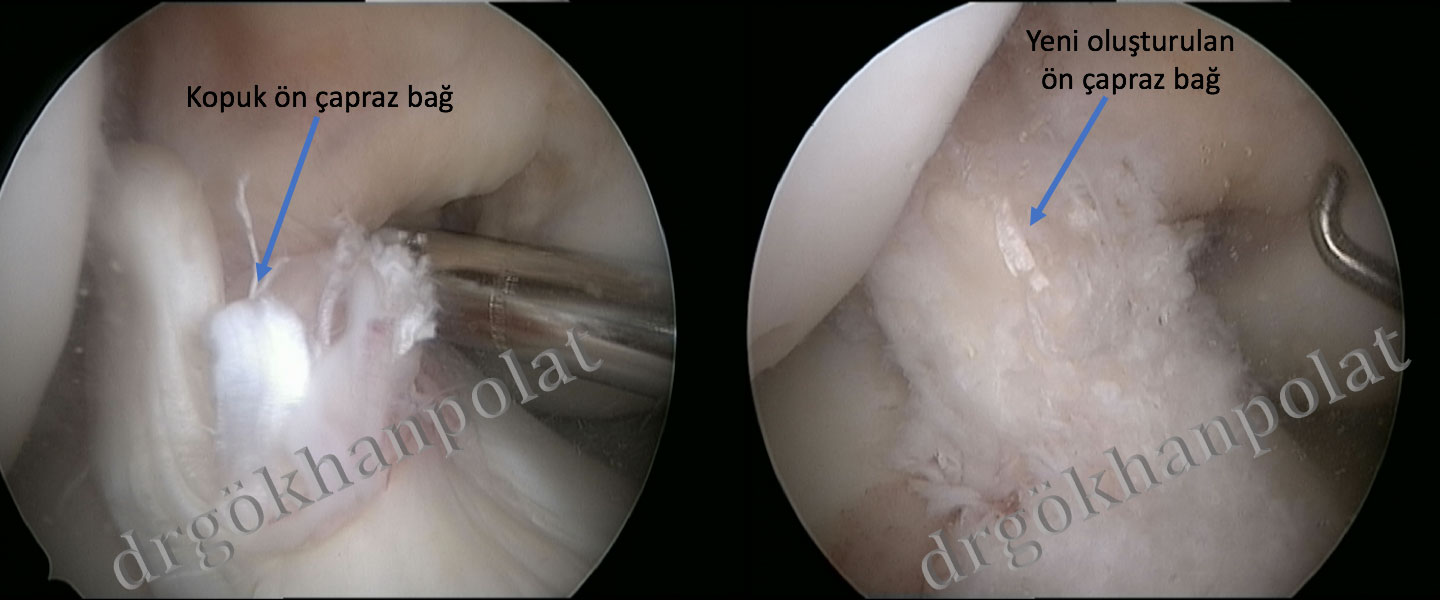
Figure: Arthroscopic anterior cruciate ligament reconstruction surgery
Common graft options are the hamstring tendons, the patellar tendon or the quadriceps tendon, and donor grafts are sometimes used. The choice depends on age, sport, knee anatomy and previous surgery. In children and adolescents with open growth plates, techniques that protect the growth plates are used. See ACL surgery: techniques, grafts and recovery for details.
Recovery and return to sport
Rehabilitation is as important as the operation itself and usually progresses in stages:
- First weeks: controlling swelling and pain, regaining full knee extension, gradual weight bearing with crutches and quadriceps activation.
- Months 1-3: normal walking, full range of motion, strength and balance training.
- Months 3-6: straight-line running when appropriate, progressing strength and endurance.
- Return to sport: pivoting and cutting sports are usually resumed around month 9 or later, based on strength and functional testing.
These timelines are a general guide and vary from person to person. For more, read our complete guide to ACL surgery and recovery and safe return to sports after ACL surgery.
Risks and possible complications
ACL reconstruction is a common operation, but like any surgery it carries some risks:
- Infection
- Deep vein thrombosis (a blood clot in the leg)
- Knee stiffness
- Pain at the graft harvest site or at the front of the knee
- Numbness around the incision
- Re-tear of the graft after a new injury
Following the rehabilitation programme and not rushing the return to sport can help reduce these risks. Outcomes vary between individuals.
When should you see an orthopaedic specialist?
- A pop and rapid knee swelling after a twisting injury
- Inability to bear weight or fully straighten the knee
- A sense of giving way that continues after the swelling has settled
- Locking of the knee, which may suggest an associated meniscus tear
For meniscus problems that often accompany ACL injuries, see our meniscus tears page; to arrange an examination, please use our contact page.
This article is for general information only; diagnosis and treatment decisions are made individually after examination and the necessary tests.
Frequently asked questions
Can an ACL tear heal without surgery?
A completely torn ACL is generally not expected to heal back on its own. For partial tears, and for people who do not play pivoting sports and have no instability, non-surgical care with physiotherapy can be an option. The decision depends on age, activity level and associated injuries.
What are the symptoms of a torn ACL?
A pop at the moment of injury, marked swelling within hours, pain and difficulty bearing weight are common. After the swelling settles, the knee may continue to give way, especially when twisting. As other knee injuries can cause similar symptoms, diagnosis is made by examination and MRI.
When can I walk after ACL surgery?
Most patients start gradual weight bearing with crutches early after surgery. How long crutches are needed depends on additional procedures such as meniscus repair. Normal walking is usually regained over the first weeks with physiotherapy; timing varies between individuals.
When can I return to sport after ACL surgery?
Straight-line running usually starts after a few months. Pivoting and cutting sports are generally resumed around month 9 or later, guided by strength and functional testing. Not rushing the return can help reduce the risk of re-injury.
Is ACL surgery risky?
ACL reconstruction is a common procedure and complications are uncommon. Risks include infection, blood clots, knee stiffness, pain at the graft site and re-tear of the graft. These should be discussed with your surgeon before the operation.

Articles on this topic
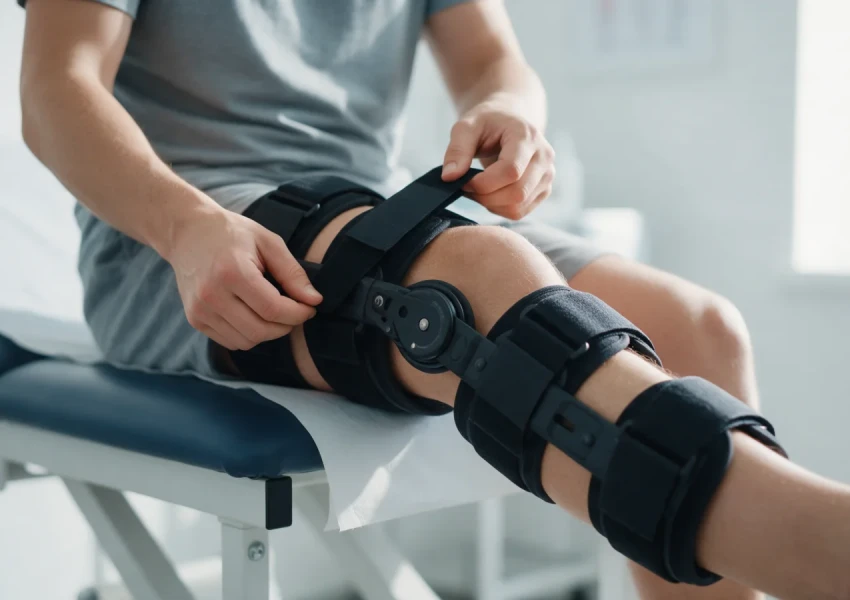 ACL Knee Brace After Surgery: Do You Need One?
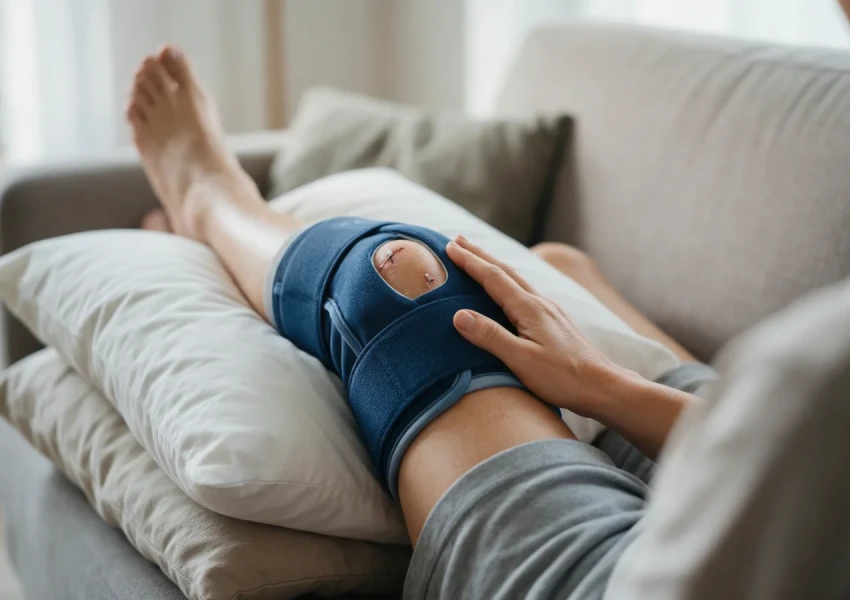 Problems After ACL Surgery: What Is Normal and What Is Not
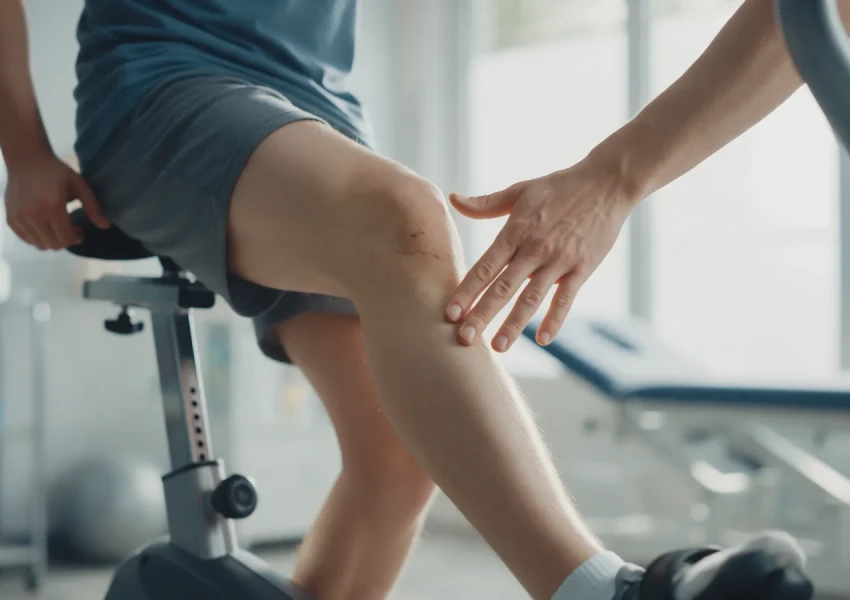 Recovery After ACL Surgery: A Week-by-Week Timeline
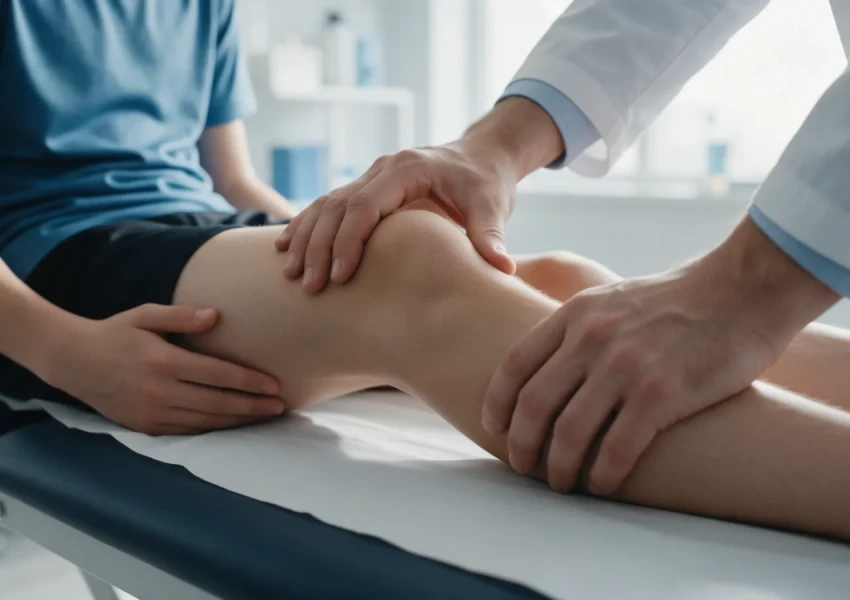 How Is an ACL Tear Diagnosed? Lachman Test, Exam and MRI
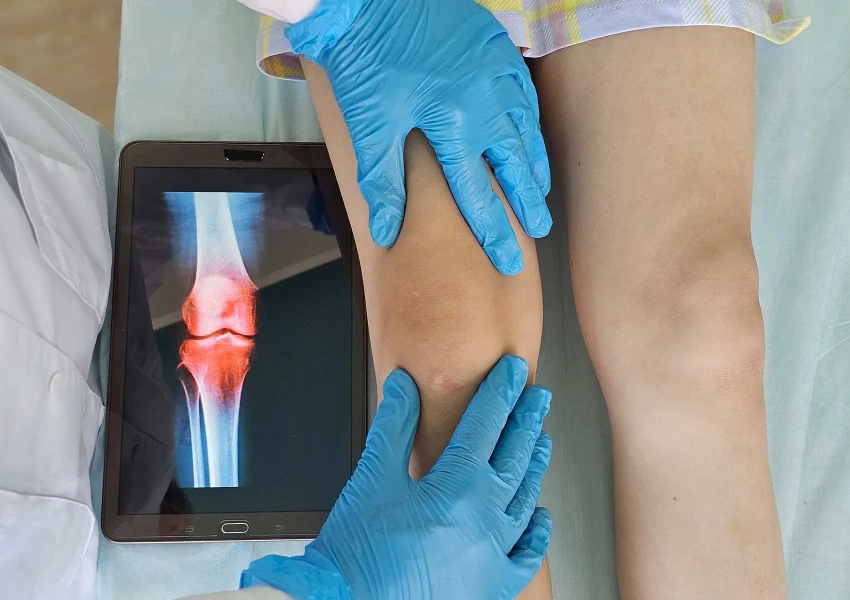 ACL Surgery: Techniques, Grafts, and Recovery Guide
 ACL Surgery: Complete Guide to Procedure and Recovery