
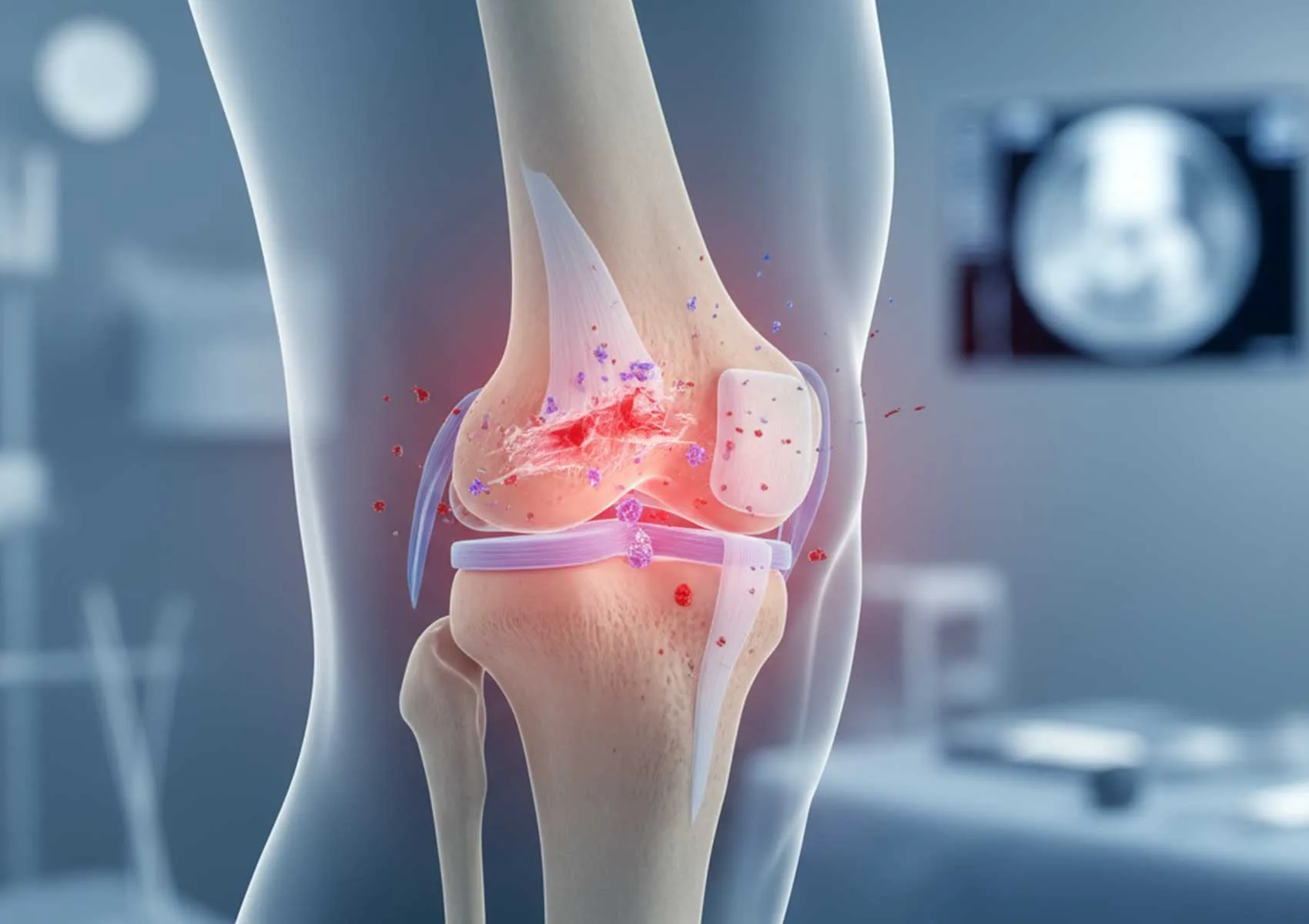
ACL Injury: Causes, Symptoms, and Treatment Options
An anterior cruciate ligament injury is a serious orthopedic condition that disrupts knee stability and is especially common among athletes.
The knee joint is one of the most complex and weight-bearing joints in the body. One of the key ligaments providing stability to this structure is the anterior cruciate ligament (ACL), which is particularly vulnerable to injury in active individuals and athletes. ACL injury refers to the stretching, partial tearing, or complete rupture of this ligament that controls rotational movements of the knee. Such injury can significantly impair mobility and, if left untreated, may lead to permanent damage in the knee.
Pain, swelling, and feelings of instability following knee trauma are often the first signs of ligament injury. Accurate diagnosis and timely intervention are critical for restoring knee function. In this article, we will explore all essential details, from the structure of the ACL and injury mechanisms to current treatment options and recovery processes.
What Is the Anterior Cruciate Ligament?
The anterior cruciate ligament (ACL) is a strong band of connective tissue located at the center of the knee joint, connecting the thigh bone (femur) to the shin bone (tibia). It prevents the tibia from sliding too far forward and provides rotational stability to the knee, playing a vital role in joint health. The diagram below illustrates the anatomical position of the ACL and common injury mechanisms.
Knee Anatomy and Role of the ACL
The knee joint is a complex articulation of bones, cartilage, menisci, and ligaments. The ACL and the posterior cruciate ligament form an “X” shape in the middle of the knee. The primary function of the ACL is to prevent excessive forward movement of the tibia relative to the femur and to maintain rotational stability. The integrity of this ligament is essential for safely performing activities such as walking, running, and sudden changes in direction.
How Does an ACL Injury Occur?
ACL injuries mostly happen due to sudden and excessive loading on the knee. The majority occur without direct contact with an opponent, often during an individual’s own movement patterns. Sudden twists of the torso while the foot is fixed to the ground, direct blows to the knee, or unstable falls from a height can cause ligament rupture.
Sports and Trauma-Related Injuries
Sports requiring abrupt stopping, starting, and changing direction, such as soccer, basketball, volleyball, and skiing, carry the highest risk for ACL injury. An abrupt pivot or landing incorrectly after a jump can exert tension beyond what the ligament can withstand. Trauma-related injuries usually arise from high-energy events, such as traffic accidents or heavy falls.
Symptoms of an ACL Tear
At the moment of ligament rupture, patients frequently report hearing a “pop” sound from their knee. This is followed by intense pain and loss of knee function. While symptoms may vary individually, typical signs usually follow a specific pattern. The flowchart below summarizes these symptoms.
Common symptoms include:
- Sudden Pain and Swelling: Rapid accumulation of blood in the knee joint causes quick swelling shortly after injury.
- Limited Movement: Pain and swelling restrict full bending or straightening of the knee.
- Instability and Giving Way Sensation: When walking, the knee may feel unstable or like it might buckle.
- Difficulty Walking: Patients often struggle to bear full weight on the injured leg.
These symptoms can sometimes resemble those of meniscus tear symptoms and treatment or coexist with such injuries. Expert evaluation is required for definitive diagnosis.
Diagnostic Methods
Diagnosis begins with a detailed patient history and physical examination. After understanding the injury mechanism, the clinician performs specific knee tests (such as the Lachman and anterior drawer tests) to assess ligament laxity and integrity.
Magnetic Resonance Imaging (MRI) is the most reliable method to confirm physical findings and detect accompanying injuries (meniscus, cartilage damage, etc.). MRI clearly shows ligament ruptures, the extent of tears, and related bone edema. X-rays are typically ordered to exclude bone fractures, as ligaments are not visible on standard radiographs.
Treatment Options for ACL Injury
The treatment approach is individualized based on patient age, activity level, occupation, and knee instability severity. The main goal is to achieve a stable, pain-free knee and help the patient return to their previous activity level. For in-depth information, see our detailed ACL injury page.
In some cases, such as advanced osteoarthritis in elderly patients or irreparable damage, options like advanced knee replacement treatments may be considered.
Non-Surgical Treatments
For older patients, those with low activity levels, or those unable to tolerate surgery, conservative treatment may be preferred. This includes rest, ice application, compression, and elevation in the acute phase. Once swelling and pain decrease, physical therapy programs focusing on strengthening muscles around the knee are implemented. Special knee braces may be used to support joint stability. However, non-surgical treatment does not repair the torn ligament; it attempts to compensate for stability through muscle strength.
Surgical Treatment: ACL Reconstruction Surgery
Surgical treatment is generally recommended for active athletes, younger patients, and those experiencing significant knee instability. Modern arthroscopic surgical techniques allow minimally invasive procedures. Instead of stitching the torn ligament, new ligament reconstruction is performed using tendons taken from the patient (autograft) or donors (allograft).
Post-Surgery Recovery and Rehabilitation
Rehabilitation following successful surgery is as important as the operation itself. Although recovery varies individually, returning to sports typically takes between 6 and 12 months. An organized post-ACL reconstruction rehabilitation plan is essential.
The initial phase focuses on controlling swelling and regaining joint range of motion. Subsequent stages emphasize muscle strengthening, balance, and proprioceptive (body awareness) exercises. Within the general framework of sports injury rehabilitation, therapy continues until muscle strength in the operated leg matches the unaffected side.
Biological treatments may support healing in some cases. In particular, current approaches involving PRP therapy for sports injuries can be integrated into the treatment plan. The following image illustrates basic physical therapy exercises after surgery.
Prevention Methods for ACL Injuries
Completely preventing ACL injuries may not be possible, but reducing risk factors is achievable. Preventive training programs are especially important for athletes at higher risk. Studies focusing on knee injury prevention in athletes show that neuromuscular training lowers injury rates.
Prevention strategies include:
- Muscle Strengthening: Establishing a balance between hamstring and quadriceps muscles.
- Balance and Coordination: Proprioceptive exercises to improve joint position sense.
- Proper Technique: Learning correct body mechanics when landing and pivoting.
- Warm-Up: Consistently performing dynamic warm-up routines before activities.
Anterior cruciate ligament injury can be managed successfully with appropriate treatment and disciplined rehabilitation. To protect your knee health and maintain an active lifestyle confidently, pay attention to symptoms and consult a specialist when needed.
This content is intended for general informational purposes only and does not constitute medical advice. The information provided is not a substitute for professional medical diagnosis or treatment. Diagnosis and treatment should be carried out by a qualified healthcare professional based on the individual patient's condition. If you have any health concerns or if symptoms persist, please consult a healthcare provider or physician without delay.
FAQ
-
How does an anterior cruciate ligament (ACL) injury occur?
ACL injuries typically happen due to sudden changes in direction, jumping, improper landing, or direct impacts to the knee during sports activities. The ligament can stretch excessively, partially tear, or tear completely. These injuries often occur without contact, during twisting motions of the body.
-
What are the symptoms of an ACL tear?
Common symptoms include a sudden 'pop' or tearing sound in the knee, severe pain, rapid swelling, limited movement, and a feeling of instability or the knee giving way. After the injury, patients usually find it difficult to put weight on the leg or walk.
-
When is ACL surgery necessary?
The decision for surgery depends on factors such as the patient’s age, activity level, knee stability, and associated injuries like meniscus tears. Surgery, typically reconstruction, is usually recommended for young and active individuals wishing to return to sports, especially those experiencing knee instability and giving way.
-
What is the recovery process after ACL surgery like?
Recovery varies per individual and requires consistent physical therapy. Early stages focus on controlling swelling and restoring range of motion, followed by muscle strengthening and balance exercises. Returning to daily activities may take a few weeks, while full return to contact sports typically requires 6 to 12 months.
-
How can ACL injuries be prevented?
Preventing injuries involves strengthening leg muscles, especially the hamstrings and quadriceps, as well as practicing balance and coordination exercises. Using proper techniques during sports, like avoiding inward knee collapse during landing, and following appropriate warm-up routines can reduce risk. Professional guidance can further enhance protection.