
Femoroacetabular Impingement (FAI): Causes, Types & Treatments
Femoroacetabular impingement is a condition caused by bony mismatches in the hip joint that lead to pain.
Femoroacetabular impingement (FAI) is a clinical condition that arises when the bony structures of the hip joint abnormally contact one another during movement. This is frequently seen in young, active individuals, and if left untreated, it can lead to damage of the joint cartilage and the labrum, a ring of fibrocartilage surrounding the socket. Movement restriction in the hip joint and groin pain are among the most prominent signs of this syndrome.
Understanding this condition depends on a clear grasp of hip anatomy and biomechanics. The answer to What is Femoroacetabular Impingement? lies in a mechanical mismatch within the ball-and-socket joint of the hip. Early diagnosis aims to preserve hip health over the long term through joint-sparing approaches.
What is Femoroacetabular Impingement (FAI)?
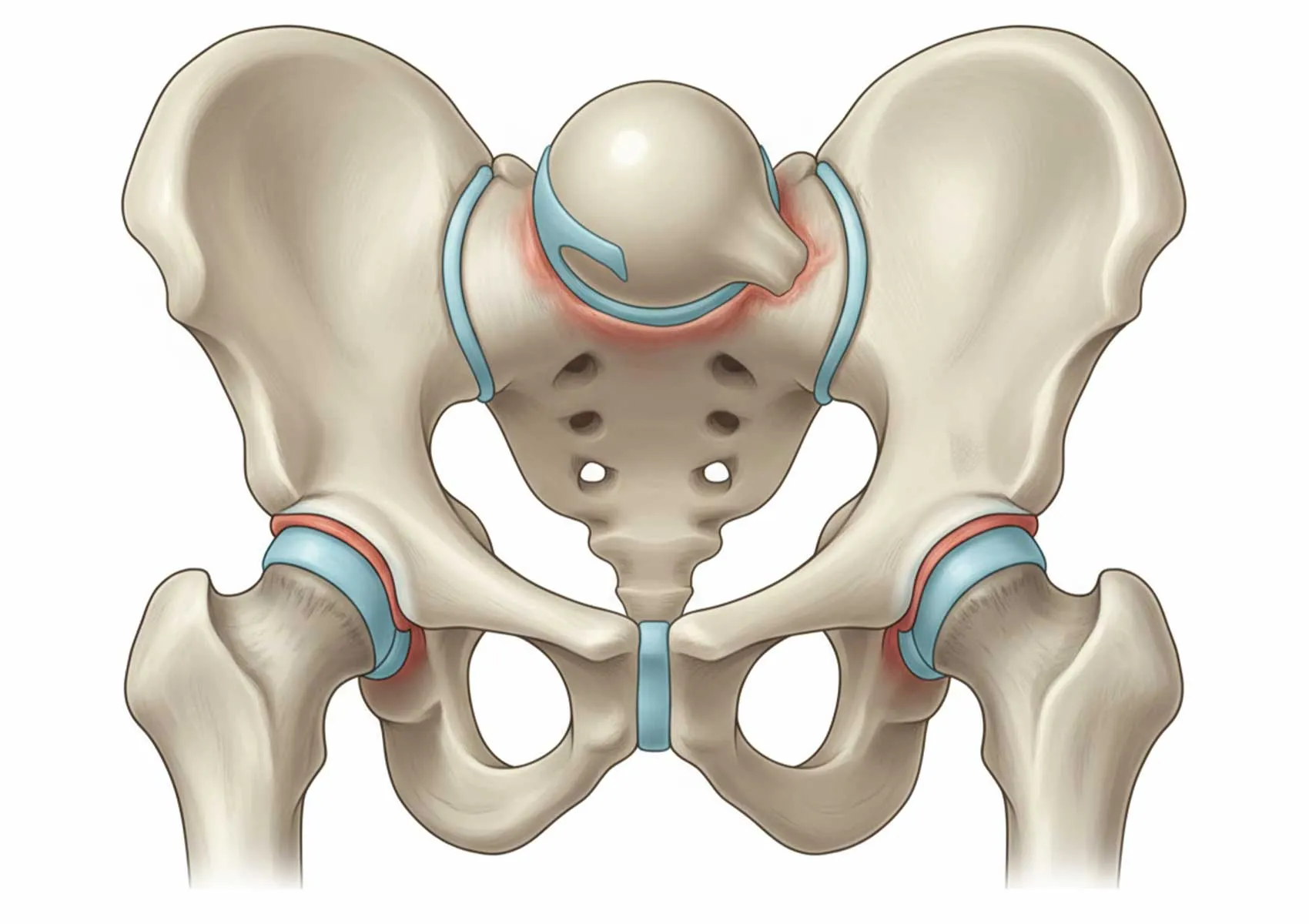
Femoroacetabular impingement (FAI) is a friction problem caused by shape abnormalities between the femoral head (thigh bone head) and the acetabulum (hip socket) in the pelvis. Normally, these structures work in perfect harmony, but in FAI patients, structural bone overgrowth leads to impingement during movement. Over time, this results in wear and pain inside the joint.
FAI can be a standalone issue or, as detailed in the section on Hip Joint Disorders, considered an early cause of hip osteoarthritis. Patients often describe a deep pain in the groin, sometimes indicated by placing their hand in a "C" shape on the side of the hip. This pain can worsen with prolonged sitting, squatting, or sports activities.
Hip Joint Anatomy and the Mechanism of FAI
Understanding the complex structure of the hip joint is essential for grasping how impingement develops. Studies on Hip Joint Anatomy demonstrate that it is one of the largest and most stable load-bearing joints in the body.
Normal Movement and Structure of the Hip Joint
In a healthy hip, the femoral head (ball) rotates smoothly within the acetabulum (socket). The joint surfaces are coated with a smooth cartilage layer that minimizes friction. Surrounding the rim of the acetabulum is the labrum, a fibrocartilaginous ring that increases joint stability and acts like a seal to retain joint fluid. This perfect fit allows pain-free movement of the leg through a wide range of motion.
Abnormal Contact in FAI
In FAI, bony overgrowths may occur on the femoral head or the acetabular rim, or both. When the hip is bent or rotated, these excess bone areas abut the cartilage or labrum on the opposite side. Repeated microtrauma may lead to hip labral tears and cartilage damage.
Types of Femoroacetabular Impingement: Cam, Pincer, and Mixed
The clinical course and treatment planning depend on the type of impingement. FAI is categorized into three main types based on the location of bony deformity.
Cam Type FAI
Cam impingement typically results from a loss of the normal round shape of the femoral head. A bony bump forms at the femoral head-neck junction, which forcibly presses into the acetabulum during movement. This can cause "grinding" damage to the cartilage. It is more commonly seen in young males and athletes.
Pincer Type FAI
Pincer impingement occurs when the acetabulum is deeper than normal or tilted backward. The bony overgrowth at the rim of the socket contacts the femoral neck prematurely. This leads to compression and potential damage of the labrum. It is more frequent in middle-aged females.
Mixed Type FAI
The most commonly encountered form in clinical practice is Mixed FAI, where features of both Cam and Pincer deformities coexist. Studies indicate that the majority of FAI patients display varying contributions from both mechanisms, increasing the risk of cartilage and labral injury.
Symptoms and Diagnosis of Femoroacetabular Impingement
FAI symptoms usually start subtly and worsen over time. The hallmark symptom is groin pain that sometimes radiates to the thigh or knee. Patients may experience decreased performance in sports, difficulty sitting prolonged periods, or challenges when entering and exiting vehicles due to discomfort, as discussed in How Hip Impingement Affects Daily Life.
Physical examination plays a crucial role in diagnosis. The physician performs an "impingement test" to provoke pain. Definitive diagnosis relies on imaging techniques such as X-rays, Magnetic Resonance Imaging (MRI), and sometimes Computed Tomography (CT).
Treatment Options for FAI
Treatment is tailored based on patient age, activity level, degree of cartilage damage, and pain severity. The goal is not only pain relief but also preserving the joint to prevent future osteoarthritis. The relationship between joint-sparing surgeries and FAI is particularly important in this context.
Conservative Approaches
In mild cases or for patients unsuitable for surgery, non-surgical treatments are attempted first. These include activity modification (avoiding pain-provoking positions), anti-inflammatory medications, and physiotherapy exercises focused on strengthening the muscles around the hip. While these methods do not correct bony deformities, they can manage symptoms.
Indications for Surgical Intervention
Surgery is considered when conservative treatments fail and mechanical impingement is evident. The arthroscopic approach to FAI treatment aims to correct the root problem permanently. Surgical decisions should carefully evaluate what arthroscopic surgery entails and its benefits. Advanced osteoarthritis may require other interventions, such as hip replacement.
Treatment with Hip Arthroscopy
Currently, the gold standard for FAI treatment is hip arthroscopy, a minimally invasive technique. Small incisions allow insertion of a camera and specialized instruments into the joint. Bone overgrowths are shaved down (osteoplasty) restoring the joint’s normal geometry, and labral tears are repaired if present.
Benefits of arthroscopic surgery include less tissue damage, reduced pain, and a faster return to daily activities.
Postoperative Course and Potential Complications
Rehabilitation after surgery is as crucial as the procedure itself. Patients typically use crutches for a few weeks and start a graded exercise program supervised by a physiotherapist. Return to full sports varies between 4-6 months depending on the procedure. As with any surgery, risks exist. Although rare, arthroscopic hip surgery complications may include nerve injury, infection, or insufficient bone removal.
Scientific References and Disclaimer
The information presented here is based on current medical literature and international orthopaedic guidelines. Primary sources include:
- National Center for Biotechnology Information (NCBI)
- Mayo Clinic – Femoroacetabular Impingement
- American Academy of Orthopaedic Surgeons (AAOS)
- Hospital for Special Surgery (HSS)
This content is intended for informational purposes only and does not replace professional medical advice. Diagnosis and treatment require consultation with a qualified healthcare provider.
The content on this website is for general informational purposes only and does not constitute medical advice, diagnosis, or treatment. For any health-related concerns, please consult your doctor or a qualified healthcare professional. The information provided here is not a substitute for professional medical evaluation. If you believe you are experiencing a medical emergency, contact your doctor immediately or call emergency services.
FAQ
-
What is femoroacetabular impingement (FAI)?
Femoroacetabular impingement is a condition where abnormal contact and friction occur between the femoral head and the pelvic acetabulum in the hip joint. This can cause pain and limit movement.
-
What are the main types of FAI syndrome?
The main types are Cam type (bony growth on femoral head), Pincer type (bony overgrowth on acetabular rim), and Mixed type, which features characteristics of both. Each type causes different impingement mechanics.
-
What are the symptoms of femoroacetabular impingement?
The most common symptom is pain in the groin or front of the hip. This pain often worsens with prolonged sitting, driving, or hip flexion movements.
-
How is FAI diagnosed and what are the treatment options?
Diagnosis involves physical examination and imaging such as X-rays and MRI. Treatment is usually surgical, involving hip arthroscopy to remove bony excess and repair joint surfaces. Early diagnosis is important.
-
When is surgery necessary for treating FAI?
Surgery is generally needed if conservative treatments fail, pain severely impacts daily activities, and there is structural damage to the joint. The decision should be made in consultation with an orthopedic specialist.