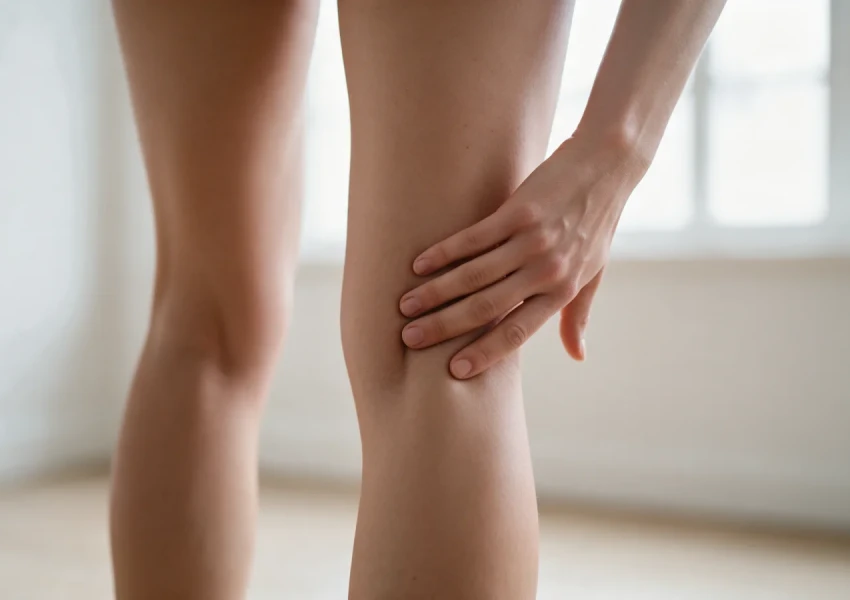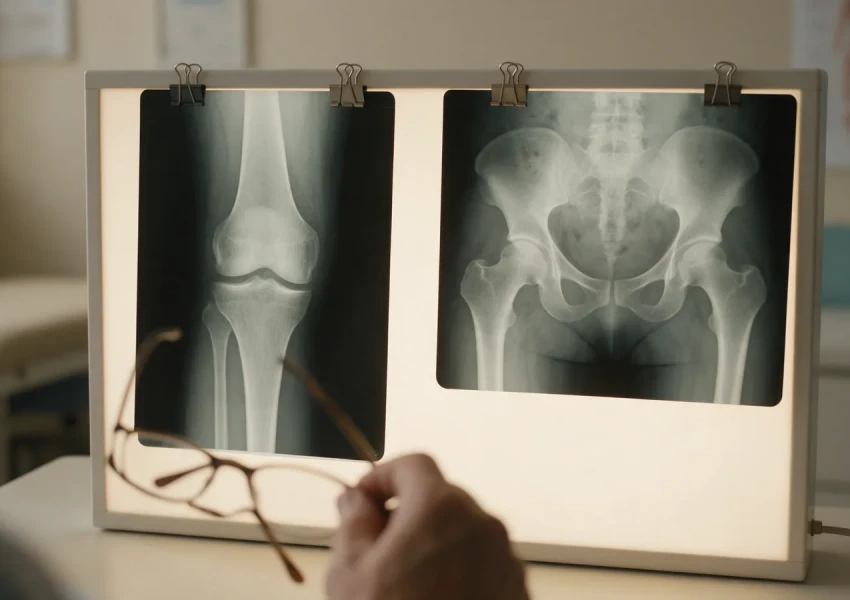

The most useful home exercises for knee osteoarthritis strengthen the quadriceps, hip and calf muscles, maintain the knee's range of motion and avoid high-impact loading. A program done at least three days a week, without clearly increasing your pain, can help ease symptoms and make daily activities easier. The effect varies from person to person, and the program should be adapted to the stage of osteoarthritis.
This guide covers why exercise helps an arthritic knee, the ground rules, step-by-step home exercises, a sample weekly plan, movements to avoid and when to stop and see a doctor.
Why does exercise help knee osteoarthritis?
Osteoarthritis develops as the cartilage covering the joint gradually thins and the joint reacts to that change. Exercise does not rebuild worn cartilage, but stronger muscles spread the load across the joint more evenly, make the knee more stable and reduce fear of movement. Regular movement also helps with stiffness.
That is why exercise, together with weight management, is considered a cornerstone of osteoarthritis care. Inactivity, by contrast, weakens the muscles, stiffens the joint and can create a vicious circle of more pain and less movement. For background, see our article on knee osteoarthritis and its early symptoms.
Before you start: ground rules
- Warm up for 5–10 minutes with walking indoors, a stationary bike or a warm shower.
- Monitor pain: a mild ache is acceptable; if pain goes above 4–5 out of 10 or is clearly worse the next day, reduce the load.
- Progress slowly: start with few repetitions and add a little each week as exercises get easier.
- Keep breathing: breathe out as you contract the muscle.
- Stay safe: hold a sturdy chair or worktop for standing exercises and avoid slippery floors.
- Be consistent: short sessions three to five times a week work better than one long weekly session.
Range-of-motion exercises
- Heel slides: lying on your back, slide your heel towards you to bend the knee as far as is comfortable, hold 3–5 seconds and straighten slowly. 10 repetitions.
- Seated knee swings: sitting on a high chair with feet off the floor, gently swing the leg forwards and back under the chair for 1–2 minutes.
- Knee straightening stretch: sitting with your heel on a footstool and nothing under the knee, let the thigh relax downwards for 30 seconds. Repeat 3 times. Being able to straighten the knee fully matters for walking.
Strengthening exercises at home
Start with 1–2 sets of 8–10 repetitions and build towards 3 sets of 12–15.
- Quad sets: with the leg straight and a small rolled towel under the knee, press the knee down into the towel, tighten the thigh for 5 seconds and relax.
- Straight leg raise: lying down with one knee bent, tighten the thigh of the straight leg and lift it to the height of the other knee, hold 3 seconds and lower slowly.
- Seated knee extension: sitting upright, slowly straighten one knee fully, hold 3–5 seconds and lower. Add a light ankle weight when it becomes easy.
- Sit-to-stand: from a sturdy chair without armrests, lean slightly forward and stand up without using your hands, then sit down with control. Use your hands or a cushion on the seat at first if needed.
- Glute bridge: lying with knees bent, squeeze your buttocks to lift the hips, hold 3 seconds and lower.
- Side-lying leg raise: lift the top, straight leg about a hand's width and lower it. The side hip muscles help stop the knee drifting inwards.
- Step-ups: holding the handrail, step up onto the bottom stair, bring the other foot up and step back down. Use a lower step if it hurts.
- Calf raises: holding a worktop, rise onto your toes and lower slowly.
Balance and endurance
- Supported single-leg stance: holding a worktop, lift one foot slightly and balance for 10–30 seconds, gradually using less support.
- Tandem stance: place one heel directly in front of the other toes and hold for 20–30 seconds with support.
For endurance choose low-impact activities such as walking on flat ground, a stationary bike, swimming or water walking, aiming for 20–30 minutes on most days, split into 10-minute bouts if needed. Our article on strengthening the muscles around the knee explains why this matters.
Sample weekly plan
- Monday, Wednesday, Friday: warm-up, range-of-motion, strengthening and balance work (about 30 minutes).
- Tuesday, Thursday, Saturday: 20–30 minutes of walking, cycling or pool exercise, then range-of-motion exercises.
- Sunday: rest or a gentle walk.
Movements to avoid
- Deep squatting, kneeling and sitting cross-legged
- Running, jumping and sudden changes of direction during painful periods
- Deep squats and lunges with heavy weights
- Pushing through exercises that clearly increase your pain
These limits are not the same for everyone; an active person with early osteoarthritis may progress to more demanding exercises with a physiotherapist.
When should you stop and see an orthopedic specialist?
- Marked swelling and warmth after exercise
- Catching, locking or giving way
- Pain that keeps increasing over a few weeks despite reducing the load
- Pain that wakes you at night or does not ease with rest
- A leg deformity that is becoming more noticeable
Seek same-day care if the knee is red, hot and swollen with a fever, or if one calf becomes swollen and painful.
When exercise alone is not enough, physiotherapy, medication, joint injections or, for selected patients, surgery may be considered; see our article on non-surgical knee treatments. At Prof. Dr. Gökhan Polat's clinic, the treatment plan is based on the examination and X-ray findings, the stage of osteoarthritis, age and activity level. Learn more on our knee joint diseases page.
In summary
- Strengthening the quadriceps, hips and calves and maintaining range of motion are core parts of knee osteoarthritis care.
- Aim for at least three sessions a week that progress gradually without clearly increasing pain.
- Avoid deep squatting, kneeling and high-impact activities during painful periods.
- Swelling, locking or steadily worsening pain mean you should pause and get an orthopedic assessment.
This article is for general information only; diagnosis and treatment decisions are made individually after examination and the necessary tests.
Frequently asked questions
Which exercises are good for knee osteoarthritis?
Strengthening exercises such as quad sets, straight leg raises, seated knee extensions, sit-to-stands, glute bridges and side-lying leg raises are commonly recommended, together with range-of-motion work like heel slides. Low-impact activities such as walking, a stationary bike or swimming can be added.
Is walking bad for knee osteoarthritis?
Walking on flat ground in comfortable shoes, for periods that do not clearly increase your pain, is helpful for most people. If it hurts more, shorten the walks and spread them through the day, or switch to cycling or swimming.
How often should I do knee osteoarthritis exercises?
Strengthening exercises are usually recommended at least three days a week, while range-of-motion exercises can be done daily. Starting with few repetitions and increasing them gradually as the exercises get easier is the safer approach.
What movements should I avoid with knee arthritis?
During painful periods it is wise to avoid deep squatting, kneeling, sitting cross-legged, running and jumping, which load the knee heavily. Forcing yourself through a movement that clearly increases pain is not recommended either.
Can exercise reverse knee osteoarthritis?
Exercise does not rebuild worn cartilage, but by strengthening the muscles it can help ease pain, preserve joint movement and make daily tasks easier. The effect varies between individuals and is greater when exercise is kept up regularly.