
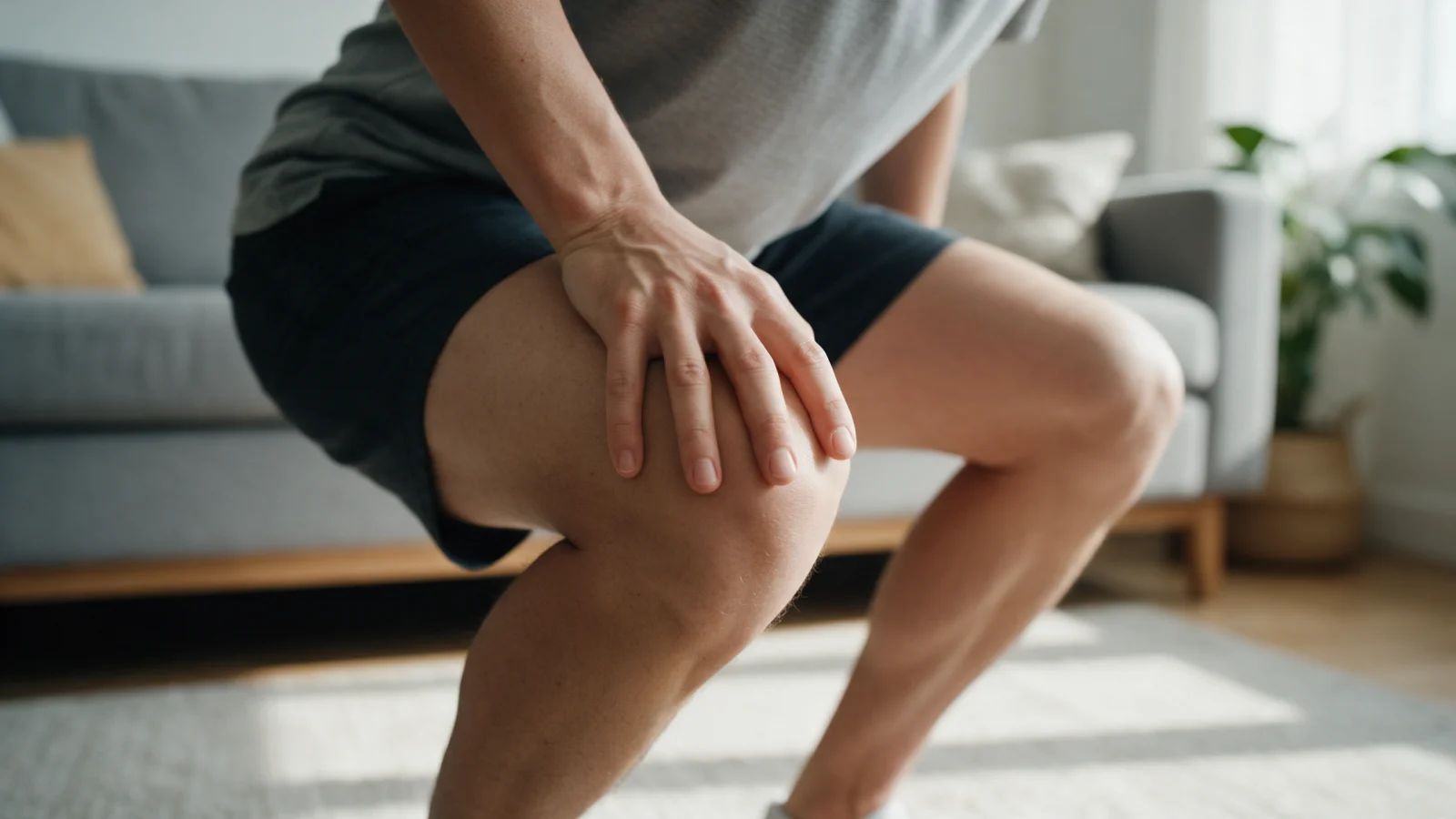
Knee Cracking and Popping: When Is a Noisy Knee a Problem?
Why does a knee crack, click or grind, and when does it matter? How to tell harmless noise from kneecap, meniscus, cartilage and arthritis problems, helpful exercises and when to see a doctor.
A knee that makes noise (crepitus) is usually harmless. Cracking or popping when you squat or climb stairs, without pain, swelling or stiffness, is common in perfectly healthy knees. Noise that comes with pain, swelling, catching, locking or the knee giving way, or that started after an injury, can point to a problem with the kneecap cartilage, the meniscus or osteoarthritis and should be examined.
This article explains why knees make noise, which sounds are harmless and which need attention, the possible causes, how they are assessed, helpful exercises and when to see an orthopedic surgeon.
Why does my knee crack or pop?
The knee is a joint in which the thigh bone, shinbone and kneecap glide over each other, surrounded by the menisci, ligaments, tendons and joint fluid. Small changes between these structures during movement can produce different kinds of sound:
- Gas bubbles: gases dissolved in the joint fluid can form tiny bubbles when pressure changes. Their collapse makes a single "crack", much like cracking your knuckles, which usually does not repeat straight away and is harmless.
- Tendons and ligaments sliding: soft tissues passing over bony bumps can make a light click.
- Rough surfaces: when cartilage behind the kneecap or on the joint surfaces softens or wears, you may feel or hear a continuous grinding, creaking or "walking on sand" sensation.
- Mechanical catching: a torn flap of meniscus or a loose fragment can catch at a certain angle, producing a click and brief locking.
Which noises are harmless and which need attention?
Usually harmless
- Cracking without pain or swelling when squatting or in the first movements after sitting
- A single click that does not repeat for a while
- Noises that have been there for years, have not changed and do not affect daily life
Worth having checked
- Noise with pain, especially around the kneecap on stairs or when squatting
- Noise with swelling
- Catching, locking or being unable to straighten the knee fully
- The knee giving way or feeling unstable
- New noise after a twist, blow or fall
- Grinding that keeps getting worse, with stiffness
Possible causes
Kneecap problems (patellofemoral pain and chondromalacia)
Softening of the cartilage behind the kneecap, or the kneecap tracking unevenly in its groove, can cause front-of-knee pain and a grinding feeling, especially on stairs, when squatting and after sitting with bent knees. It is common in young, active people, particularly women, and muscle imbalance and weak hip muscles often contribute.
Osteoarthritis
As joint cartilage thins and surfaces roughen, a constant grinding may be felt and heard, along with morning stiffness, pain after long walks and gradually reduced movement. The noise alone does not show how severe the arthritis is; that is judged by examination and X-ray.
Meniscus tear
A torn piece of meniscus can catch inside the joint, causing a click, catching or locking with certain movements and pain on the inner or outer side. Our article on mechanical locking in the knee explains what locking means.
Cartilage damage and loose bodies
Damage to the joint surface after a blow or repeated loading, or small detached fragments of cartilage and bone, can cause noise, catching and pain. We discuss why early assessment matters in cartilage damage in the knee.
Plica and tendon-related noises
A thickened fold of the joint lining (plica) can cause pain on the inner side of the kneecap and a click with movement. The iliotibial band or hamstring tendons sliding over bony points can also make noise on the outer or inner side.
After surgery
Some noise for a while after knee arthroscopy or knee replacement is common and usually harmless, but noise with pain, swelling or warmth should be discussed with your surgeon.
How is it assessed?
The examination is the cornerstone. Your doctor will ask when the noise occurs and whether there is pain, swelling or catching, and will check kneecap movement, the joint line, the meniscus and ligaments, and muscle strength. X-rays can show arthritis, kneecap position and loose bone fragments; MRI gives a detailed view of the meniscus, cartilage and ligaments, particularly after an injury or with catching or locking. A noise without pain or swelling usually needs no further tests.
Exercises for a noisy knee
Harmless noises do not need to be stopped, but when noise comes with front-of-knee pain, strengthening the muscles around the knee and hip can help the kneecap move more evenly:
- Quad sets: lying on your back with a small towel under the knee, tighten the thigh muscle for 5 seconds.
- Straight leg raises: lift the straight leg a few inches and hold for a few seconds.
- Side-lying leg raises and clamshells: work the hip muscles that stop the knee drifting inwards.
- Bridges: strengthen the glutes and hamstrings.
- Partial squats and step-ups: in a pain-free range, with control.
- Hamstring and calf stretches: to ease tension around the joint.
If an exercise increases your pain, it is not yet right for you or the load is too high. Read why it matters in strengthening the muscles around the knee. Losing excess weight and limiting deep squats can also ease symptoms.
When should you see an orthopedic surgeon?
- The noise comes with pain or swelling
- The knee catches, locks or will not straighten fully
- The knee gives way or feels unstable
- The noise started after an injury
- Grinding is getting worse and limiting your daily activities
Seek urgent care for a "pop" at the moment of injury followed by rapid swelling and inability to bear weight, or for a red, hot knee with fever.
At Prof. Dr. Gökhan Polat's clinic, a noisy knee is assessed together with any other symptoms, the examination and imaging where needed; whether treatment is needed depends on the underlying cause, not the noise itself. See our knee joint diseases page for more.
Summary
- Cracking and clicking without pain or swelling are usually harmless.
- Noise with pain, swelling, catching, locking or instability should be checked for kneecap, cartilage, meniscus or arthritis problems.
- Strengthening the knee and hip muscles can help when noise comes with front-of-knee pain.
- Treatment decisions depend on the cause found on examination, not on the sound.
This article is for general information only; diagnosis and treatment decisions are made individually after examination and the necessary tests.
FAQ
-
What does a cracking knee mean?
Cracking without pain or swelling is usually caused by gas bubbles in the joint fluid or tendons sliding over bone, and is harmless. If the noise comes with pain, swelling, catching or locking, it may suggest a problem with the kneecap cartilage, a meniscus tear or osteoarthritis, and an examination is needed.
-
Why does my kneecap click and hurt?
When noise from the kneecap comes with pain, the most common reasons are softening of the cartilage behind the kneecap or the kneecap tracking unevenly in its groove. Front-of-knee pain on stairs, when squatting and after long sitting is typical. Osteoarthritis and a plica can cause similar symptoms.
-
Is a noisy knee a sign of arthritis?
Not every noise means arthritis; cracking is common in young and healthy knees too. In osteoarthritis, constant grinding usually comes with morning stiffness, pain that builds with walking and gradually reduced movement. Whether arthritis is present is assessed by examination and X-ray.
-
Which exercises help a noisy knee?
If the noise comes with front-of-knee pain, exercises that strengthen the knee and hip, such as quad sets, straight leg raises, side-lying leg raises, clamshells and bridges, may help. They should be done in a pain-free range and with control. Noises without pain do not need to be exercised away.
-
When should I see a doctor about knee noise?
See an orthopedic surgeon if the noise comes with pain, swelling, catching, locking or the knee giving way, if it started after an injury, or if grinding is getting worse. A pop at the moment of injury followed by rapid swelling needs urgent assessment.