
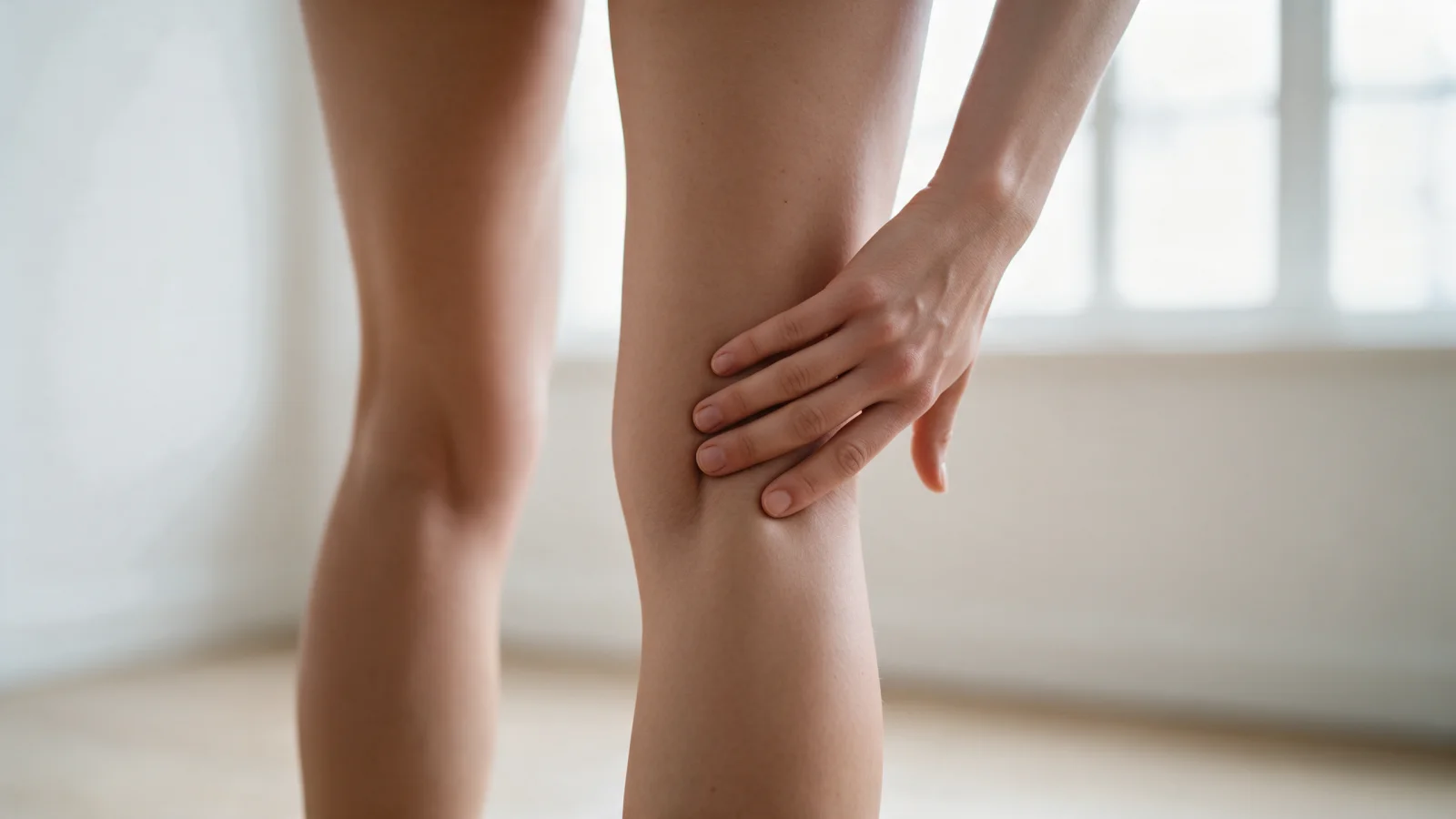
Pain Behind the Knee: Possible Causes and When to See a Doctor
Why does the back of the knee hurt? Possible causes such as a Baker's cyst, posterior meniscus tears, hamstring and calf strains, osteoarthritis and blood clots, their symptoms and when to seek urgent care.
The most common causes of pain behind the knee are a Baker's cyst (a fluid-filled sac at the back of the knee), tears in the back part of the meniscus, strains of the hamstring or calf muscles and their tendons, and osteoarthritis. Less often, a posterior cruciate ligament injury or a blood clot in a vein (deep vein thrombosis) can cause pain in this area. How the pain started, whether there is swelling and which movements make it worse are the most useful clues. One-sided calf swelling with redness and tightness needs prompt assessment because of the possibility of a clot.
This article explains why the back of the knee hurts, the possible causes and their typical symptoms, how the diagnosis is made, what you can do at home at first and when you should see a doctor.
What lies behind the knee?
The hollow at the back of the knee is called the popliteal fossa. It contains the tendons of the hamstrings, the upper ends of the calf muscle (gastrocnemius), the popliteus muscle, the back of the joint capsule, the rear horns of the menisci and the posterior cruciate ligament. The main artery, vein and nerves of the leg also pass through it, which explains why pain here can come from many different sources.
Possible causes of pain behind the knee
Baker's cyst
Joint fluid collects in a sac at the back of the knee, usually alongside a problem inside the joint such as a meniscus tear or osteoarthritis. It can cause fullness, tightness and discomfort when fully bending or straightening the knee. If the cyst ruptures, fluid can track into the calf and cause sudden pain and swelling, which can mimic a clot and must be checked.
Posterior horn meniscus tear
Meniscus tears often involve the back of the meniscus, so pain may be felt at the back-inner or back-outer knee. Pain with deep squatting, twisting and going downstairs, catching or locking and swelling are typical. Our article on meniscus tear symptoms explains more.
Hamstring and calf problems
A strain or tear of the hamstring or calf muscle can happen during sprinting, jumping or sudden acceleration, and overuse can irritate the hamstring tendons where they attach around the knee. Muscle-related pain usually increases when you stretch or contract the muscle. See our article on muscle tears and strains.
Osteoarthritis
Arthritis pain is usually at the front and inner knee, but tightness in the joint capsule and an associated Baker's cyst can make it felt behind the knee too, often with morning stiffness, pain after long walks and difficulty straightening the knee fully.
Posterior cruciate ligament injuries
These typically follow a blow to the front of the shin with the knee bent, such as the knee hitting the dashboard in a car accident, or a fall onto the knee. They can cause pain and swelling at the back of the knee and a feeling of instability, especially downhill and on stairs. Read more about PCL tears.
Deep vein thrombosis
A clot in the vein behind the knee or in the calf can cause one-sided calf swelling, tightness, pain, warmth and redness. Long journeys, recent surgery, immobility, pregnancy, the contraceptive pill and cancer increase the risk. Because a clot can travel to the lungs, these signs need urgent assessment.
Less common causes
- Popliteus tendon problems, especially in downhill runners
- A widening of the artery behind the knee (aneurysm) or nerve entrapment
- Pain referred from a slipped disc in the lower back
- Rarely, bone or soft tissue masses
What do the symptoms suggest?
- Fullness and tightness behind the knee, pressure when bending: Baker's cyst
- Pain after a twist, catching, locking, swelling: meniscus tear
- A sudden pulling sensation during sport, pain on stretching, bruising: muscle strain or tear
- Morning stiffness and pain that builds with walking over the years: osteoarthritis
- Pain after a blow and instability going downstairs: PCL injury
- One-sided calf swelling, warmth, redness: possible clot, urgent assessment
These patterns are only a guide; the same symptom can have different causes and more than one problem may be present. The diagnosis is confirmed by examination and the necessary tests.
How is pain behind the knee diagnosed?
The examination covers where it hurts, swelling, range of motion, meniscus and ligament tests, the muscles and tendons, and the calf. If needed, ultrasound is a practical way to show a Baker's cyst, muscle injuries and clots (Doppler ultrasound); X-rays assess arthritis and bone; MRI shows the meniscus, ligaments, cartilage and the cyst in detail.
What can you do at home at first?
If there has been no blow, no marked swelling and no signs of a clot, these steps are reasonable for mild pain:
- Pause deep squats, running and jumping for a few days while staying active with walking.
- For new pain, apply a towel-wrapped ice pack for 15–20 minutes.
- If the knee is swollen, raise the leg when lying down.
- As the pain settles, gently stretch the hamstrings and calves without forcing painful stretches.
- Use painkillers only short term and on the advice of a doctor or pharmacist.
These measures do not treat the underlying cause. A Baker's cyst, for example, is usually managed by treating the joint problem behind it, and meniscus tears, ligament injuries and arthritis each need their own plan.
When should you see a doctor?
- Pain behind the knee that has not eased within 1–2 weeks or keeps getting worse
- Swelling, catching, locking, or being unable to fully straighten or bend the knee
- Pain that started after a fall, blow or twist during sport
- The knee giving way or feeling unstable on stairs
- A lump behind the knee that is growing or becoming firm
Seek emergency care for one-sided calf swelling, tightness, warmth and redness, especially with shortness of breath or chest pain; numbness, coldness or colour change in the leg; or being unable to bear any weight.
At Prof. Dr. Gökhan Polat's clinic, pain behind the knee is evaluated by combining how it started, the examination findings and imaging where needed, and treatment is tailored to the underlying cause. Learn more on our knee joint diseases page.
Summary
- Common causes of pain behind the knee are a Baker's cyst, a posterior horn meniscus tear, muscle and tendon strains, and osteoarthritis.
- How the pain started, swelling and the movements that worsen it give useful clues, but the diagnosis is made on examination.
- Relative rest and cold are reasonable first steps for mild pain, but treatment targets the underlying cause.
- One-sided calf swelling with redness and warmth may be a clot and needs urgent assessment.
This article is for general information only; diagnosis and treatment decisions are made individually after examination and the necessary tests.
FAQ
-
What is pain behind the knee a sign of?
Pain behind the knee is most often linked to a Baker's cyst, a tear in the back part of the meniscus, a hamstring or calf strain, or osteoarthritis. Less commonly, a posterior cruciate ligament injury or a blood clot in a vein can cause pain here. An examination is needed to find the cause.
-
When is pain behind the knee dangerous?
One-sided calf swelling, tightness, warmth and redness can be signs of a clot in a vein and need urgent assessment; if shortness of breath or chest pain is present, go to the emergency department immediately. Numbness, coldness or colour change in the leg, or being unable to bear any weight, are also emergencies.
-
Is a swelling behind the knee a Baker's cyst?
A soft, full swelling behind the knee often suggests a Baker's cyst, which usually accompanies a joint problem such as a meniscus tear or osteoarthritis. However, not every swelling is a cyst; a widened artery or, rarely, other masses can look similar. The diagnosis is made by examination and ultrasound or MRI.
-
What helps pain behind the knee?
If there has been no blow, marked swelling or sign of a clot, pausing aggravating activities for a few days, using cold for new pain and raising the leg when swollen can help. As the pain settles, gentle hamstring and calf stretches may be added. Pain that does not settle within a few weeks needs its underlying cause investigated.
-
Can pain behind the knee be a meniscus tear?
Yes, meniscus tears often involve the back (posterior horn) of the meniscus, so pain may be felt at the back-inner or back-outer knee. Pain with deep squats and twisting, catching, locking and swelling make this more likely. The diagnosis is confirmed with examination and MRI.