
What Is Tendinitis? Types, Symptoms and Treatment Options
What is tendinitis and how is it treated? Symptoms of shoulder, elbow, hip, knee and Achilles tendinitis, warning signs of a tendon rupture and a treatment approach built on progressive strengthening.
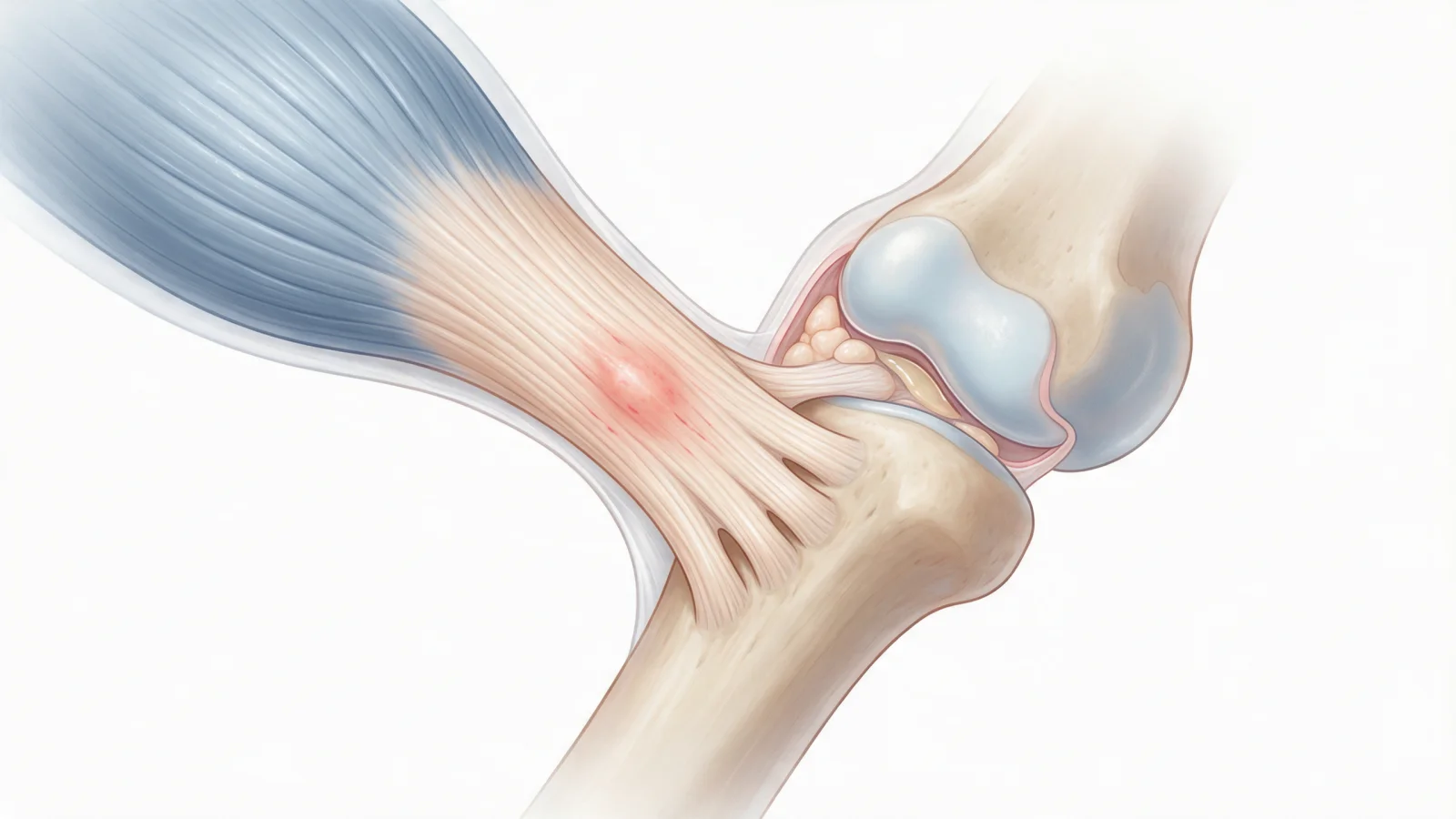
Tendinitis is irritation and pain in a tendon, the tough cord that connects muscle to bone, caused by excessive or repetitive loading. It most often affects the shoulder, elbow, wrist, hip, the tendon below the kneecap and the Achilles tendon. The typical sign is pain at a specific point along the tendon that increases with movement and load, together with tenderness and morning stiffness. Because long-standing cases usually involve structural wear in the tendon rather than classic inflammation, doctors often use the broader term "tendinopathy". The core of treatment is adjusting the load and progressive strengthening exercise.
This article explains why tendinitis develops, the common types, its symptoms, the signs that suggest a tendon rupture, how it is diagnosed and treated, and when to see an orthopedic surgeon.
What is a tendon and how does tendinitis develop?
Tendons are strong, slightly elastic structures made of collagen fibres that transmit the force of a muscle to bone. They adapt to load and grow stronger with regular, gradual training. However, their blood supply is more limited than muscle and they remodel slowly. When the load on a tendon exceeds its capacity to recover, the fibre structure starts to break down and pain and tenderness appear.
In the early stage there may be irritation and an inflammatory response, which is why "tendinitis" is the usual name for new, short-lived pain. In symptoms lasting weeks or months, signs of wear such as thickening and disorganised fibres take over. This matters, because rest and anti-inflammatory tablets alone are often not enough for long-standing tendon pain.
What causes tendinitis? Risk factors
- A sudden increase in load: starting a new sport or ramping up training time or intensity.
- Repetitive movements: keyboard and mouse work, racket sports, using hand tools, frequent jumping and running.
- Technique and equipment: poor technique, unsuitable shoes or rackets.
- Age: tendons tolerate less load with age; tendinitis is more common after 40.
- Other conditions: diabetes, excess weight, high cholesterol and some rheumatic diseases.
- Certain medicines: fluoroquinolone antibiotics raise the risk of tendon problems, and frequent corticosteroid injections can weaken tendons.
Common types of tendinitis
- Rotator cuff tendinitis: shoulder pain when lifting the arm overhead or lying on that side; calcific tendinitis involves calcium deposits in the tendon.
- Tennis and golfer's elbow: pain on the outer or inner elbow with gripping and wrist movements.
- De Quervain's tenosynovitis: pain on the thumb side of the wrist with thumb movements, common with heavy hand use and after childbirth.
- Hip tendinopathies: pain in the tendons on the outer hip or in the iliopsoas tendon at the front of the groin. See our article on iliopsoas tendinitis.
- Patellar tendinitis: pain just below the kneecap with jumping and squatting, common in basketball and volleyball.
- Achilles tendinitis: pain above the heel, especially in the first steps of the morning and with running. Read more in Achilles tendon problems in athletes.
Symptoms of tendinitis
- Pain at the tendon that increases with load
- Pain at the start of activity that eases as you warm up, then returns afterwards or the next day
- Stiffness in the morning or after sitting
- Tenderness, sometimes mild swelling or thickening
- Later, weakness and difficulty with everyday tasks
Signs of a tendon rupture
Tendinitis usually builds up slowly, whereas a rupture is typically sudden. The following should be assessed without delay:
- Sudden sharp pain, sometimes a "pop" or a feeling of being kicked
- Rapid swelling and bruising
- Being unable to do the movement or a clear loss of strength, such as not being able to rise onto your toes, lift the arm or keep the knee straight
- A gap along the tendon or a muscle that looks out of place
How is tendinitis diagnosed?
Diagnosis is usually based on your history and an examination, in which your doctor presses on the tendon and tests it against resistance. If needed, ultrasound can show thickening, fluid and partial tears and allows dynamic assessment; MRI is used when a tear is suspected, the picture is unclear or surgery is being planned; X-rays can show calcium deposits, bone spurs or joint problems.
How is tendinitis treated?
- Adjust the load: rather than complete rest, reduce the activities that clearly worsen the pain and keep moving at a tolerable level. Total inactivity can reduce the tendon's capacity even further.
- Progressive strengthening: the most important step. Exercises that load the tendon in a controlled way and get gradually heavier support tissue remodelling. These programmes usually take weeks to months of regular work.
- Pain relief: cold packs and short-term painkillers, where appropriate, can help early on.
- Supportive measures: technique changes, new equipment, taping and braces can help in some types. Shockwave therapy is an option for selected chronic cases.
- Injections: corticosteroids can ease pain in the short term, but are used cautiously and not repeatedly, particularly in load-bearing tendons such as the Achilles and patellar tendons, because of the risk of rupture. Biological injections such as PRP may be considered in some chronic tendon problems; see PRP in tendon and ligament injuries.
- Surgery: considered for full-thickness tears or selected cases that have not improved despite months of appropriate treatment.
Tendon healing is slow and varies from person to person. Stopping the programme as soon as the pain eases, or jumping straight back to your old load, often leads to a relapse.
Preventing tendinitis
- Increase training time, frequency and intensity gradually.
- Maintain muscle strength and flexibility with regular exercise.
- Take breaks during repetitive work and adjust your workstation and tools.
- Use suitable, well-maintained equipment and have your technique checked.
- Do not keep training at the same load while masking pain with painkillers.
When should you see an orthopedic surgeon?
- Pain that has not eased after 3–4 weeks of reduced load and simple measures
- Pain at night or at rest
- Marked weakness or being unable to do the movement
- Sudden pain, a popping sensation, swelling and bruising (possible rupture)
- Redness, warmth and fever around the tendon
Early assessment matters when a rupture is suspected, as treatment options for some tears change over time. At Prof. Dr. Gökhan Polat's clinic, tendon problems are evaluated by combining the examination, ultrasound or MRI findings where needed, and your sports and work demands. Learn more on our sports injuries page.
Summary
- Tendinitis is localised, load-related pain that develops when the demand on a tendon exceeds its capacity to recover.
- In long-standing cases wear matters more than inflammation, so progressive strengthening is the core of treatment.
- Injections and surgery are for selected cases; corticosteroids are used cautiously in load-bearing tendons.
- Sudden pain, a pop and loss of strength suggest a rupture and need prompt assessment.
This article is for general information only; diagnosis and treatment decisions are made individually after examination and the necessary tests.
FAQ
-
How long does tendinitis take to heal?
New, mild tendinitis may settle within a few weeks with load adjustment. Long-standing tendon pain usually takes a few months of regular strengthening to improve. The timeline varies with the tendon involved, how long symptoms have lasted and how consistently the programme is followed.
-
Is heat or cold better for tendinitis?
For new pain that flares after activity, a towel-wrapped ice pack for 15–20 minutes can be soothing. For long-standing stiffness, gentle heat before exercise can make movement easier. Both are supportive measures; the core of treatment is load management and strengthening.
-
How can you tell if a tendon has ruptured?
Sudden sharp pain, a pop or a feeling of being kicked, rapid swelling and bruising, and being unable to perform the movement suggest a tendon rupture. A gap may be felt along the tendon. These signs call for prompt assessment by an orthopedic surgeon.
-
Is a cortisone injection used for tendinitis?
A cortisone injection can reduce pain in the short term in some types of tendinitis. Because it may increase the risk of rupture, especially in load-bearing tendons such as the Achilles and patellar tendons, it is used cautiously and not repeated often. The decision depends on the tendon involved and the examination findings.
-
Should you exercise with tendinitis?
Yes, exercise at the right dose is the foundation of treatment. Activities that clearly worsen the pain are reduced while controlled, progressively heavier strengthening exercises load the tendon. Mild discomfort during exercise is acceptable, but marked pain lasting into the next day means the load is too high.