
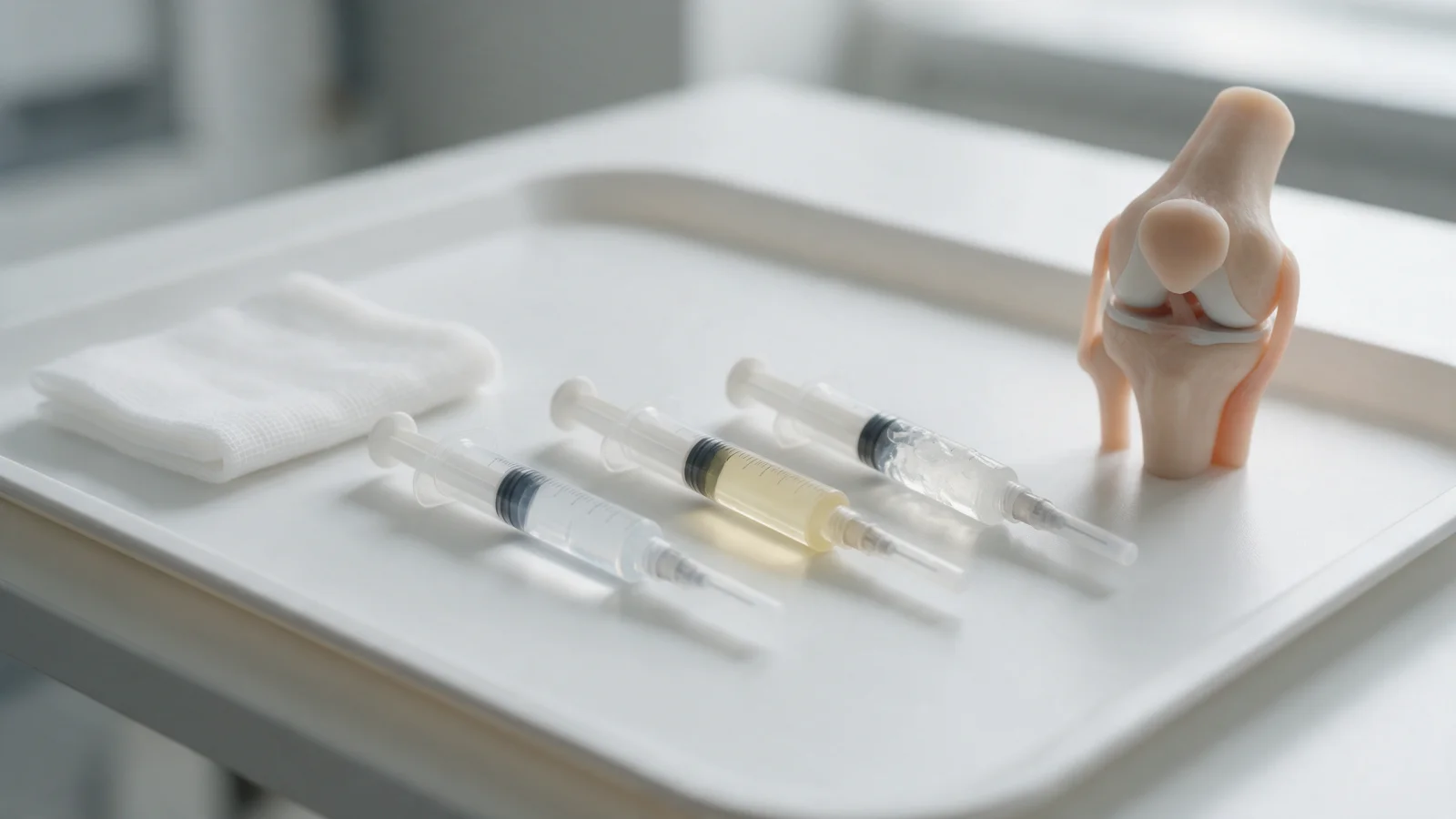
Knee Injections Compared: PRP, Hyaluronic Acid and Cortisone
A comparison of knee injection options: how cortisone, hyaluronic acid and PRP work, how long they last, what the evidence says, who they may suit and their possible side effects.
The three most common knee injections are cortisone, hyaluronic acid and PRP. They are used for different purposes, and none of them regrows worn cartilage. Cortisone usually brings fast but short-lived relief; hyaluronic acid works more slowly and its study results are mixed; PRP has shown longer-lasting benefit in some studies of mild to moderate osteoarthritis, but the evidence is not consistent. Which injection makes sense depends on the cause of the pain, the stage of arthritis, other health conditions and the patient's goals.
This article compares how each injection works, who it may suit, what the research shows, the possible side effects and the questions that matter when you are deciding.
What is an intra-articular injection and when is it considered?
An intra-articular injection delivers a medicine or biological preparation directly into the knee joint. It is usually done in the clinic after the skin is cleaned, using a fine needle; ultrasound guidance is sometimes used to make sure the needle is in the right place. It takes a few minutes, and most people resume their daily routine the same day.
Injections are not the first step in treating knee pain. In osteoarthritis, the foundation is exercise, weight management and adjusting activities. Injections are usually considered when:
- Pain limits daily life despite exercise and medication
- Arthritis flares up suddenly with fluid in the joint
- Pain stops someone from taking part in physiotherapy
- Symptoms need controlling in patients who are not suitable for surgery or wish to postpone it
Cortisone: quick but short-lived relief
Cortisone (a corticosteroid) strongly suppresses inflammation inside the joint. It is mostly used during flare-ups, when the knee is swollen, warm and painful.
- Onset: usually within a few days.
- Duration: a few weeks for most people, sometimes longer; this varies considerably.
- Evidence: its short-term benefit for pain is well established and appears in many guidelines.
- Cautions: because frequent, repeated injections may harm cartilage, they are usually limited to a few per year with gaps between them. In people with diabetes, blood sugar can rise for a few days.
Hyaluronic acid: supporting the joint fluid
Hyaluronic acid is a natural molecule that gives healthy joint fluid its slippery, cushioning quality. In osteoarthritis its structure and amount change. These injections, often called "gel shots", aim to support the properties of the joint fluid for a while.
- Onset: slower than cortisone, usually within a few weeks.
- Duration: in people who respond, effects may last several months; not everyone responds.
- Evidence: mixed. Some analyses show a small benefit over placebo, but whether that difference is large enough for patients to notice is debated. Some international guidelines advise against routine use, while others say it can be considered in selected patients.
- Schedule: one injection or a short weekly series, depending on the product.
PRP: a biological option made from your own blood
PRP (platelet-rich plasma) is prepared by spinning a sample of your own blood. Growth factors released from platelets are thought to modify the inflammatory environment in the joint and reduce pain.
- Onset: gradual, usually over a few weeks.
- Duration: in responders, from several months up to around a year.
- Evidence: in mild to moderate knee osteoarthritis, some randomized trials and analyses have reported better pain and function at 6–12 months than with hyaluronic acid or placebo. However, some well-designed trials found no clear difference from placebo. Different preparation methods make results hard to compare, and guidelines disagree.
- Schedule: usually one to three sessions a few weeks apart.
For more on PRP in arthritis, read our article on PRP treatment for knee osteoarthritis.
Side by side: which may suit whom?
The points below are a general guide, not a substitute for an individual decision:
- Marked swelling and a flare-up: cortisone is more often chosen to settle inflammation quickly.
- Mild to moderate arthritis in an active, relatively young patient: PRP or hyaluronic acid may be discussed, with a frank conversation about evidence and expectations.
- Advanced arthritis: all three may have limited effect; osteotomy or joint replacement may also need discussing.
- Diabetes: the effect of cortisone on blood sugar is taken into account.
- Blood disorders or blood thinners: need separate assessment before PRP or any injection.
The key point: no injection reverses osteoarthritis or rebuilds lost cartilage. The aim is to ease pain so that exercise and daily activities become easier. Benefit is more likely when an exercise program continues alongside the injection. For a wider view of the options, see non-surgical knee treatments.
Possible side effects and aftercare
- Temporary pain, swelling or bruising at the injection site
- A flare of pain for a day or two, especially after PRP or hyaluronic acid
- Facial flushing or a temporary rise in blood sugar after cortisone
- Rarely, joint infection or an allergic reaction
After the injection it is usually advised to avoid strenuous activity for 24–48 hours and to use a cold pack if it aches. After PRP you may be asked to avoid some anti-inflammatory medicines for a while. Your doctor will tailor these instructions to you and to the preparation used.
Questions worth asking
- What is causing my pain, and does this injection suit that cause?
- How soon, and how much, might it help?
- How strong is the evidence for it?
- How often can it be repeated?
- Which exercises should I do alongside it?
When should you see an orthopedic surgeon?
- Knee pain lasting several weeks that does not improve with home measures
- Recurrent swelling, locking or giving way
- Shorter walking distance or real difficulty with stairs
- Previous injections that seem to work less and less
Urgent: worsening pain, redness, warmth and swelling with fever in the days after an injection may mean infection and should be assessed the same day.
At Prof. Dr. Gökhan Polat's clinic, the decision about an injection is based on the examination, imaging, the stage of arthritis and the patient's expectations, and the strength of the evidence for each option is discussed openly. For more information, visit our cellular therapies (PRP, stem cell) page. Response to treatment varies from person to person.
Summary
- Cortisone usually gives fast, short-lived relief, and the number of injections is kept limited.
- Hyaluronic acid acts more slowly; evidence is mixed and not everyone responds.
- PRP has shown longer-lasting benefit in some studies of mild to moderate arthritis, but results are not consistent.
- No injection rebuilds cartilage; injections are most useful as part of a plan that includes exercise and weight control.
This article is for general information only; diagnosis and treatment decisions are made individually after examination and the necessary tests.
FAQ
-
What injections are given into the knee?
The most common knee injections are cortisone, hyaluronic acid and PRP. Cortisone is mostly used for flare-ups with swelling, while hyaluronic acid and PRP are more often considered in mild to moderate osteoarthritis. The choice is made after examination, based on the cause of pain, the stage of arthritis and overall health.
-
How long does a knee injection last?
Cortisone usually starts working within a few days and lasts a few weeks for most people. Hyaluronic acid and PRP take longer to act; in responders, relief may last several months, and sometimes close to a year with PRP. Duration varies a lot between individuals, and not everyone responds.
-
Is PRP more effective than hyaluronic acid?
In mild to moderate knee osteoarthritis, some studies report better results with PRP than hyaluronic acid at 6–12 months. However, not all studies agree, and preparation methods differ. Which is more suitable is decided through an individual assessment.
-
Can a joint injection reverse osteoarthritis?
No. None of these injections, whether cortisone, hyaluronic acid or PRP, rebuilds lost cartilage or reverses osteoarthritis. Their aim is to ease pain so that exercise and daily activities become easier.
-
What are the side effects of knee injections?
The most common side effects are temporary pain and swelling at the injection site and a flare of pain lasting a day or two. Cortisone can temporarily raise blood sugar in people with diabetes. Joint infection is rare; increasing pain, redness and fever after an injection need prompt medical attention.