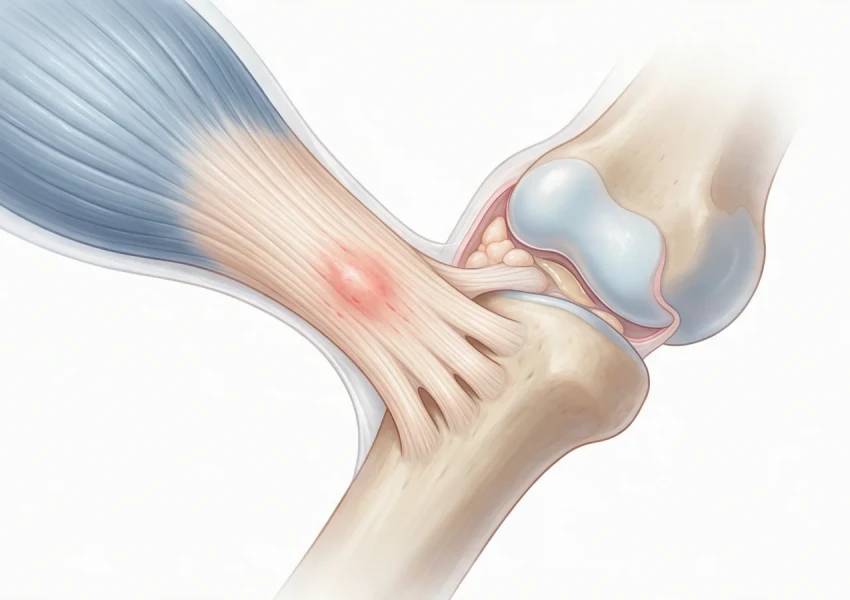
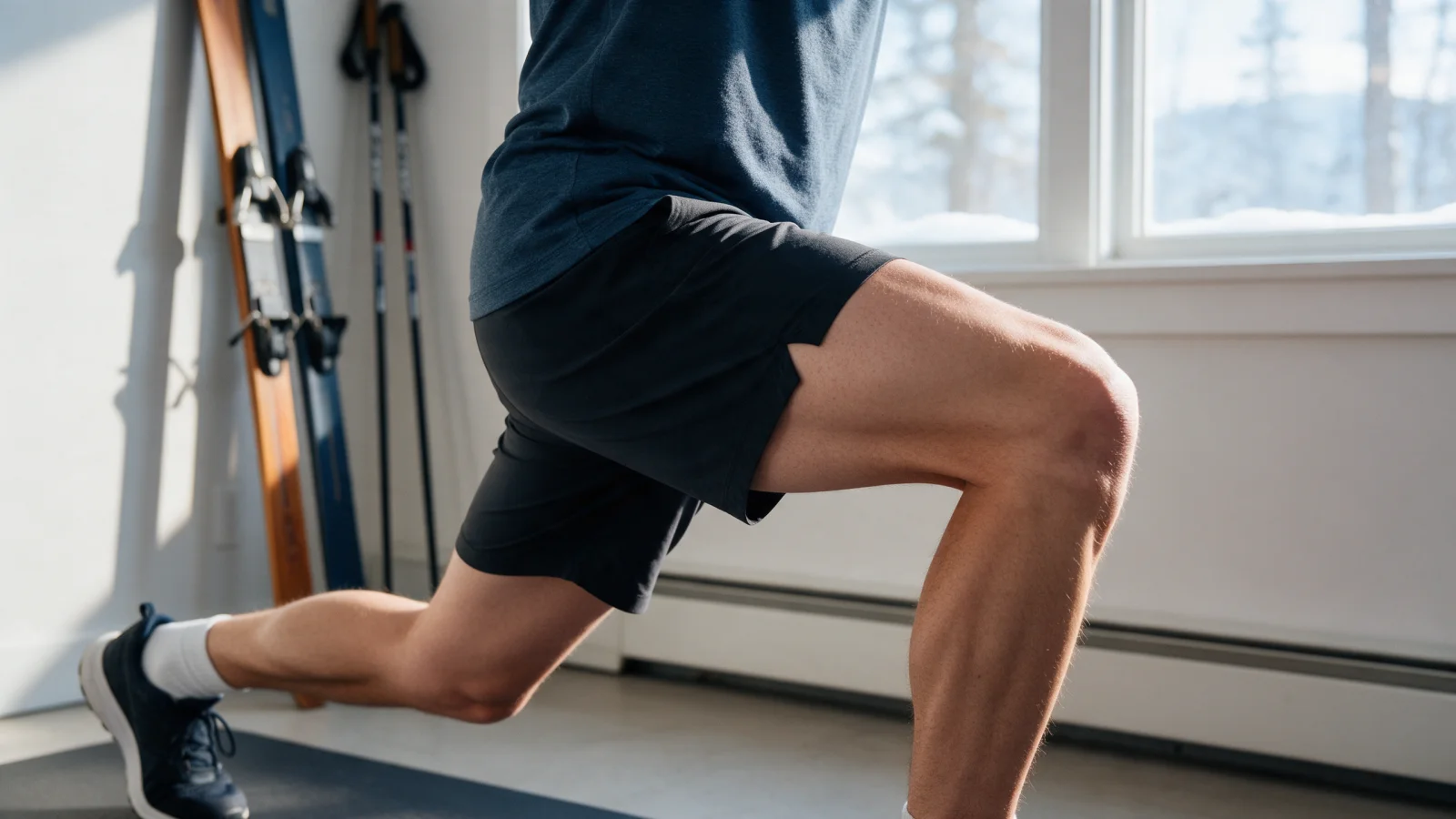
Starting pre-ski exercises at least six weeks before the season, two or three days a week, is a realistic way to prepare your knees for the slopes. The core of the program is strengthening the thigh and hip muscles, training balance and landing control, building trunk stability and improving endurance. Strong, fatigue-resistant muscles support the knee better during sudden twists and falls, although no program can remove the risk of injury entirely.
Below you will find why skiing is demanding for the knees, when to start, a week-by-week six-week program, tips for good technique and who should check with a doctor first.
Why is skiing so demanding for the knees?
Skiing keeps the knees slightly bent for long periods, so the quadriceps work almost constantly. Bumps, changes in snow and turns load the knee suddenly in both bending and twisting. Because ski boots fix the ankle, much of the twisting force in a fall or loss of balance is transferred to the knee.
As the day goes on, the muscles tire, reaction time slows and the knee loses some of its muscular protection, which is why many skiers find the last runs of the day the hardest. Pre-season training aims to build strength, improve endurance and help your body react faster when you lose balance. Our article on injury prevention through strength training explains this in more detail.
When and how to start
Meaningful gains in strength and balance usually take several weeks of regular work, so aim to begin six to eight weeks before your trip. If you are starting later, a shorter program is still better than none.
- Plan two or three sessions a week with at least one rest day in between.
- Warm up for 5–10 minutes with brisk walking, cycling or light movement.
- Move slowly and with control; quality matters more than the number of repetitions.
- In squats and lunges, keep your knee in line with your toes rather than letting it drift inwards.
- Mild muscle fatigue is normal; stop if you feel sharp or stabbing knee pain.
- Add walking, cycling or swimming on a few days a week for cardio.
The six-week pre-ski program
This is a general framework for adults who exercise regularly and have no active knee problem. Reduce the repetitions or stay longer at a stage if you need to.
Weeks 1–2: Foundation strength and control
- Sit-to-stand squat: feet shoulder-width apart, push your hips back until you touch a chair, then stand. 3 sets of 10–12.
- Glute bridge: lying on your back with knees bent, lift your hips and hold for 2–3 seconds. 3 sets of 12.
- Side-lying leg raise: works the side hip muscles that help stop the knee collapsing inwards. 3 sets of 12 each side.
- Single-leg stance: knee slightly bent, 30 seconds, 3 times each side.
- Plank: on your elbows with a straight body, 20–30 seconds, 3 times.
Weeks 3–4: More strength and balance
- Squat: without the chair, deeper and controlled. 3 sets of 12–15.
- Forward lunge: keep the front knee over the ankle. 3 sets of 10 each leg.
- Step-down: standing on a low step, slowly lower one foot towards the floor without the knee drifting inwards. 3 sets of 8–10 each leg.
- Wall sit: back against the wall, knees comfortably bent; build from 30 to 45 seconds, 3 times.
- Single-leg reach: standing on one leg, tap forwards, sideways and backwards with the other foot. 3 rounds each side.
- Side plank: 20–30 seconds each side, 3 times.
Weeks 5–6: Power, agility and endurance
- Lateral lunge: prepares you for sideways loading. 3 sets of 10 each side.
- Squat jump: a low jump with a soft landing on slightly bent knees. 3 sets of 8.
- Skater hops: hop sideways from one foot to the other and hold the landing for 1–2 seconds. 3 sets of 8 each side.
- Long wall sit: 45–60 seconds, 3 times, to build the endurance needed for long runs.
- Unstable surface balance: stand on one leg on a folded mat for 30 seconds, 3 times each side.
In jumping drills the goal is not height but a controlled landing: land quietly on the balls of your feet with knees and hips slightly bent. Watch especially that the knee does not cave inwards, since that position is risky on the slopes too.
Who should check with a doctor first?
- Anyone who has had ACL, meniscus or cartilage surgery
- Anyone with a knee injury in the past few months
- People with knee osteoarthritis or pain on stairs
- Anyone with recurrent swelling, catching or giving way
- People with heart or other conditions that limit exercise capacity
Exercise is usually still possible and helpful for these groups; the choice of exercises and the pace of progression simply need to be tailored. See our article on knee injury risk factors and prevention in athletes.
Practical tips on the slopes
- Warm up before your first run and take the first runs slowly.
- Have your bindings set by an authorised shop according to your weight, height and level.
- When you feel tired, take a break instead of squeezing in one more run.
- Avoid slopes above your level and high speed in poor visibility.
- If you start to fall, keep your arms forward and let yourself fall in a controlled way rather than fighting it on straight legs.
- Drink enough fluids and do not skip meals.
When should you see an orthopedic specialist?
- Sharp knee pain during exercise followed by swelling
- Catching, locking or a feeling that the knee is slipping
- A pop after a fall, sudden swelling and being unable to bear weight
- Pain that persists despite a few days of rest or returns with every session
An examination, and imaging if needed, will identify the source. At Prof. Dr. Gökhan Polat's clinic, assessment of athletes takes into account the type of injury, sporting goals and personal expectations. Read more on our sports injuries page.
In summary
- Begin pre-ski training six to eight weeks before the season, two or three days a week.
- Combine thigh and hip strength, balance, landing control, trunk stability and endurance.
- Controlled technique with the knee in line with the toes matters more than repetitions.
- If you have had knee surgery or a recent injury, plan the program with a doctor or physiotherapist.
This article is for general information only; diagnosis and treatment decisions are made individually after examination and the necessary tests.
Frequently asked questions
When should I start exercising before ski season?
Because meaningful gains in strength and balance usually take several weeks, starting six to eight weeks before your trip with two or three sessions a week is a sensible target. Even a shorter, consistent program is worthwhile if you start later.
Which exercises strengthen the knees for skiing?
Squats, lunges, lateral lunges, step-downs and wall sits build the thigh muscles, while glute bridges and side-lying leg raises strengthen the hips. Single-leg balance work and controlled jumps help prepare the knee for sudden loads.
Can I ski after ACL surgery?
Returning to skiing after ACL surgery depends on completing rehabilitation and on strength and balance testing, and is assessed by your surgeon. Timing and decisions such as wearing a brace are individual, so a check-up before the season is advisable.
What are the most common knee injuries in skiing?
The most common knee injuries in skiing are medial collateral ligament sprains and ACL injuries, sometimes with meniscus tears. They usually happen when the knee twists during a fall; swelling or a feeling of giving way afterwards should be assessed.
What if my knee hurts during pre-ski exercises?
Mild muscle fatigue is normal, but stop the exercise and reduce the load if you feel sharp, stabbing pain or pain that lingers into the next day. If it does not settle within a few days, or comes with swelling or catching, see an orthopedic specialist.