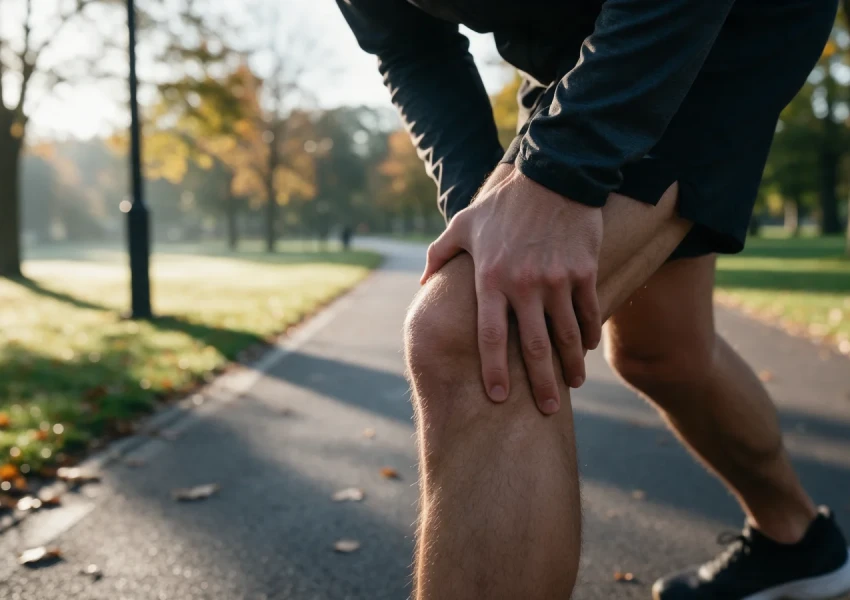
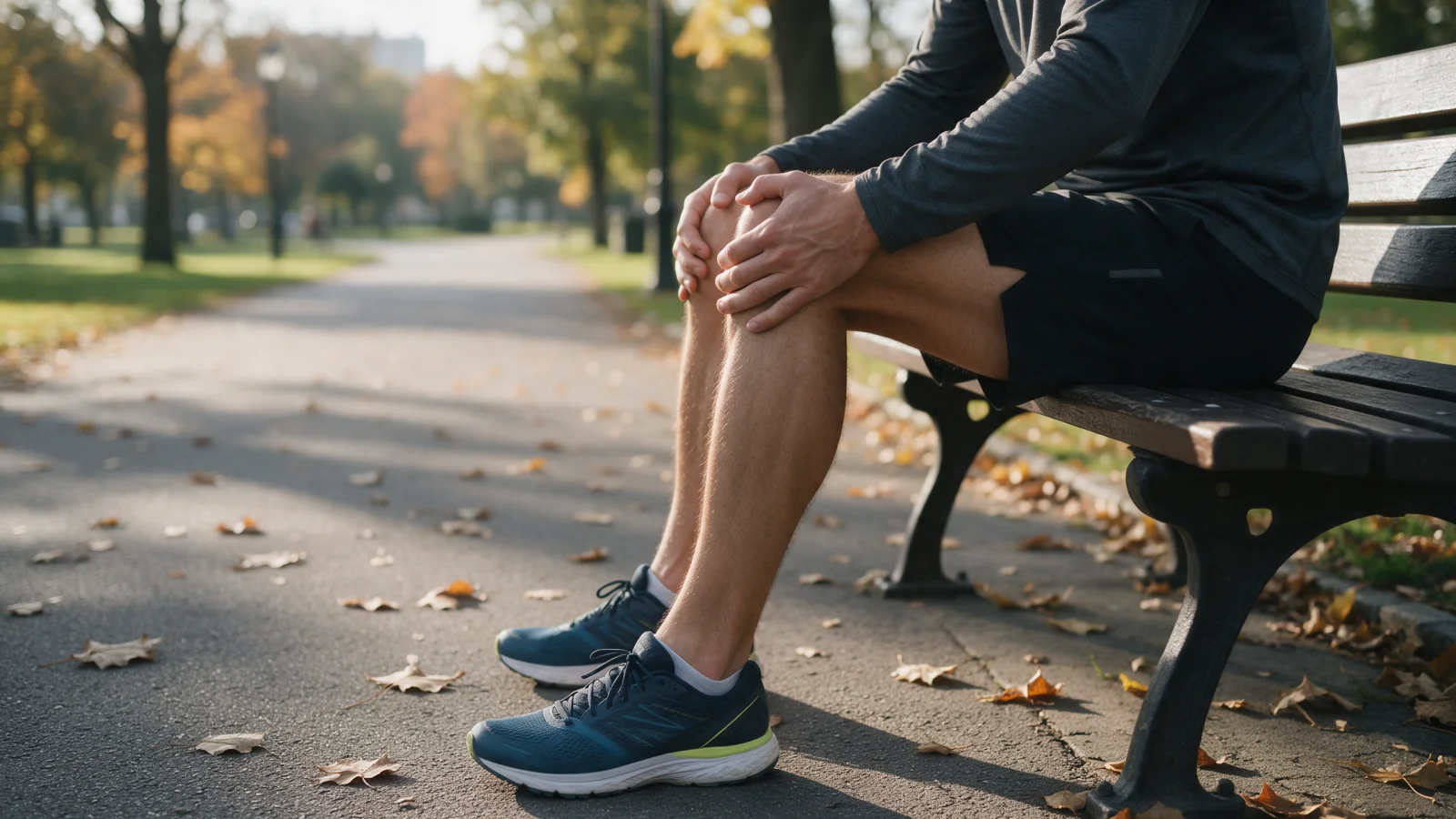
A dull, widespread ache around both knees and in the thigh muscles that starts a few hours or a day after a long run, peaks on day two or three and then fades is usually normal muscle fatigue. Knee pain that is sharp, focused on one spot, comes with swelling or a limp, or gets worse rather than better over the following days may point to an injury and should be checked.
This guide explains how to tell ordinary post-run soreness from an injury, what the location of the pain can suggest, what to do in the first few days and how to plan your return to running. It applies to marathons, half marathons and long training runs in general, not to any particular race.
What happens to your knees on a long run?
Every running stride sends a force of several times your body weight through the knee. The quadriceps, hip and calf muscles absorb most of it, and on downhill sections and as fatigue builds they work while lengthening (eccentric contractions). This causes small, temporary changes in the muscle fibres and produces delayed-onset muscle soreness, which typically peaks 24 to 72 hours later and then settles.
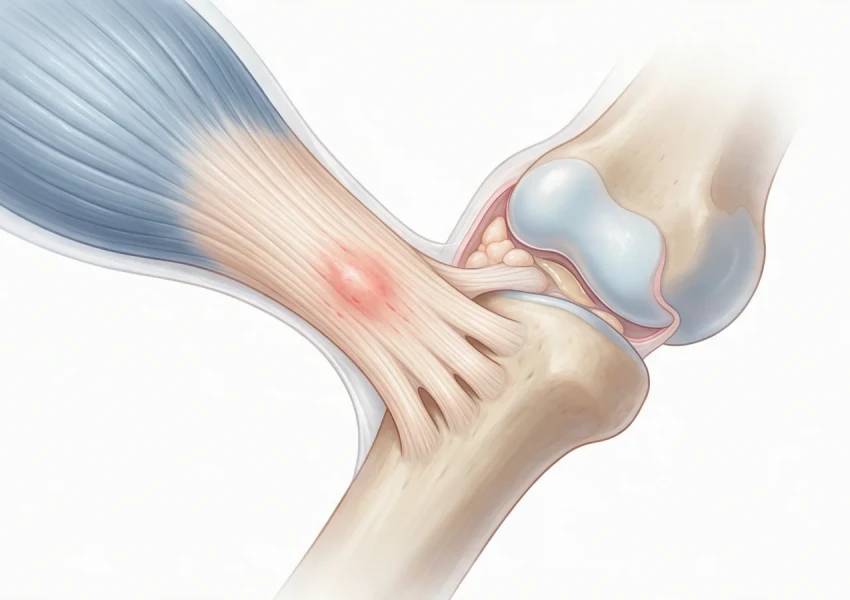
As the muscles tire, more load shifts onto the tendons, cartilage and the joint surface behind the kneecap, so some tenderness around the kneecap after a long distance is common. The catch is that normal fatigue can mask a genuine overuse injury. Where the pain is, what it feels like and how it changes over time are the clues.
Signs it is probably just soreness
- The ache is spread across the thigh muscles and around the knee rather than in one spot.
- Both legs feel roughly the same.
- It starts hours after the run or the next morning, peaks on day two or three and then eases.
- It is worse on stairs, when standing up or squatting, and loosens up after a short walk.
- There is no visible swelling, locking or giving way.
- It does not wake you at night and improves with rest.
This kind of soreness usually settles within a few days to a week, although the exact time varies from person to person. Our article on when post-workout pain is normal covers muscle soreness in more detail.
Signs that suggest an injury
- Pain you can point to with one finger
- Sharp pain in one knee only
- Pain that began suddenly during the run, sometimes with a pop or a sense that something gave
- Swelling that develops within hours, making the knee look full and tight
- Catching, locking or the knee giving way
- Being unable to walk without limping or put full weight on the leg
- Pain that has not eased after three or four days, or is getting worse
- Marked tenderness when you press on the bone, for example along the inner shin
What the location of the pain can suggest
Location is a useful guide, though only an examination can confirm the cause.
Front of the knee
Pain around or behind the kneecap that is worse on stairs, when squatting or after sitting with bent knees may suggest patellofemoral pain. Pain just below the kneecap, over the tendon, may relate to patellar tendon overload. Both are usually overuse problems linked to a rise in training load.
Outside of the knee
Burning or stabbing pain on the outer side that appears after a certain distance, especially downhill, can fit iliotibial band irritation. It often eases when you stop and returns at a similar point on the next run.
Inside of the knee
Tenderness on the inner, lower side of the knee may come from tendon or bursa irritation. Pain along the joint line that worsens with twisting and comes with catching suggests a meniscus problem, which can develop without a clear injury from middle age onwards.
Bone tenderness
Distinct tenderness when you press on the shin or bones around the knee, pain that increases with walking and does not fully settle with rest can suggest a stress fracture. Do not keep running until this has been assessed.
The first 72 hours after a long run
- Keep moving gently: walk for a few minutes after finishing and take short, easy walks over the next days.
- Refuel: replace fluids and eat a meal with carbohydrate and protein in the first hours.
- Sleep: much of your recovery happens overnight.
- Cold: for a tender spot or mild swelling, apply a towel-wrapped ice pack for 15–20 minutes.
- Easy cross-training: from day two or three, gentle cycling or swimming can ease stiffness.
- Painkillers: after long runs with heavy fluid loss some anti-inflammatories can strain the kidneys, so check with a doctor or pharmacist before taking them regularly.
If you face a long flight or coach journey home, get up and walk regularly and drink plenty of fluids. For sudden injuries, see our guide to first aid for sports injuries.
When and how to return to running
After a marathon many runners take several days completely off and then build back gradually. Let your body, not the calendar, decide. Useful checks:
- Walking and stairs are pain-free.
- A single-leg half squat feels similar on both sides.
- There is no swelling.
- Your first runs are short, flat and easy.
- Pain during the run stays at or below 3 out of 10 and is no worse the next day.
If you do not pass these checks yet, cycling, swimming or brisk walking can maintain your fitness. Increasing weekly mileage gradually, strengthening the hips and thighs and replacing worn shoes all help reduce the chance of the same pain returning.
When should you see an orthopedic specialist?
- Sudden pain, a pop or a tearing sensation during the run followed by swelling
- Locking, catching or giving way
- Being unable to walk without a limp
- Pinpoint bone tenderness and pain on weight-bearing
- Pain lasting more than a week, or returning at the same spot on every run
Seek same-day care if the knee is red, hot and swollen with a fever, or if one calf becomes swollen, tight and painful, particularly after long travel, as this can signal a blood clot.
The examination focuses on where and how the pain began and on your training history; X-ray, ultrasound or MRI may be used if needed. At Prof. Dr. Gökhan Polat's clinic, treatment for runners is planned around the type of injury, training goals and lifestyle. Learn more on our sports injuries page.
In summary
- A widespread ache in both knees and thighs that starts to fade by day two or three is usually normal fatigue.
- Sharp, one-spot pain with swelling or a limp that does not settle suggests an injury.
- Gentle movement, fluids, food, sleep and, when needed, ice support recovery.
- Return to running gradually, based on pain-free walking and no swelling rather than a fixed date.
This article is for general information only; diagnosis and treatment decisions are made individually after examination and the necessary tests.
Frequently asked questions
Is knee pain after running normal?
A widespread ache around both knees and in the thighs that eases over a few days is usually normal muscle fatigue after a long run. Sharp pain in one spot, swelling, locking or a limp are not considered normal and should be assessed.
How long does knee pain last after a run?
Soreness from muscle fatigue usually peaks on day two or three and fades within a few days to a week, though this varies between people. Pain that lasts longer than a week or keeps getting worse may indicate an injury and should be examined.
Should I use ice or heat on my knee after running?
If a particular area of the knee is tender or slightly swollen after a run, a towel-wrapped ice pack for 15–20 minutes is usually the better choice. On later days, when there is no swelling and muscle stiffness is the main complaint, a warm shower or gentle heat can feel soothing.
Can I keep running with knee pain?
If pain stays at or below 3 out of 10 while running, is no worse the next day and the knee is not swollen, short easy runs are usually reasonable. If the pain is sharp, makes you limp or there is pinpoint tenderness over a bone, stop running and get it checked.
Why does my kneecap hurt after running?
Pain around the kneecap after running is often linked to a rise in training load and tired thigh and hip muscles, which overload the joint surface behind the kneecap and the patellar tendon. It typically worsens on stairs and when squatting; if it lasts more than a few weeks, an examination should clarify the cause.