
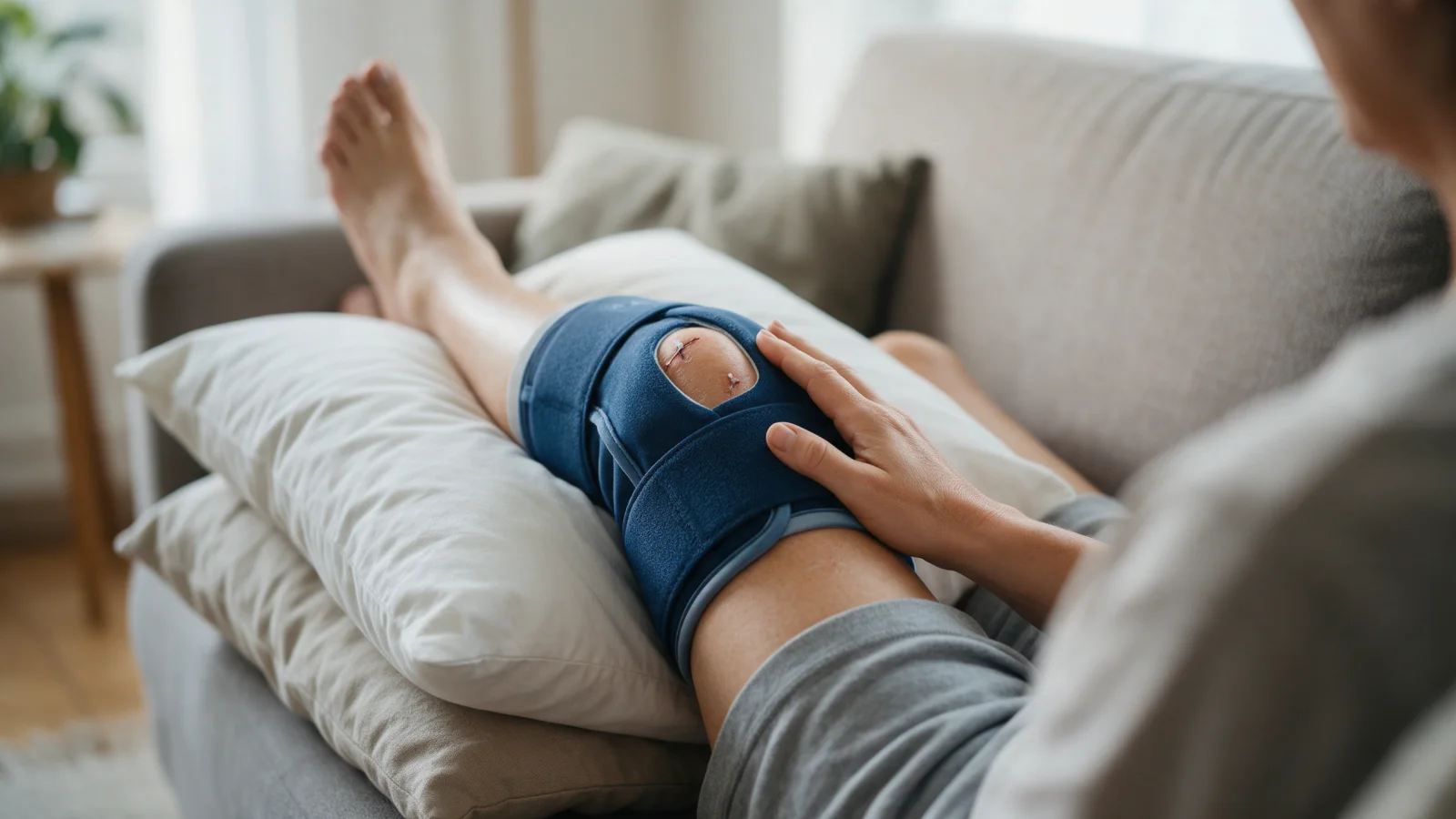
Problems After ACL Surgery: What Is Normal and What Is Not
Pain, swelling, stiffness, numbness and a giving-way feeling after ACL surgery: which complaints are part of normal healing and which warning signs need prompt assessment by your surgeon?
Most complaints after ACL surgery are a normal part of healing: in the first weeks, pain, swelling, warmth in the knee, numbness around the incision and soreness after exercise are common and usually ease over time. By contrast, pain and swelling that keep getting worse, fever, wound discharge, one-sided calf swelling, or a knee that still will not straighten or bend after several weeks are not considered normal, and your surgical team should be told without delay.
This article goes through the most common problems after surgery one by one and explains which findings fit an expected recovery and which may point to something that needs to be checked. The aim is to ease unnecessary worry while making sure the warning signs are not missed.
Pain after surgery: how much is normal?
Pain is expected in the first days and is usually managed with prescribed painkillers, cold therapy and keeping the leg raised. It tends to be strongest in the first few days and then eases in a wave-like pattern over the following weeks. Feeling more sore in the evening after an exercise session or a long walk is also common at this stage.
Where you feel the pain can depend on the graft used:
- Patellar tendon graft: tenderness below the kneecap and pain when kneeling are more common and can last for months in some people.
- Hamstring graft: tightness, cramp-like pain or bruising in the back or inner thigh.
- Quadriceps tendon graft: tenderness above the kneecap and at the front of the thigh.
Our article on pain after arthroscopic surgery covers the general pattern in more detail. What matters is that pain trends downwards over time. Pain that increases over several days, does not respond to painkillers or becomes prominent at rest and at night should be assessed.
Swelling and warmth: when do they settle?
Swelling is one of the longest-lasting complaints. Fluid inside the joint and swelling of the surrounding tissue are most noticeable in the first weeks; although they settle in most people within weeks, mild swelling after activity can come and go for several months. A knee that feels slightly warmer than the other side is also common during healing.
- Raise the leg above heart level several times a day.
- Use cold therapy for 15–20 minutes at a time, protecting the skin, as your surgeon advises.
- Avoid long periods on your feet and sudden jumps in exercise load.
- Keep up regular ankle pumps.
Tense swelling that develops quickly, marked redness and warmth together with fever or chills can suggest a joint infection or bleeding into the joint, and need same-day assessment.
Trouble bending or straightening the knee
Stiffness is one of the problems watched most closely after surgery. Limited bending in the first weeks is expected because of swelling and pain, and it improves gradually with physiotherapy. Sometimes, however, progress stalls:
- Loss of extension: even a few degrees of bend left in the knee can cause a limp and front-of-knee pain. A nodule of scar tissue at the front of the joint, known as a cyclops lesion, is one possible cause.
- Loss of flexion: bending that does not improve over several weeks may suggest excessive scar tissue inside the joint (arthrofibrosis).
Early recognition matters. In the early phase, stepping up physiotherapy is often enough, whereas established stiffness may need additional procedures such as an arthroscopic release. If the angles measured by your physiotherapist stop improving for several weeks, bring your follow-up forward.
Numbness, clicking and catching
- Numbness on the outer side of the incision: small skin nerve branches are often affected by incisions at the front and inner side of the knee, so a patch of numbness beside the scar is common. It usually shrinks over months; a small area of reduced sensation may remain for a long time but rarely affects how the knee works.
- Clicking or crackling: sounds without pain or swelling are usually harmless. If pain, catching or swelling come with them, have them checked.
- Catching or locking: a knee that gets stuck at a certain angle may suggest a loose fragment, a meniscus problem or scar tissue, and should be examined.
A giving-way feeling: could the graft be the problem?
In the first months your muscles are not yet strong enough, so the knee may feel unsteady; this does not mean the graft has failed. However, sudden swelling, pain and a feeling that the knee is shifting out of place after a new twist or fall should be investigated with an examination and, if needed, an MRI. The risk of graft injury rises particularly with an early return to sport, which is why sticking to the criteria in your rehab plan matters. Our complete guide to ACL surgery and recovery explains the whole process.
Serious but rare problems: infection and blood clots
Joint infection
This usually appears in the first weeks after surgery, with fever, chills, increasing pain, redness, warmth and tense swelling. Cloudy discharge from the wound is another important warning sign. Prompt assessment is essential to protect the joint and the graft.
Deep vein thrombosis
One-sided calf swelling, tightness, pain and warmth may suggest a clot in a leg vein. Sudden shortness of breath or chest pain needs emergency care. Staying as mobile as advised, keeping up ankle exercises and following any preventive treatment your surgeon prescribes help reduce the risk.
What can help ease these complaints?
Many post-operative complaints can be eased with everyday habits. The points below are a general framework; the specific instructions from your surgical team always come first:
- Take painkillers at the advised times and doses, before pain builds up, so you can keep up with your exercises.
- Do not skip physiotherapy sessions or home exercises; they lower the risk of both stiffness and muscle weakness.
- Increase exercise load gradually over weeks rather than all at once to avoid flare-ups of swelling and pain.
- Keep the wound clean and dry and avoid pools and baths until the stitches are out.
When should you contact an orthopedic surgeon?
Contact your surgical team without waiting for your scheduled visit if you have:
- A fever above 38°C, chills or discharge from the wound
- Pain, redness and tense swelling that increase over several days
- One-sided calf swelling and pain; go to the emergency department for shortness of breath or chest pain
- A knee that will not straighten fully, or bending that stops improving, after several weeks
- Locking, marked catching or a giving-way feeling after a new twist
- New weakness or widespread loss of sensation in the foot or leg
In Prof. Dr. Gökhan Polat's practice, post-operative complaints are assessed through examination, range-of-motion measurements and imaging where needed, and the treatment plan is adjusted individually. For more on diagnosis and treatment, visit our page on anterior cruciate ligament injury.
In summary
- Pain, swelling, mild warmth and numbness around the incision are usually an expected part of early recovery.
- What matters is that symptoms trend downwards; increasing pain and swelling should be assessed.
- Problems with straightening or bending are easier to manage when they are picked up early.
- Fever, wound discharge and one-sided calf swelling need prompt medical attention.
This article is for general information only; diagnosis and treatment decisions are made individually after examination and the necessary tests.
FAQ
-
How long does pain last after ACL surgery?
Pain is usually strongest in the first few days and then eases in a wave-like pattern over the following weeks. Soreness after exercise and tenderness at the graft site can last a few months. Pain that increases rather than settles, or becomes prominent at rest, should be assessed.
-
When does swelling go down after ACL surgery?
Marked swelling settles in most people within the first weeks, although mild swelling after activity can come and go for several months. Elevation, cold therapy and increasing load gradually help keep it under control. Tense swelling that develops quickly, with redness and fever, needs urgent assessment.
-
I can't fully straighten my knee after ACL surgery. Is that normal?
In the first days swelling and pain may stop the knee from straightening fully, but full extension is one of the main early goals. If the knee still stays a few degrees bent after several weeks, scar tissue or another cause may be involved. Bring your follow-up forward and review your physiotherapy plan with your surgeon.
-
Will the numbness at the front of my knee go away?
Numbness around the incision is caused by small skin nerve branches being affected and is very common. The numb area usually shrinks over months, although a small patch of reduced sensation may remain for a long time. It rarely affects how the knee works.
-
How can I tell if my ACL graft has torn?
Sudden swelling, pain and a feeling of the knee shifting or giving way after a new twist or fall may suggest a graft injury. A general sense of unsteadiness in the first months is more often due to muscle weakness. The graft is assessed with an examination and, if needed, an MRI.