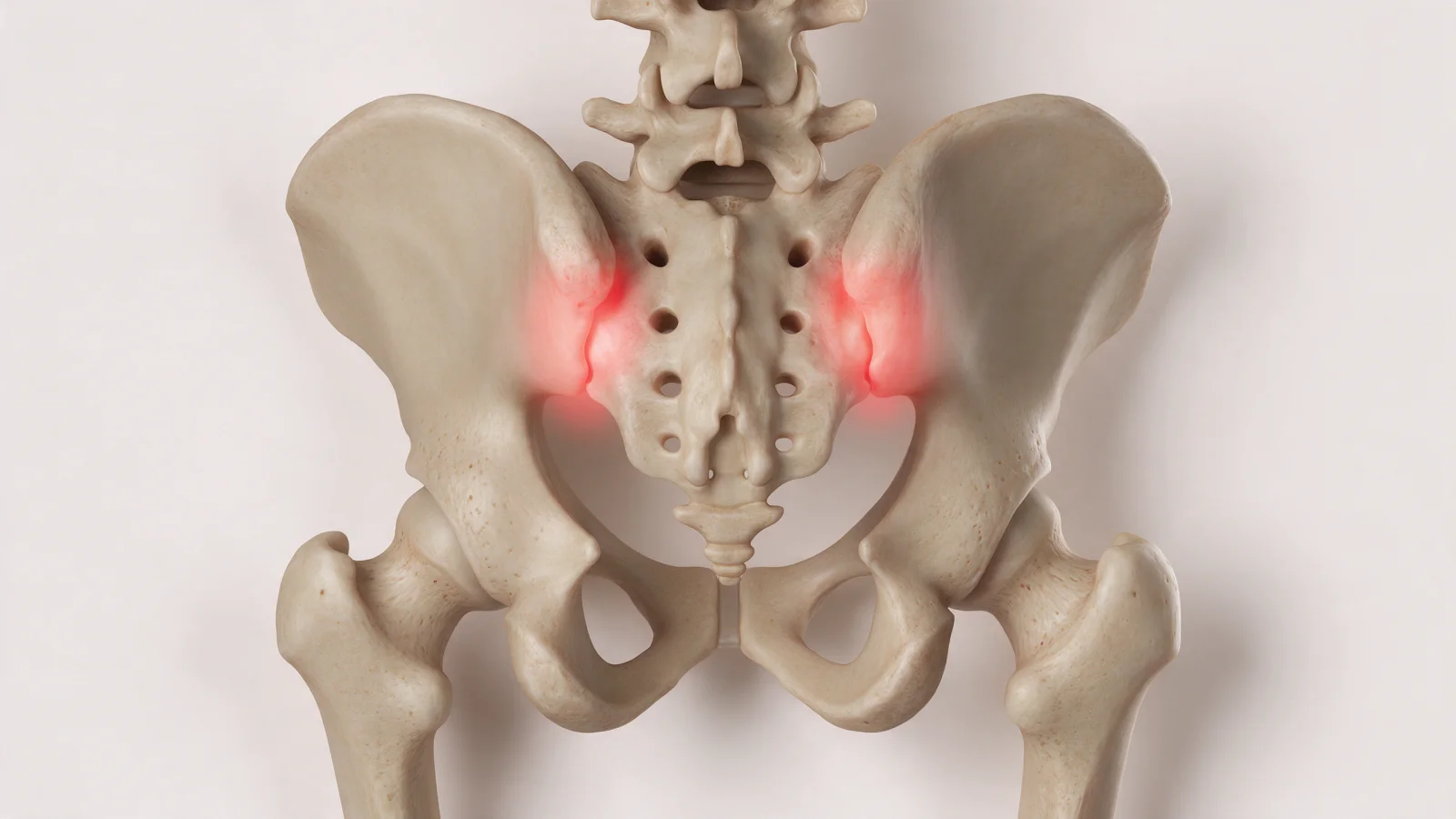
Sacroiliac joint pain is usually felt low in the back, below the belt line, over the back of the pelvis around the dimples on either side of the sacrum. Pain from the hip joint itself is more often felt in the groin and the front of the hip, and tends to worsen when putting on socks, getting out of a car or bending and turning the leg inwards. These clues help, but the two can feel very similar, and the source is confirmed with examination, specific tests and imaging when needed.
This article explains what the sacroiliac joint is, what causes sacroiliac joint pain, how it differs from hip joint pain, how the diagnosis is made, treatment options and safe exercises to try at home.
What and where is the sacroiliac joint?
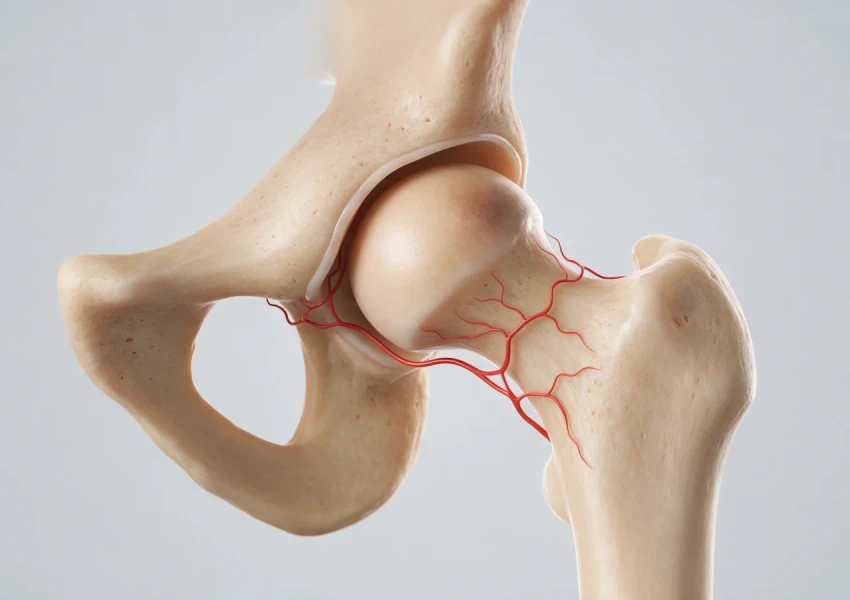
There are two sacroiliac joints, one on each side, where the triangular sacrum at the base of the spine meets the wings of the pelvis (ilium). They transfer the weight of the upper body to the legs, are held by very strong ligaments and move only a few millimetres. The hip joint, by contrast, is a ball-and-socket joint between the head of the thigh bone and the pelvic socket, with a wide range of movement. Because the two joints are close and can refer pain to similar areas, they are often confused with each other, and with lower back problems or muscle pain in the buttock.
What causes sacroiliac joint pain?
- Pregnancy and the postpartum period: hormonal changes loosen the ligaments and posture changes add strain.
- Falls: especially landing on the buttocks.
- Repetitive asymmetric loading: sports such as running, football or golf, or one-sided work.
- Leg length difference and gait problems
- Previous lumbar fusion surgery, which can increase load on the sacroiliac joints.
- Inflammation (sacroiliitis): particularly in young adults as part of a rheumatic condition.
- Age-related degenerative change
Typical features of sacroiliac joint pain
- Pain low in the back, below the belt line, usually on one side
- Pointing with one finger to a spot just below and inside the bony bump at the back of the pelvis
- Spread to the buttock and the back or side of the thigh, rarely below the knee
- Worse with prolonged standing or sitting, climbing stairs and standing on one leg
- Worse when rolling over in bed, getting out of a car or standing up
In inflammatory sacroiliitis, pain is typically worse in the second half of the night and in the morning, with stiffness lasting more than half an hour that improves with movement; this may need assessment together with a rheumatologist.
How does hip joint pain differ?
- Location: mostly in the groin and front of the hip; people often cup the side of the hip with a "C" shaped hand.
- Movement: bending and turning the leg inwards, putting on socks and shoes, getting in and out of a car and sitting cross-legged increase pain.
- Mechanical symptoms: catching, locking or clicking can suggest a labral tear.
- Stiffness: reduced inward rotation is common in impingement and osteoarthritis.
- Age: impingement and labral tears are typical in young active people, osteoarthritis in older adults.
Pain on the outer side of the hip that worsens when lying on that side usually comes from tendons and bursae outside the joint. Sciatica from a disc problem typically runs down the back of the leg below the knee, often with numbness or tingling. Our article on telling hip pain from a lumbar disc herniation covers this in detail.
How is the diagnosis made?
A detailed history and examination are the key steps. For the sacroiliac joint, several provocation tests stress the joint in different directions; when a number of them reproduce the pain, a sacroiliac source becomes more likely. For the hip, impingement tests, range of motion and gait are assessed. Some tests can be painful with either joint, so results are interpreted together, and the spine and nerves are examined too.
- X-ray: can show hip osteoarthritis, bony shapes that cause impingement and advanced sacroiliac changes.
- Sacroiliac MRI: helpful for early signs of inflammatory sacroiliitis.
- Hip MRI or MR arthrography: used when a labral tear or cartilage damage is suspected.
- Blood tests: if an inflammatory condition is suspected.
If the source is still unclear, an image-guided local anaesthetic injection into the sacroiliac joint or hip joint can help: marked relief afterwards supports that joint as the source.
Treatment options
- Temporarily reducing activities that provoke the pain
- Physiotherapy and exercise to strengthen the trunk, hips and back
- A sacroiliac support belt during and after pregnancy
- Pain relief and anti-inflammatory medication on medical advice
- Image-guided joint injections for persistent symptoms
- Nerve-targeted procedures for selected patients and, very rarely, surgical fusion
Inflammatory sacroiliitis is managed together with a rheumatologist. For hip joint pain, treatment depends on the cause: alongside physiotherapy and injections, hip arthroscopy may be considered for impingement or labral tears, and joint replacement for advanced osteoarthritis.
Home exercises for sacroiliac joint pain
Stop any movement that increases your pain, and plan the program with a physiotherapist if pain is severe or you are pregnant.
- Knee to chest: lying on your back, gently pull one knee towards your chest for 20–30 seconds. 3 times each side.
- Glute bridge: lift your hips with knees bent and hold 3–5 seconds. 10 repetitions.
- Clamshell: lying on your side with knees bent and feet together, open and close the top knee. 10–15 each side.
- Bird dog: on hands and knees, extend one arm and the opposite leg, keep the trunk still and hold 5 seconds. 8–10 each side.
- Buttock stretch: lying down, cross one ankle over the opposite knee and gently pull the lower thigh towards you. 20–30 seconds, 3 times each side.
When should you see an orthopedic specialist?
- Low back or hip pain lasting several weeks and limiting daily life
- Groin pain, catching, locking or clicking in the hip
- Pain that wakes you at night or morning stiffness lasting over half an hour
- Pain after a fall that makes walking difficult
- A limp and marked loss of hip movement
Seek urgent care for progressive leg weakness, loss of bladder or bowel control, numbness in the saddle area, or pain with fever and feeling unwell.
At Prof. Dr. Gökhan Polat's clinic, the source of pain around the hip is investigated with a detailed examination, specific tests and appropriate imaging, and treatment is tailored to the diagnosis, age and activity level. Learn more on our hip joint diseases page.
In summary
- Sacroiliac joint pain is usually felt low in the back, below the belt line, over the back of the pelvis.
- Hip joint pain is more often in the groin and front of the hip and worsens with bending and inward rotation.
- Examination tests, imaging and sometimes a diagnostic injection are used together to tell them apart.
- Treatment usually starts with exercise and physiotherapy, with further options depending on the cause.
This article is for general information only; diagnosis and treatment decisions are made individually after examination and the necessary tests.
Frequently asked questions
Where does sacroiliac joint pain spread?
Sacroiliac joint pain is usually felt low in the back and over the back of the pelvis, and may spread to the buttock and the back or side of the thigh. It rarely goes below the knee; pain reaching the foot with numbness should prompt a check for a pinched nerve in the lower back.
How can you tell sacroiliac pain from hip pain?
Sacroiliac pain is mostly felt below the belt line at the back of the pelvis, while hip joint pain is felt in the groin and front of the hip and worsens when the leg is bent and turned inwards. A reliable distinction requires examination tests, imaging and sometimes a diagnostic injection.
Does sacroiliac joint pain go away?
In many people sacroiliac joint pain eases over weeks with activity changes, exercise and physiotherapy, though the timescale varies with the cause and the individual. If it persists, image-guided injections may be considered, and inflammatory conditions are treated together with a rheumatologist.
What exercises help sacroiliac joint pain?
Exercises that strengthen and stretch the trunk and hip muscles, such as knee to chest, glute bridges, clamshells, bird dogs and buttock stretches, are commonly recommended. Avoid movements that increase the pain, and plan the program with a physiotherapist if pain is severe or you are pregnant.
Which doctor treats sacroiliac joint pain?
Sacroiliac and hip pain are assessed by orthopedic surgeons and by physical medicine and rehabilitation specialists. If symptoms such as morning stiffness and night pain suggest an inflammatory condition, a rheumatologist is also involved.