
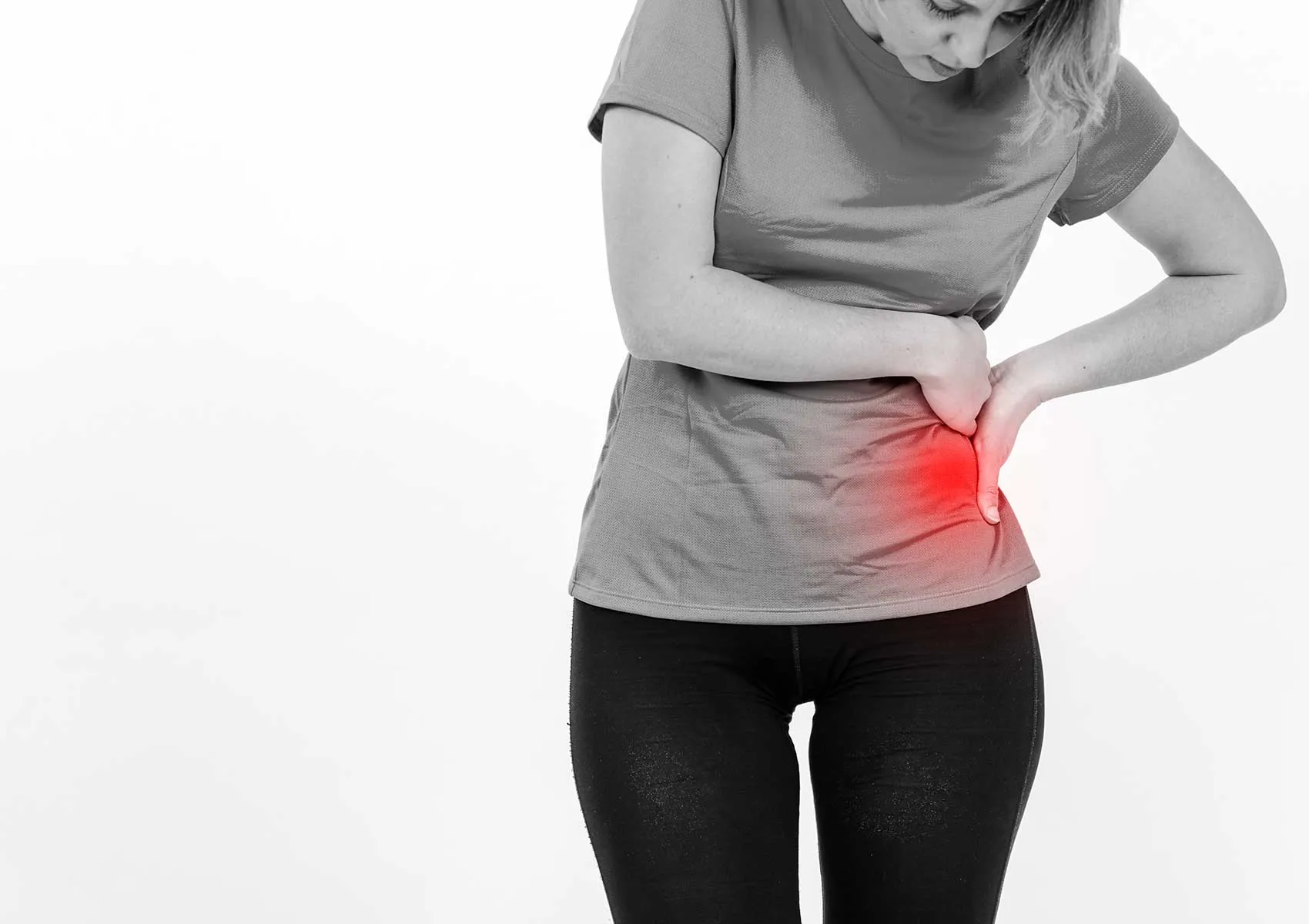
How to Differentiate Hip Pain and Lumbar Disc Herniation?
Understanding the difference between hip pain and lumbar disc herniation is crucial for accurate diagnosis and treatment. This article thoroughly covers the symptoms, causes, diagnostic methods, and key distinguishing points of hip pain and lumbar disc herniation.
Hip pain and lumbar disc herniation are common complaints, especially among the active age group. However, their symptoms can resemble each other, making accurate diagnosis challenging at times. Differentiating these issues, which severely affect patients’ quality of life, is critical for creating an effective treatment plan. In this article, we will explore how to distinguish hip pain from lumbar disc herniation, examining their clinical signs, causes, and diagnostic methods in detail.
Causes of Hip Pain
The hip region has a complex joint structure where the upper thigh and pelvis meet. Causes of hip pain cover a broad range. Among the most common causes are femoroacetabular impingement, labral tears, acetabular dysplasia, gluteus medius tears, osteitis pubis, and athletic pubalgia. These conditions typically increase pain during specific movements and cause tenderness in the area.
In femoroacetabular impingement, abnormal contact between the bony structures of the hip joint leads to movement limitations and pain. Labral tears occur due to damage to the cartilage in the hip joint, causing pain especially during sitting and rotational movements. Gluteus medius tears cause pain on the outer side of the hip, particularly in pressure-bearing areas while walking. Osteitis pubis and athletic pubalgia manifest as localized pain in the front part of the pelvis.
Causes and Symptoms of Lumbar Disc Herniation
Lumbar disc herniation happens when the disc material between the vertebrae protrudes outward, pressing on nerve roots. This causes pain that radiates through the lower back and leg, numbness, and weakness. The most characteristic feature is nerve pain that starts from the lower back and extends to the hip, thigh, and sometimes the toes. The pain is usually unilateral and worsens with coughing, straining, or bending forward. Loss of reflexes, muscle weakness, and sensory deficits in the leg may also occur.
Common and Distinct Symptoms of Hip Pain and Lumbar Disc Herniation
Differentiating hip pain from lumbar disc herniation requires a detailed assessment of the patient’s pain complaints. Key distinguishing factors include the pain’s location, nature, relation to movement, and accompanying neurological symptoms.
Hip pain is often localized around the joint and fluctuates with movement, increasing or decreasing in intensity. Some movements may cause tenderness and a clicking sensation within the joint. Usually, hip pain originates from the hip joint itself, although tendons, muscles, or inflammatory conditions in the pelvis can also cause pain.
In contrast, lumbar disc herniation pain generally starts in the lower back and radiates down to the hip and leg, presenting as burning, electric shock-like nerve pain. Neurological symptoms such as numbness, tingling, and muscle weakness accompany it. Pain worsens with movement and is characteristically triggered by coughing or straining.
These differences help to determine whether the pain is hip-related or lumbar-origin.
Diagnostic Methods
Physical examination by a physician is the first and most crucial step in differentiating hip pain from lumbar disc herniation. The evaluation focuses on hip joint range of motion, painful movements, and neurological examination. Specific tests can detect femoroacetabular impingement or nerve root irritation.
Imaging methods support diagnosis as well. Magnetic resonance imaging (MRI) is used to assess joint structures in cases of hip pain, while lumbar MRI and, if necessary, electromyography (EMG) tests to evaluate nerve function are performed when lumbar disc herniation is suspected.
Treatment Approaches
Treatment for hip pain primarily depends on its cause. Physical therapy, weight reduction, muscle strengthening exercises, and arthroscopic surgery options can be applied when needed. Especially in athletes, femoroacetabular impingement or labral tears may be corrected surgically.
For lumbar disc herniation, conservative treatment is prioritized. Rest, physical therapy, pain relievers, and medications that reduce nerve pressure are used. Surgical intervention is reserved for severe neurological deficits or when conservative treatments fail.
Accurate differentiation between hip pain and lumbar disc herniation enhances treatment success and improves quality of life. Therefore, consulting an orthopedic specialist for persistent pain in the hip or lower back is advisable.
FAQ
-
How does hip pain feel different from lumbar disc herniation pain?
Hip pain is usually localized around the joint in the hip area, while lumbar disc herniation pain starts from the lower back and radiates down to the hip and leg as nerve pain. Lumbar disc herniation pain may be accompanied by burning, numbness, or electric shock sensations.
-
What tests are performed if lumbar disc herniation is suspected?
Magnetic resonance imaging (MRI) is used for detailed examination of the lumbar spine. Electromyography (EMG) tests may also be performed to assess nerve function.
-
When is surgical intervention necessary for hip pain?
Surgical intervention may be recommended if hip pain is caused by femoroacetabular impingement or labral tears and does not respond to conservative treatment.
-
Is surgery always necessary for treating lumbar disc herniation?
No, most patients recover with conservative treatments. Surgery is only recommended in cases of severe neurological damage, persistent weakness, or unbearable pain.
-