
Meniscus Root Repair: Causes, Symptoms, and Treatment
The knee joint is among the most complex and load-bearing structures in the body. Menisci play a crucial role in maintaining healthy joint mechanics by acting as shock absorbers. However, injuries occurring at the meniscus’s attachment to the bone—referred to as meniscus root tears—pose a serious threat to knee stability and long-term joint health. Meniscus root repair is an advanced surgical technique aimed at restoring the knee’s natural structure and preserving joint integrity over time.
While meniscus injuries are common in sports-related trauma, root tears can sometimes be overlooked despite their serious consequences. This article will explore why meniscus root repair is necessary, describe typical symptoms, and present current treatment approaches in detail.
What Is a Meniscus Root Tear?
A meniscus root tear occurs when the meniscus detaches or tears at its root, the point where it connects to the tibial plateau (shinbone). This root acts as the anchor that allows the meniscus to evenly distribute loads on the joint surface. When this attachment is disrupted, the meniscus loses its functional capacity, resulting in a biomechanical state similar to the absence of the meniscus in the joint.
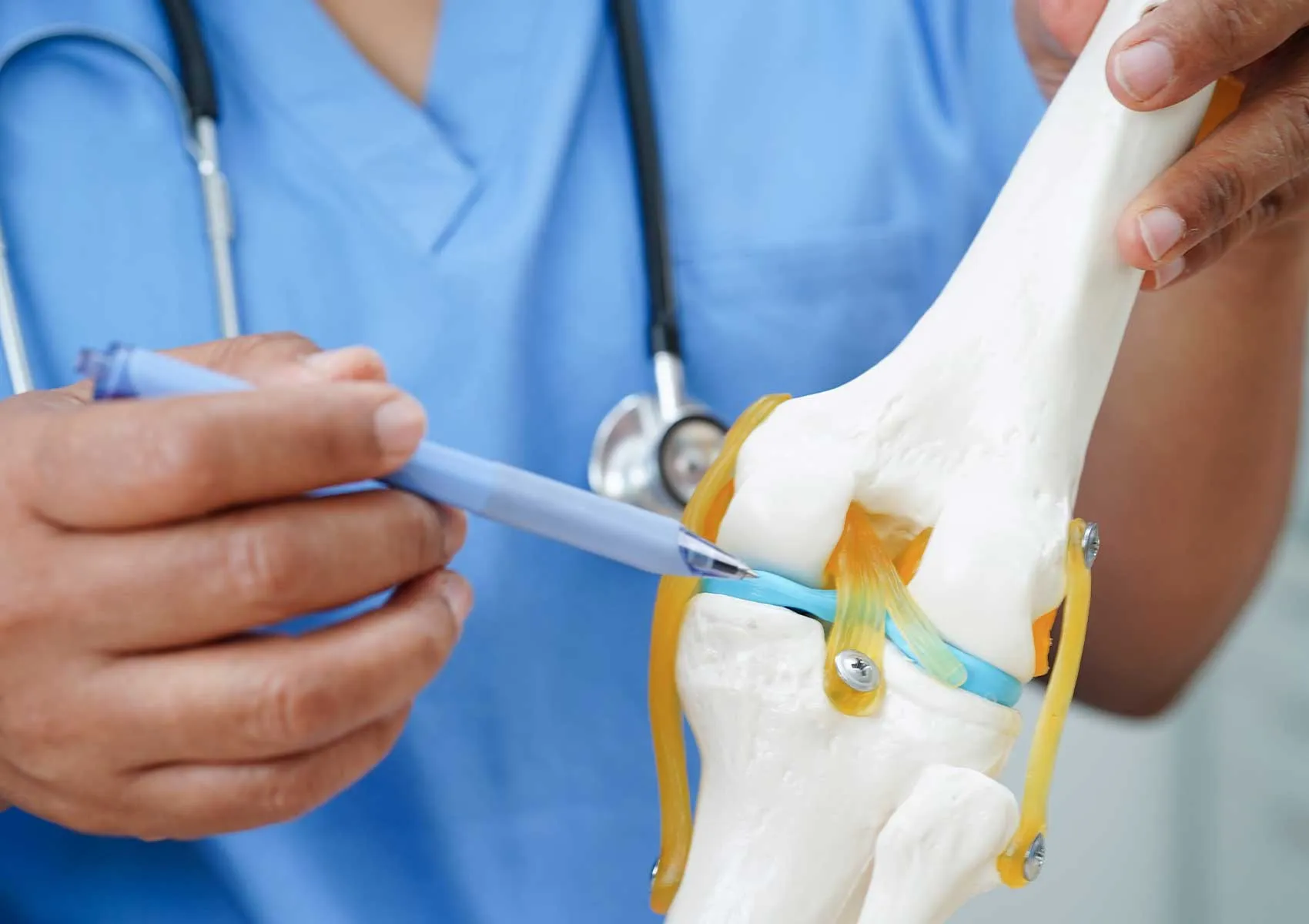
The anatomical location of a meniscus root tear is illustrated in the following diagram.
Meniscus Anatomy
The menisci are two C-shaped fibrocartilaginous structures — the medial (inner) and lateral (outer) meniscus. Their primary roles are to harmonize the movement between the femur (thigh bone) and tibia, and to absorb load forces. The meniscus root is the strongest attachment point to the bone, preventing the meniscus from migrating out of place and maintaining the hoop stress essential for knee stability.
Definition and Classification of Root Tears
Root tears are categorized as either complete full-thickness or partial tears. Moreover, based on their cause, they are classified as traumatic (resulting from sudden injury) or degenerative (due to gradual wear and aging). Accurate classification is vital for treatment planning and directly affects the success of the surgical approach.
Causes and Risk Factors of Meniscus Root Tears
Meniscus root tears typically develop through two main mechanisms. In younger, active individuals, traumatic events like excessive bending or twisting of the knee during sports can cause root tears. In older populations, degenerative changes and decreased tissue quality may lead to tears even during routine activities.
Risk factors include obesity, malalignment (such as leg bowing), and previous knee injuries. Repetitive deep squatting can also increase pressure on the posterior root, raising the risk of tear.
Symptoms and Diagnostic Process
Patients often report sudden, severe pain behind the knee when the tear occurs. A popping sound may be heard during the injury. Activities such as going up or down stairs, squatting, or bearing weight on the knee typically worsen the pain. Locking or catching sensations are less common than with other meniscus tears but joint instability or a feeling of the knee giving way often occurs.
The diagnostic pathway and symptom evaluation are summarized in the following flowchart.
Imaging Techniques
Though physical examination findings may suggest a root tear, definitive diagnosis requires Magnetic Resonance Imaging (MRI). MRI provides detailed visualization of soft tissues, pinpointing the tear’s location, type, and severity. The “ghost meniscus” sign — absence of meniscus signal where expected — is a typical MRI feature indicating a root tear.
The image below compares the meniscus status before and after repair.
Meniscus Root Repair Surgery
Once diagnosed, meniscus root repair surgery is considered especially before cartilage damage progresses significantly. This procedure involves reattaching the torn root to its anatomical position on the tibia. The goal is to restore load transmission capacity and delay or prevent joint osteoarthritis.
The key surgical steps and applied techniques are illustrated in the infographic below.
Arthroscopic Surgical Techniques
Currently, these procedures are performed arthroscopically—minimally invasive surgery using small incisions where a camera and specialized instruments are inserted into the knee. The torn meniscus root is secured back to the bone tunnel or socket with special sutures or anchors. This method aims to optimize tissue healing while minimizing surgical trauma.
Patient Selection Criteria
Not all meniscus root tears are candidates for repair. Patient evaluation considers age, activity level, degree of cartilage damage, and leg alignment. Repair is generally preferred in patients without advanced osteoarthritis who are biologically and functionally fit. In cases with advanced cartilage degeneration, alternative treatment options are explored.
Postoperative Recovery and Rehabilitation
Surgical success depends not only on the operation itself but also on postoperative care. The rehabilitation process following arthroscopic repair requires careful management to protect the healing meniscus root. Initial weeks often involve restricted weight-bearing and limited knee range of motion.
Exercise and Physical Therapy
Physical therapy programs progress gradually to increase joint mobility and restore muscle strength. Early rehabilitation focuses on passive movements, transitioning to active strengthening exercises. Return-to-sports timelines vary per patient but typically span 4–6 months.
Essential rehabilitation exercises are depicted in the image below.
Potential Risks and Complications
As with all surgeries, meniscus root repair carries risks including infection, neurovascular injury, and anesthesia-related complications, though these are rare. There is also a risk of incomplete healing or re-tearing of the repaired tissue. Smoking, obesity, and poor adherence to rehabilitation can negatively affect recovery outcomes.
Regenerative and Supportive Therapies
To support tissue healing after surgery, biological therapies may be utilized. Treatments such as platelet-rich plasma (PRP) and stem cell therapy enhance the biological environment at the repair site, potentially improving healing potential. If cartilage damage is also present, stem cell applications targeting cartilage repair can be incorporated into the treatment plan. These adjunct therapies are considered on a case-by-case basis by the surgeon.
In conclusion, meniscus root repair offers a valuable opportunity to preserve knee function in appropriately selected patients. Early diagnosis and precise surgical techniques aim to restore pain-free activity and long-term joint health.
This content is for informational purposes only. It is not intended as a substitute for professional medical diagnosis or treatment. Always consult a qualified healthcare provider for any medical concerns. The information provided on this site does not replace a physician’s examination or consultation and should not be considered medical advice or a prescription. Do not delay seeking medical care based on the content provided.
FAQ
-
What is a meniscus root tear and why is it important?
A meniscus root tear is a tear where the meniscus attaches to the knee joint, which can significantly affect the knee’s shock-absorbing function. If untreated, it can lead to cartilage damage and early joint degeneration.
-
Who is a meniscus root repair suitable for?
This surgical procedure is generally recommended for young and active individuals in the early stages of a meniscus root tear to preserve knee stability and function. It is important to consult a specialist to determine suitability.
-
How is meniscus root repair surgery performed?
The surgery is typically done arthroscopically, using small incisions and a camera. The torn meniscus root is reattached to the bone using special suturing techniques or fixation devices.
-
What is the recovery process and rehabilitation like after surgery?
Recovery usually takes several months and requires a dedicated rehabilitation program. Physical therapy exercises help strengthen the knee and restore full function.
-
What are the risks or complications after meniscus root repair?
As with any surgery, risks include infection, bleeding, nerve injury, or repair failure. These risks are generally low and managed by an experienced team. It is advisable to discuss all risks with your surgeon before deciding on the procedure.