
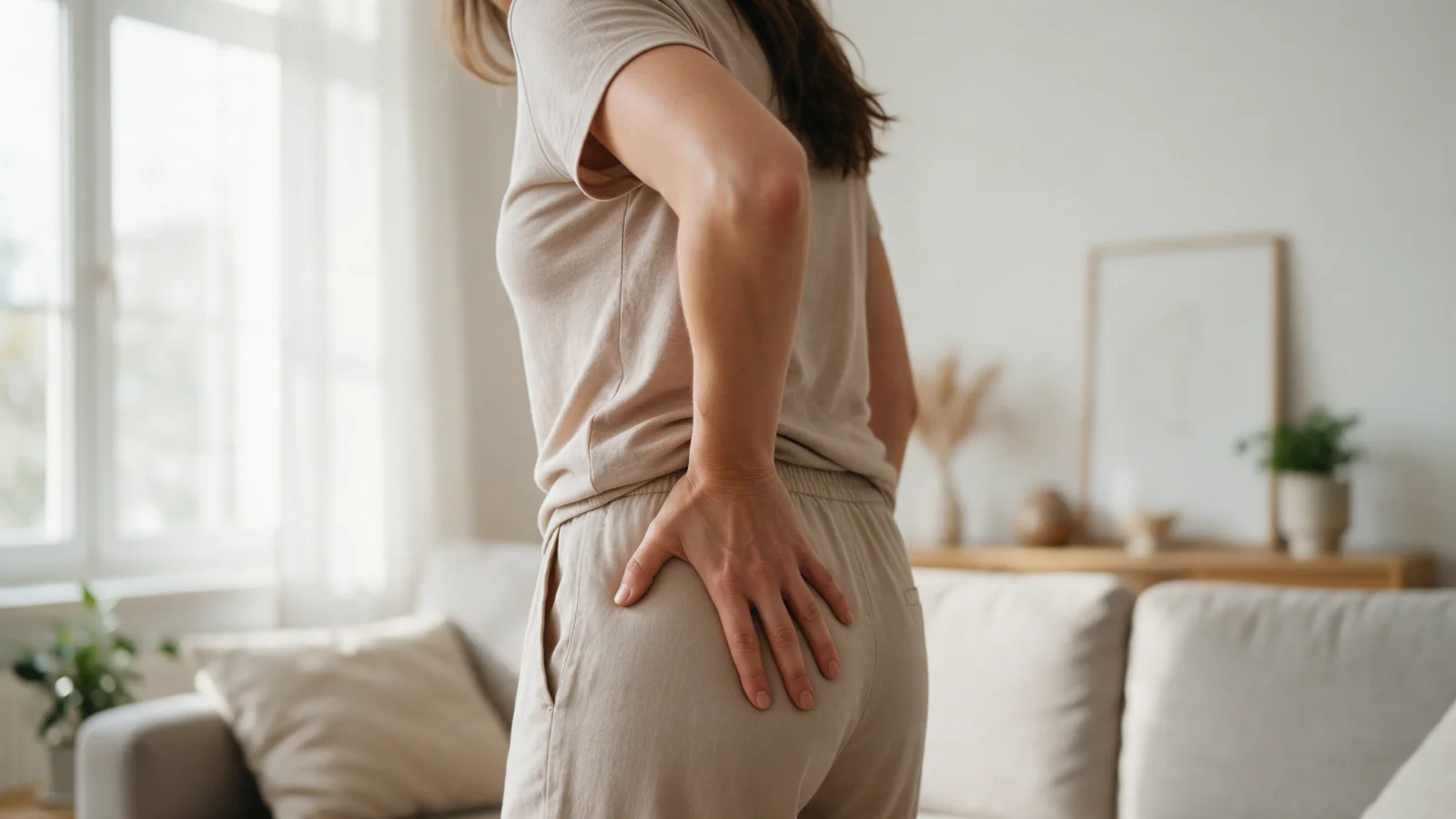
Hip Bone Pain: Possible Causes on the Right or Left Side
Hip bone pain can be felt in the groin, on the side or at the back of the hip. Learn the likely causes by location, whether the right or left side matters, how it is diagnosed and when to see a doctor.
Hip bone pain usually comes from one of four places: the hip joint itself, the tendons and bursae on the outer side of the hip, the muscles that attach to the pelvis, or the lower back, which can refer pain into the hip. Whether the pain is on the right or the left rarely tells you the cause on its own. The more useful clues are exactly where you feel it (groin, side or back of the hip), how it started and which movements make it worse. Pain that has not eased within a few weeks, or that comes with warning signs such as fever or being unable to bear weight, should be checked by an orthopedic surgeon.
This guide explains what people usually mean by "hip bone", the likely causes depending on where the pain sits, whether right-sided and left-sided pain differ, how the diagnosis is made, what you can safely do at home and when you should not wait to be seen.
Where exactly is the "hip bone"?
When people say their hip bone hurts, they are usually pointing at one of three areas. Knowing which one is the first step toward working out the cause:
- The bony ridge just below the waist (the iliac crest): This is where a belt sits. Pain here most often comes from muscle attachments, the sacroiliac joint or the lower back.
- The hard bump on the side of the hip (the greater trochanter): This is the point you lie on when you sleep on your side. Pain here is usually linked to tendon and bursa problems.
- The groin and the front of the hip: The hip joint sits deep, close to the groin. Deep, aching pain that spreads into the groin often comes from the joint itself.
Because the joint lies so deep, true hip joint pain is often felt in the groin rather than on the side. Many patients describe it by cupping the side of the hip between thumb and index finger in a "C" shape.
Possible causes depending on where it hurts
Pain in the groin and front of the hip
Groin pain that is worse when getting in and out of a car, standing up from a chair or bending and turning the leg inward may point to a problem inside the joint. Common causes include:
- Hip osteoarthritis: Typically from middle age onward, with morning stiffness, difficulty putting on socks and groin pain that builds with walking. Our article on hip osteoarthritis and its treatment options covers this in detail.
- Femoroacetabular impingement and labral tears: More common in younger, active people, often with catching or locking and pain after long periods of sitting, deep squats or sport.
- Avascular necrosis: Loss of blood supply to the femoral head, sometimes associated with long-term steroid use or heavy alcohol intake. Early on it may cause only mild groin pain.
- Stress fracture: Seen in runners who increase their mileage quickly and in people with osteoporosis; pain rises with weight bearing.
Pain on the outer side of the hip
Pain that is worse when lying on that side, climbing stairs or standing for a long time, with tenderness over the bony bump, usually comes from structures outside the joint. This picture is often called greater trochanteric pain syndrome and covers irritation of the gluteal tendons and the bursae in the area. Tears of the gluteus medius tendon can cause similar pain and a limp.
Pain at the back of the hip and lower back
Pain spreading from the lower back into the buttock does not always come from the hip. A herniated disc, lumbar arthritis, sacroiliac joint problems and tight deep buttock muscles such as the piriformis can all cause pain here. Pain that travels down the back of the leg with numbness or tingling is more suggestive of a nerve problem. We explain how to tell the two apart in hip pain versus a lumbar disc herniation.
Is right hip bone pain different from left?
For muscle, tendon, joint and bone causes, there is no meaningful difference between the two sides. Arthritis, impingement, labral tears and bursitis can all occur on either side. Which side hurts is usually shaped by habits: always sleeping on the same side, carrying a child on one hip, standing with your weight on one leg or favouring a dominant leg in sport.
Side matters more when the pain may be coming from an internal organ. Kidney stones, urinary infections, gynecological problems in women, appendicitis on the right and bowel conditions on the left can all refer pain to the hip and groin. These pains generally do not change with movement and tend to come with other symptoms such as fever, nausea, burning on urination, changes in periods or abdominal pain. If your pain is unrelated to movement and comes with any of these, it is more appropriate to see the relevant specialist or go to the emergency department first.
How is hip bone pain diagnosed?
A detailed history and physical examination are the most valuable first steps. Your doctor will ask where the pain is, how it began, whether it wakes you at night and what makes it worse. The examination looks at range of motion, whether specific positions reproduce the pain, tenderness on the outer hip, muscle strength, the way you walk and your lower back.
Depending on the findings, tests may include:
- X-ray: Shows arthritis, bone shape variations that can lead to impingement, a shallow socket and fractures.
- MRI: Assesses cartilage, the labrum, tendons, bone marrow oedema, stress fractures and avascular necrosis. If a labral tear is suspected, MR arthrography with contrast may be preferred.
- Ultrasound: Helpful for the tendons and bursae on the outer hip.
- Blood tests: Requested if inflammatory arthritis or infection is suspected.
In some cases a diagnostic local anaesthetic injection into the joint helps show whether the pain comes from inside the joint or from surrounding tissues. A firm diagnosis is reached by putting the examination and test results together.
What can you do at home?
For new, mild hip bone pain without warning signs, a few simple measures may help. They do not treat the underlying cause, but they can reduce the load while you wait to be assessed:
- Cut back for a few days on movements that clearly make the pain worse, such as deep squats, sitting cross-legged or lying on the painful side, but avoid complete rest.
- If you sleep on your side, lie on the other side with a pillow between your knees.
- Break up long periods of sitting with a short walk every 30–45 minutes and avoid very low seats.
- When standing, try to share your weight evenly between both legs.
- After a knock or sudden strain, 15–20 minutes of cold may help in the first days; warmth can ease longer-standing muscle tightness.
- Over-the-counter pain relief can be used briefly; check with your doctor first if you have stomach, kidney, blood pressure or heart problems.
Masking pain with tablets for weeks can hide a problem that is progressing. Pain that has not clearly improved within two to three weeks is a sign that it is time to be examined.
How is treatment planned?
Treatment depends entirely on the cause, so there is no single approach that suits every hip. Many muscle and tendon problems respond to activity changes, physiotherapy and a strengthening programme for the hip muscles. Osteoarthritis is usually managed with weight control, regular exercise and, when needed, medication or joint injections.
For problems inside the joint, such as impingement, labral tears or early cartilage damage, non-surgical care is tried first. If symptoms persist in a suitable patient, joint-preserving options such as hip arthroscopy may be considered, while advanced arthritis may lead to a discussion about hip replacement. At Prof. Dr. Gökhan Polat's clinic, the plan is built around the source of the pain, age, activity level and personal goals, and response to treatment varies from person to person. You can read more on our hip joint diseases page.
When should you see an orthopedic surgeon?
- Pain that has not eased, or is getting worse, after two to three weeks of sensible home care
- Pain that wakes you at night or does not settle with rest
- Catching, locking or a feeling that something is moving in the groin
- A limp, difficulty turning the leg in or out, or trouble putting on socks
- Groin pain that rises with weight bearing after running or heavy training
- New groin pain in someone with a history of long-term steroid use
Seek urgent care if: you cannot bear any weight after a fall, or the leg looks shortened or turned outward, as this may indicate a fracture. Hip pain with fever, chills and an inability to move the joint needs same-day assessment for infection. Leg weakness, loss of bladder or bowel control, or numbness in the groin and genital area may signal nerve compression and also need emergency evaluation.
In summary
- "Hip bone pain" can be felt in the groin, on the side or at the back of the hip, and its location is an important clue to the cause.
- Muscle, tendon and joint causes are similar on both sides; the side matters mainly when internal organs might be involved.
- Diagnosis starts with history and examination, with X-ray, MRI or ultrasound added when needed.
- Pain that lasts for weeks, wakes you at night, catches or stops you bearing weight deserves an examination.
This article is for general information only; diagnosis and treatment decisions are made individually after examination and the necessary tests.
FAQ
-
What causes pain in the right hip bone?
Right hip bone pain most often comes from hip arthritis, impingement, a labral tear, tendon and bursa problems on the outer hip, or pain referred from the lower back. If the pain does not change with movement and comes with fever, nausea or urinary symptoms, appendicitis, kidney stones or gynecological causes should also be considered. An examination is needed to clarify the cause.
-
Why does my left hip bone hurt?
The muscle, tendon and joint causes on the left are the same as on the right: arthritis, impingement, labral tears, bursitis and pain referred from the lower back are the most common. Habits such as always sleeping on the left or standing with your weight on the left leg can make it worse. Left-sided pain that is unrelated to movement and comes with abdominal or urinary symptoms may have a kidney or bowel cause and should be assessed.
-
Which doctor should I see for hip pain?
For hip pain that is linked to movement, such as walking, standing up or lying on your side, an orthopedic surgeon is usually the right first contact. If the pain spreads from the back down the leg with numbness, a spine specialist or physical medicine doctor may also be involved. If fever, urinary symptoms or abdominal pain are present, see the relevant specialist or the emergency department first.
-
When is hip bone pain serious?
Being unable to bear weight after a fall, fever and chills with an inability to move the joint, leg weakness or loss of bladder or bowel control all need urgent assessment. Pain that wakes you at night, has lasted several weeks or comes with catching and locking should also be examined without delay.
-
How can I ease hip bone pain at home?
Resting from movements that make it worse for a few days, sleeping on the other side with a pillow between your knees, breaking up long periods of sitting and using cold or warmth as appropriate can all help. These steps do not treat the cause, and pain that has not eased within two to three weeks should be examined.