
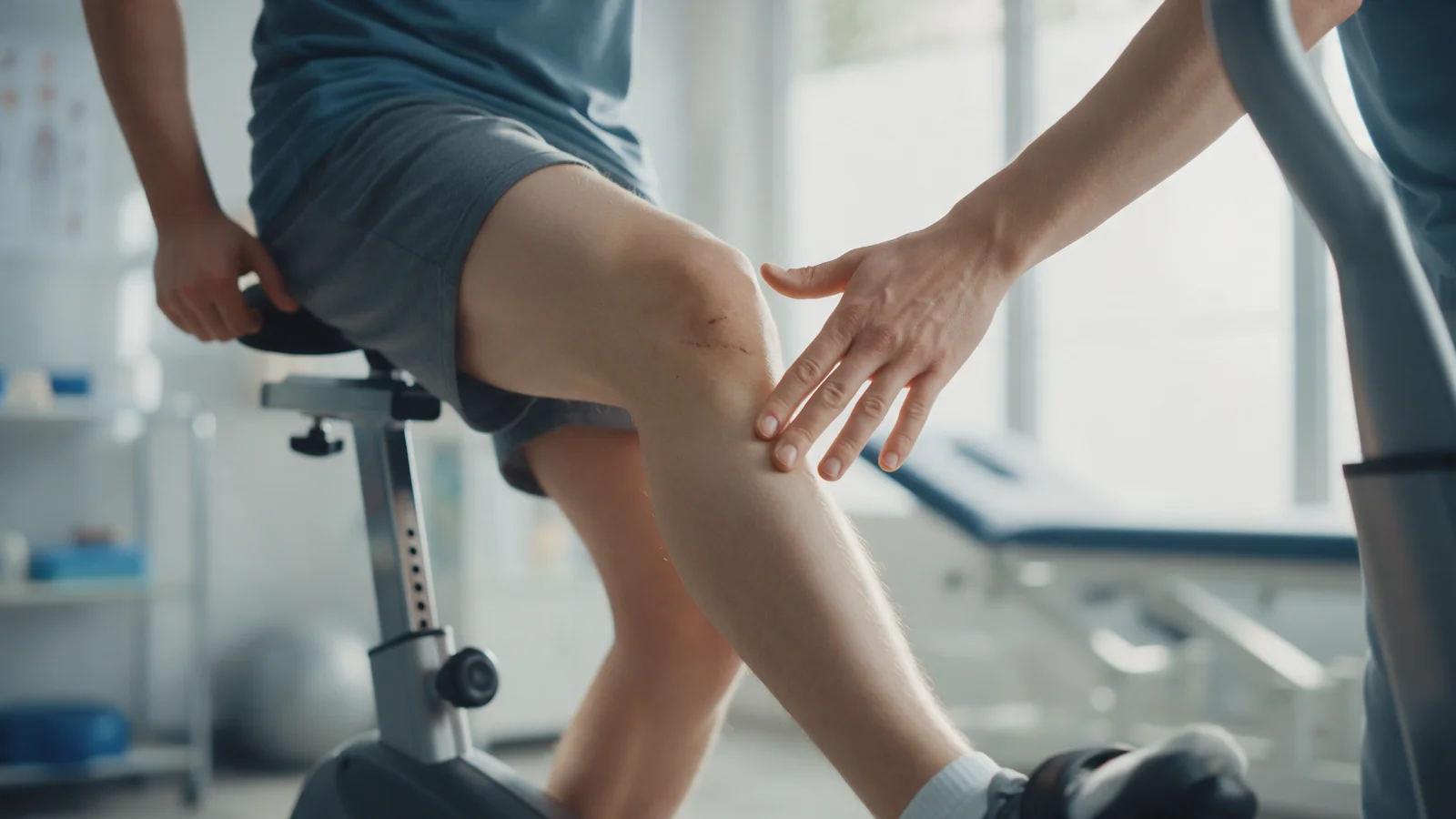
Recovery After ACL Surgery: A Week-by-Week Timeline
What to expect after ACL surgery, from the first days to day 20, week 6 and month 3: key rehab goals, what to avoid at each stage and the warning signs that mean you should call your surgeon.
Recovery after ACL surgery happens in stages over months: in the first two weeks the focus is on controlling swelling and getting the knee fully straight; around day 20 many people are close to putting their crutches aside; by week 6 everyday walking is largely back to normal; and at around 3 months strength work intensifies and, for suitable patients, a gradual return to light jogging may be discussed. A return to pivoting and jumping sports is generally not advised before 9 months. These are average timeframes; the graft type, any meniscus repair done at the same time and how consistently you follow your rehab can shift the schedule considerably.
This guide walks through what you can expect from your knee at each stage, from the first days to month 6, which goals matter most, what to avoid, and which symptoms mean you should contact your surgical team sooner.
Why the recovery timeline varies from person to person
In ACL reconstruction, the torn ligament is usually replaced with a graft taken from your own tissue, such as a hamstring, patellar or quadriceps tendon. The graft first heals into bone tunnels and then goes through a remodeling process that lasts many months. This biology cannot be rushed, so a knee that feels good is not the same as a fully matured graft. Our article on ACL surgery techniques and graft options explains these choices in more detail.
The main factors that shape your timeline are:
- Associated injuries: if a meniscus was repaired or cartilage treated during the same operation, weight-bearing and bending limits may last longer.
- Your knee before surgery: people who go into surgery with little swelling, good motion and strong muscles tend to have an easier start.
- Graft type: depending on where the tendon was taken from, early discomfort may be felt at the front of the knee or in the back of the thigh.
- Consistency with rehab: doing your home exercises regularly is one of the strongest predictors of progress.
- Age, work and sporting goals: an office worker, a manual laborer and a competitive athlete have different targets and timeframes.
The first 2 weeks: swelling control and a straight knee
Pain, swelling and warmth are expected in the first days. The two key goals are to bring the swelling down and to regain full extension, meaning the knee can straighten completely. A knee that stays slightly bent can lead to limping and front-of-knee pain later, so physiotherapists pay close attention to this.
- Keep the leg raised above heart level and use cold therapy as your surgeon advises.
- Resist the temptation to rest with a pillow under the knee; place it under the heel instead so the knee can straighten.
- Quadriceps sets, ankle pumps and straight-leg raises usually start within the first days.
- How much weight you may put through the leg on crutches depends on whether a meniscus repair was performed, and your surgeon will tell you.
Stitches or skin strips are usually checked or removed between days 10 and 14. Keeping the wound dry and following your surgeon's advice on showering lowers the risk of infection.
Day 20 after ACL surgery: what is typical?
Around day 20 many patients notice the first clear changes. In an uncomplicated recovery you may find that:
- Swelling has eased but still builds up at the end of the day or after long periods on your feet, which is usually normal at this stage.
- The knee straightens fully or nearly fully, and bending often reaches about 90 degrees or a little more.
- Many patients without a meniscus repair have moved to one crutch or are getting ready to stop using them.
- Desk workers can often start planning a return to work if pain and travel allow.
The most common mistake at this point is speeding up exercises or taking long walks because the knee feels good. Overloading can bring the swelling back and set you back. How your knee responds the next day, in terms of swelling and pain, is a practical guide to whether the load was right.
Weeks 3–6: getting back to a normal walk
The aim now is to walk without a limp and to increase bending gradually. Once you can bend far enough, a stationary bike is added, supporting both range of motion and muscle endurance. By week 6, in an uncomplicated course, most patients can:
- Walk without crutches with little or no limp
- Straighten the knee fully, with clearly improved bending
- Progress to closed-chain exercises such as mini squats, step-ups and balance work
- Discuss a return to driving with their surgeon and physiotherapist, particularly after right knee surgery
Being able to drive is not only about less pain; you need to be able to brake hard and suddenly. After left knee surgery in an automatic car this may come earlier, but the decision is always individual.
Week 6 to month 3: the graft's vulnerable phase
This is when patients often feel much better, yet the graft is still biologically vulnerable as it remodels. A knee that feels fine is not ready for cutting, jumping or ball sports. The program usually focuses on controlled strengthening of the quadriceps, hamstrings and hip muscles, single-leg balance and proprioception work, and low-impact conditioning such as cycling and pool walking, while avoiding running, jumping, sudden stops and pivoting.
Month 3 after ACL surgery: can you start running?
For many people, month 3 feels like a turning point: stairs, long walks and a full return to work are usually manageable. Starting to jog, however, is decided by measurable criteria rather than the calendar. These commonly include:
- No significant swelling in the knee
- Full or nearly full range of motion
- Strength in the operated leg that has come reasonably close to the other side
- Controlled single-leg squats and balance tests without the knee collapsing inwards
If these are met, a short, gradual running program on flat ground may begin between months 3 and 4. If not, waiting is the safer choice to reduce the risk of reinjury later.
Months 4–9 and beyond: preparing to return to sport
From month 4 the program gradually adds agility, change of direction, jump-landing technique and sport-specific drills. Returning to football, basketball, volleyball, skiing or tennis is generally not advised before 9 months and is planned according to strength, hop and functional test results, since returning too early is known to raise the risk of reinjury. You can read more in our guide to a safe return to sport after ACL surgery.
When should you contact an orthopedic surgeon?
Mild pain, swelling at the end of the day and tiredness after exercise are common during recovery. Contact your surgical team without waiting for your scheduled visit if you notice:
- A fever above 38°C, or increasing redness, warmth or discharge from the wound
- One-sided calf swelling, tightness and pain, or shortness of breath, which need urgent assessment because of the risk of a blood clot
- Swelling and pain that keep getting worse over several days instead of settling
- A knee that still will not straighten fully, or bending that stops improving, after several weeks
- A new twist followed by a giving-way sensation, locking or sudden swelling
In Prof. Dr. Gökhan Polat's practice, follow-up after surgery combines wound checks, range of motion, muscle strength and functional testing, and each rehab step is planned individually based on those findings. For more on diagnosis and treatment options, see our page on anterior cruciate ligament injury.
In summary
- In the first two weeks, the priorities are reducing swelling and getting the knee fully straight.
- Around day 20 many people are close to walking without crutches; by week 6 walking is largely back to normal.
- At month 3 strength training intensifies, and a return to jogging depends on criteria, not the calendar.
- Pivoting sports are generally not advised before 9 months, and every recovery is different.
This article is for general information only; diagnosis and treatment decisions are made individually after examination and the necessary tests.
FAQ
-
How soon can I walk after ACL surgery?
Most patients start walking with crutches the day after surgery. How long you need crutches depends on whether a meniscus was repaired and on how well you control the knee; in an uncomplicated recovery many people stop using them within the first 2–4 weeks. Walking without a limp usually becomes possible around week 6.
-
When will my knee bend fully after ACL surgery?
Bending usually reaches about 90 degrees in the first weeks and clearly more by around week 6. Full bending is often regained within 2–3 months, although after a meniscus repair the angle may be deliberately limited early on. If progress stalls, your physiotherapist and surgeon should take a look.
-
When can I go back to work after ACL surgery?
People with desk jobs can often return within 2–4 weeks if pain and travel allow. Jobs that involve long hours on your feet or heavy physical work may require several months. The timing should be planned with your surgeon based on the demands of your job.
-
Can I run 3 months after ACL surgery?
Some patients can start short, gradual runs on flat ground between months 3 and 4. This requires meeting criteria such as no swelling, full or nearly full motion and adequate leg strength. The decision is based on examination and functional testing, not the calendar alone.
-
When can I return to sport after ACL surgery?
A return to pivoting and jumping sports such as football, basketball or skiing is generally not advised before 9 months. The decision depends on strength, hop and balance test results, and the timeline varies from person to person. Returning too early can increase the risk of reinjury.