
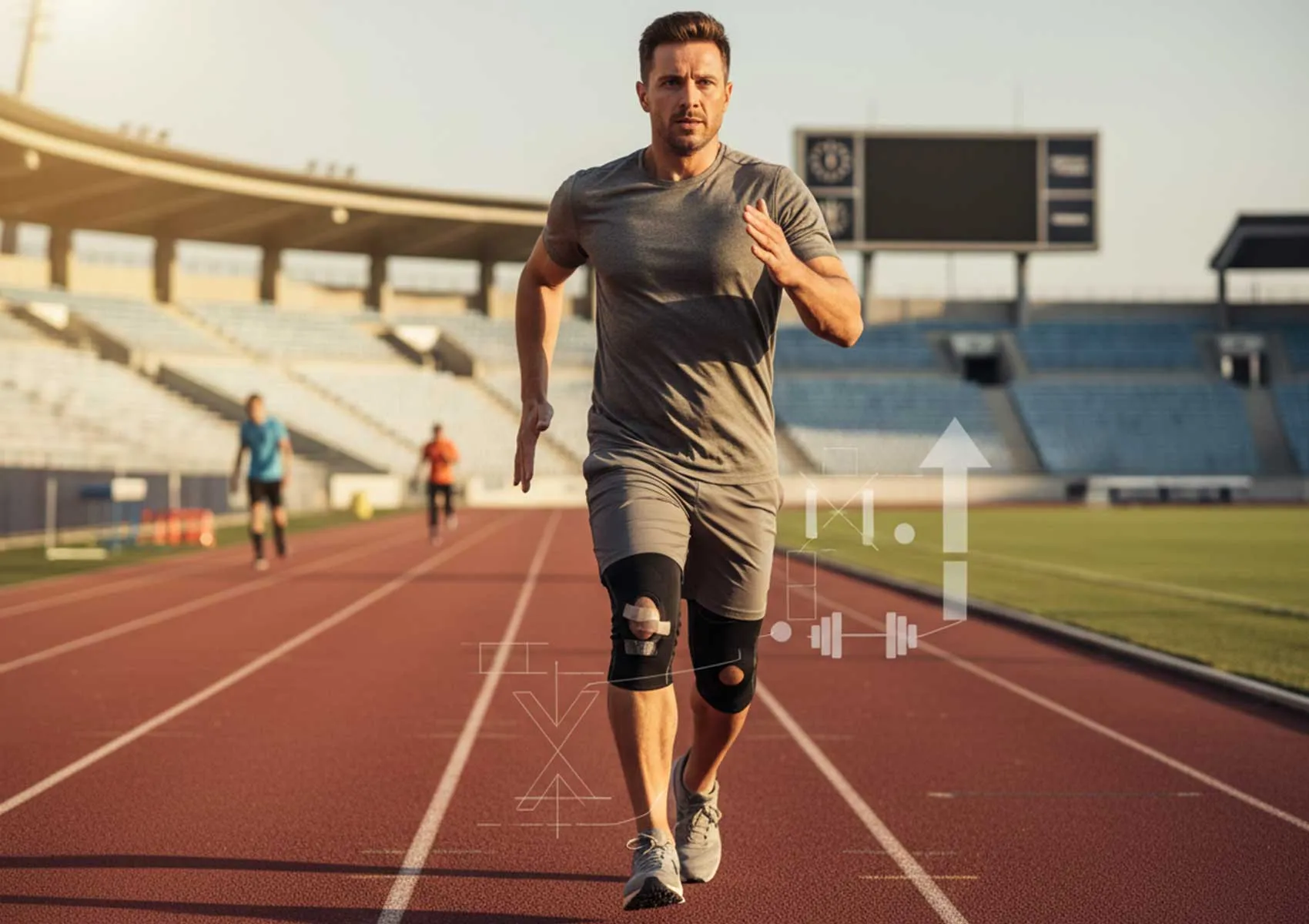
ACL Surgery: What to Know and Returning to Sports
Anterior cruciate ligament reconstruction is a key surgical procedure to restore knee stability, especially in active athletes.
Anterior cruciate ligament (ACL) injuries represent serious orthopedic challenges that can significantly affect the careers and daily lives of individuals involved in high-intensity sports. The ACL plays a critical role in maintaining knee stability, and its rupture may necessitate anterior cruciate ligament surgery. Treatment involves not only surgical intervention but also comprehensive rehabilitation and a carefully planned return-to-sport strategy. This article thoroughly reviews all essential stages, from deciding on surgery to the recovery process.
What Is the Anterior Cruciate Ligament?
The anterior cruciate ligament is a vital stabilizing structure within the complex anatomy of the knee. To understand injury mechanisms, it is essential to be familiar with its anatomical and functional characteristics.
The Role of the ACL in Knee Anatomy
The knee joint connects the thigh bone (femur) to the shinbone (tibia) and is supported by four main ligaments. Positioned centrally within the knee, the ACL prevents the tibia from sliding too far forward relative to the femur. It also provides rotational stability during twisting movements.
When Is the ACL Injured?
ACL injuries commonly occur through non-contact mechanisms. Sudden stops, rapid changes in direction, uneven landings after jumps, or direct blows to the knee can overstretch or rupture the ligament. Such injuries are frequent in sports like football (soccer), basketball, and skiing. Excessive loads beyond the ligament’s capacity may cause partial or complete tears of the fibers.
ACL Rupture: Symptoms and Diagnosis
The clinical presentation at the time of injury and afterward forms the first step in diagnosis. Accurate diagnosis is critical for developing an appropriate treatment plan.
What Are the Symptoms?
Patients with an ACL rupture often report hearing or feeling a “pop” at the moment of injury. This is followed by intense pain and rapid swelling (hemarthrosis) within hours. Attempts to walk may result in feelings of instability and a sense of the knee “giving way.” Limitation in range of motion and difficulty fully extending the knee are also common symptoms.
How Is the Diagnosis Made?
Diagnosis begins with a detailed physical examination by an orthopedic specialist. Specific maneuvers such as the Lachman test and anterior drawer test assess ligament integrity. Definitive diagnosis and evaluation of accompanying injuries (e.g., meniscal tears or cartilage damage) are made using Magnetic Resonance Imaging (MRI). MRI provides detailed visualization of soft tissues and assists in surgical planning.
When Is Anterior Cruciate Ligament Surgery Necessary?
Not every ACL injury requires surgery. Treatment approaches depend on the patient’s age, activity level, and expectations.
Surgical and Non-Surgical Options
Treatment options are divided into conservative (non-surgical) management and surgical reconstruction. For older adults, less active individuals, or those without significant feelings of knee instability, physical therapy and strengthening exercises may suffice. Nonetheless, for active athletes and patients experiencing knee instability, ACL injury and treatment usually involve surgical intervention.
When Is Surgery Recommended?
Surgical treatment is generally advised in the following situations:
- Active individuals involved in professional or competitive sports.
- Patients experiencing instability during pivoting or jumping activities.
- Cases with combined injuries such as meniscal tears or multiple ligament injuries.
- Patients who continue to have instability complaints despite conservative treatment.
Surgical Methods and Graft Options
Since the ACL’s capacity for self-healing is limited, reconstruction is typically performed by replacing the torn ligament with a new tissue graft.
What Are Autografts and Allografts?
The replacement tissue used in surgery is called a “graft.” Grafts can be taken from the patient’s own body (autografts) or from a donor (allografts). The most common autograft sources are the hamstring tendons and the patellar tendon.
Advantages of Arthroscopic Surgery
Today, ACL surgeries are commonly performed using minimally invasive arthroscopic surgical techniques. This method uses small incisions through which a camera and instruments are inserted into the knee joint. Arthroscopy causes less tissue damage, reduces pain, and allows for faster recovery compared to open surgery. It also enables concurrent procedures such as arthroscopic cartilage repair during the same session.
Postoperative Rehabilitation Process
Successful surgery marks only the beginning of the healing journey. A disciplined rehabilitation program is essential for graft integration and regaining muscle strength.
First 6 Weeks: Early Phase
In the initial postoperative weeks, focus is on controlling swelling and restoring joint mobility. Patients may need crutches and movement restrictions within specific ranges. Isometric quadriceps exercises that activate muscles without joint movement are initiated immediately.
6–12 Months: Functional Recovery
As recovery progresses, the intensity and complexity of exercises increase. From the sixth month onwards, running and sport-specific drills can be gradually included. The post-ACL surgery rehabilitation process varies individually but typically spans 9–12 months.
Safe Return to Sports: Criteria and Timing
Deciding when to return to sports should be based on objective milestones rather than only elapsed time. Early return raises the risk of re-injury considerably.
Functional Tests and Muscle Strength
Returning to sports requires an absence of knee pain and swelling, full range of motion, and muscle strength reaching at least 90% compared to the uninjured leg. Functional assessments include jump and balance tests.
Meeting all criteria for returning to sports after ACL surgery is critical for the athlete’s future performance.
Psychological Preparedness and Motivation
Besides physical healing, psychological readiness is essential ("kinesiophobia" — the fear of movement). Fear of re-injury can negatively impact performance. Mental preparation should not be overlooked during rehabilitation.
Common Exercise Mistakes and Prevention
Incorrect loading during rehabilitation or after returning to sports may delay recovery or cause new injuries. Proper management of hip and knee mechanics is crucial. For example, the relationship between femoroacetabular impingement and sports injuries shows how hip problems affect knee loading. Being aware of common exercise mistakes in athletes and injury risks is vital for injury prevention. Improper squat or lunge techniques can place excessive stress on the healing ligament.
This content is for informational purposes only. Diagnosis and treatment should be determined by a healthcare professional following a medical examination. The information provided does not substitute professional medical advice. Please consult a qualified physician for any health concerns and do not delay seeking necessary care.
FAQ
-
What is the anterior cruciate ligament and what is its function?
The anterior cruciate ligament (ACL) is one of the main stabilizing ligaments in the knee joint. It connects the thigh bone to the shin bone, preventing excessive rotation or forward sliding of the knee, ensuring balanced movement.
-
How can an anterior cruciate ligament rupture be identified?
It is often indicated by a sudden 'pop' sound in the knee, severe pain, swelling, and a feeling of looseness. Diagnosis involves physical examination and MRI imaging. For an accurate diagnosis, consulting a specialist is essential.
-
How long does the recovery process take after surgery?
Recovery time after ACL surgery varies between individuals but generally lasts between 6 to 12 months. Strict adherence to the rehabilitation program is crucial for full functional recovery.
-
What criteria are important for returning to sports?
Key criteria for returning to sports include absence of pain and swelling, full range of motion, sufficient muscle strength and balance, and passing functional tests. This process should always be managed under the guidance of a doctor and physiotherapist.
-
Is ACL surgery always necessary?
An ACL tear does not always require surgery. Treatment options depend on the person's age, activity level, other ligament injuries, and the feeling of instability in the knee. It is important to discuss the most appropriate treatment plan with your doctor.