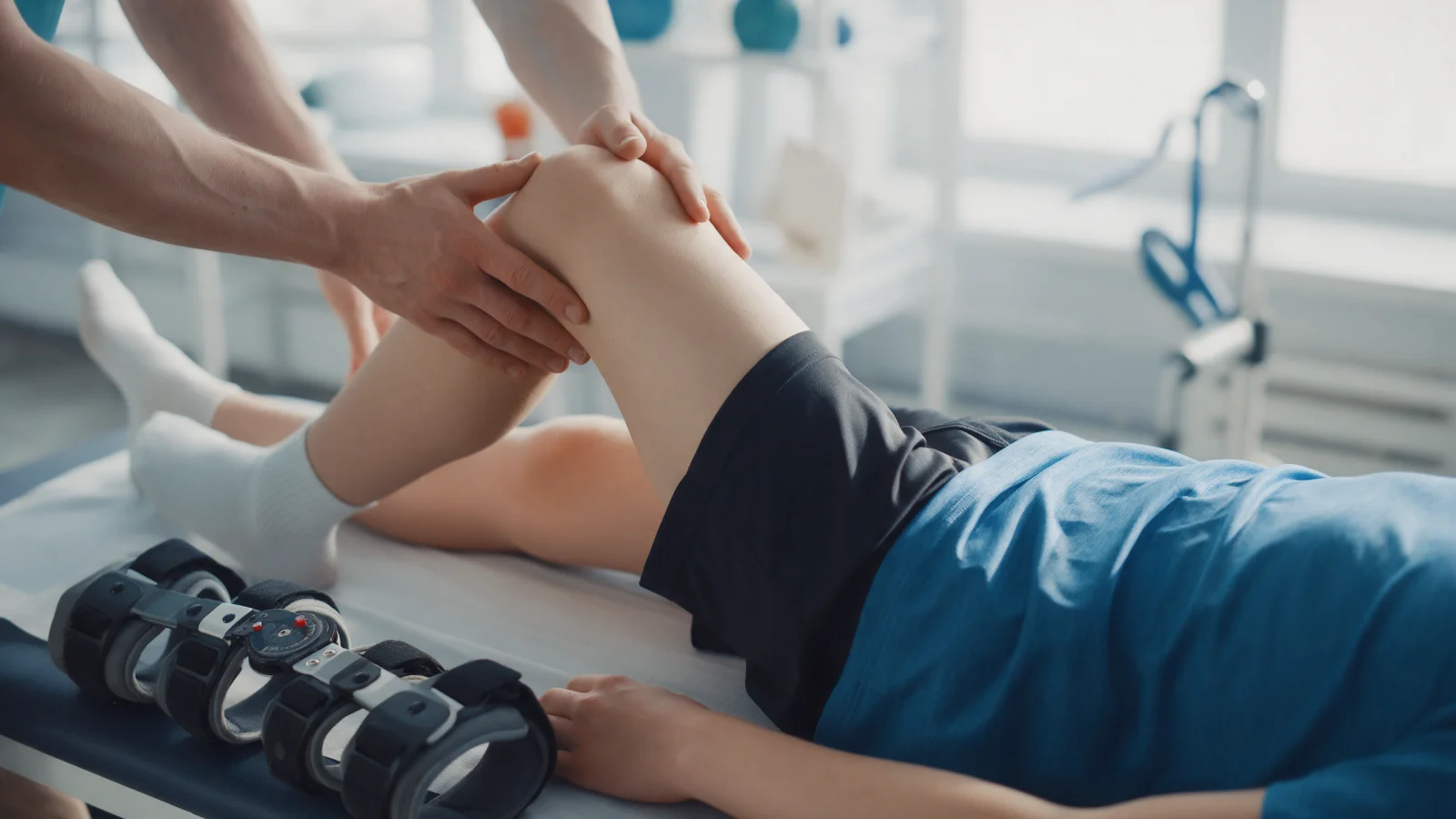
When the ACL and a meniscus are torn together, the ligament is usually reconstructed and the meniscus repaired with stitches where possible, or the torn part trimmed if needed, in a single arthroscopic operation. Recovery differs from an ACL-only reconstruction mainly in the first weeks: after a meniscus repair, weight-bearing and knee bending are progressed more cautiously. Return to sport is planned at the end of a test-based rehabilitation lasting months, and timing varies between individuals.
This article explains why these injuries often occur together, their symptoms and diagnosis, how meniscus repair versus trimming affects treatment, surgical timing, the stages of recovery and warning signs to watch for.
Why do the ACL and meniscus tear together?
The ACL is the main ligament preventing the shin bone from sliding forward and over-rotating under the thigh bone. The menisci are C-shaped cartilage cushions that spread load and stabilise the joint. In football, basketball, skiing or handball, when the foot is planted and the knee twists suddenly, the same force can injure both structures, so a meniscus tear frequently accompanies an ACL injury.
Meniscus tears do not only happen at the moment of injury. In a knee without a functioning ACL that keeps giving way, each episode can damage the meniscus and cartilage further. That is one reason why the timing of ACL treatment is discussed carefully.
Symptoms and diagnosis
- A pop or tearing sensation at the moment of injury
- Marked swelling within hours
- Instability, a feeling of the knee giving way on twisting
- Localised pain along the inner or outer joint line
- Catching, locking or being unable to fully straighten the knee
- Pain when squatting or pivoting
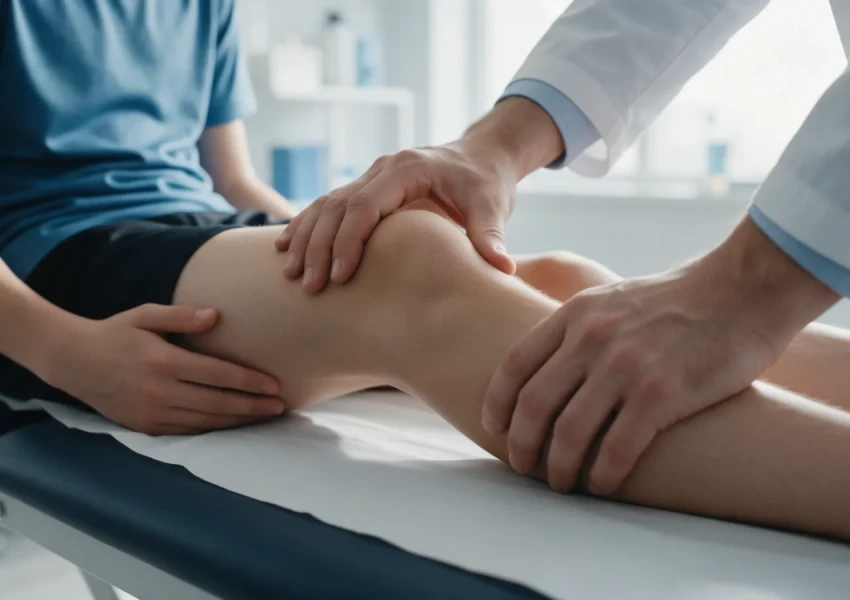
Examination tests assess ACL integrity and the menisci, but early swelling and pain can make this difficult. MRI plays a key role, showing the ligament, the site, type and size of the meniscus tear and any cartilage or bone bruising. Some meniscus tear types are only fully seen during arthroscopy. For background, see our article on ACL injury symptoms and treatment.
Repair or trim the meniscus?
The meniscus matters for long-term knee health: removing tissue increases load on the cartilage and can raise the risk of osteoarthritis later. Preserving it is the goal whenever the tear allows.
- Meniscus repair: preferred for suitable tears in the well-vascularised zone with healthy tissue. The healing environment created during ACL reconstruction is thought to support a repair done at the same time. Rehabilitation is slower and more protected.
- Partial meniscectomy: for tears that cannot be repaired, the torn part is removed and healthy tissue preserved; early rehab then usually follows an ACL-only pathway.
- Root tears and special patterns: may need specific repair techniques and a more protected rehabilitation.
The final choice is often made during surgery when the tear is seen directly, so both possibilities are discussed beforehand. See our article comparing meniscus repair and trimming.
When is surgery done?
- In many patients, surgery waits until swelling settles, the knee straightens fully and the quadriceps are working again; physiotherapy in this period can ease recovery afterwards.
- When a displaced bucket-handle tear locks the knee, surgery may be planned earlier to improve the chance of saving the meniscus.
- If the knee keeps giving way, delaying treatment is not advised, to avoid further meniscus and cartilage damage.
The ligament is reconstructed arthroscopically with a graft, usually from the patient's own tendons. Read more about ACL surgery techniques and grafts.
Recovery after ACL and meniscus surgery
The stages below are a general guide; timings vary with the meniscus treatment, the surgeon's protocol and individual healing.
Weeks 0–2: protection and swelling control
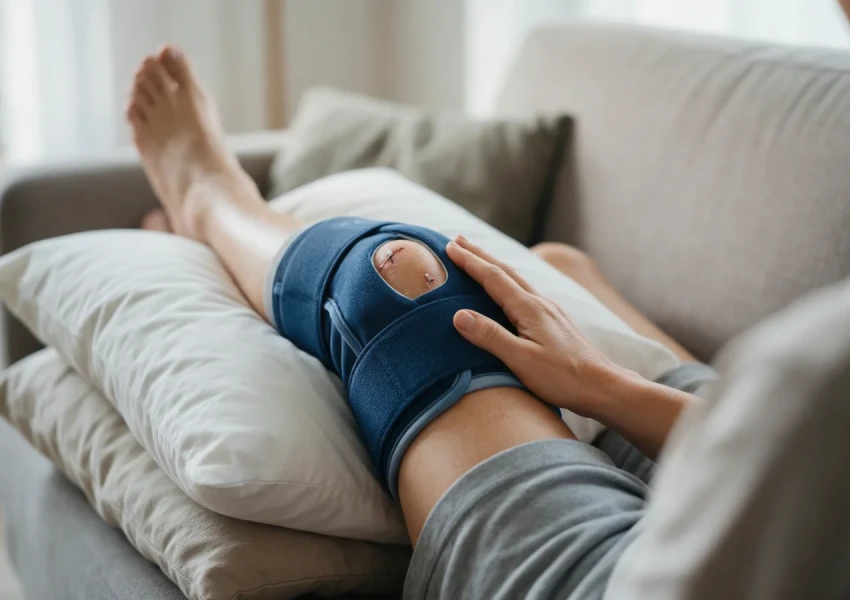
- Ice, elevation and prescribed medication to reduce swelling
- Exercises to regain full straightening and activate the quadriceps
- Walking with crutches; after a meniscus repair, weight-bearing is usually more limited
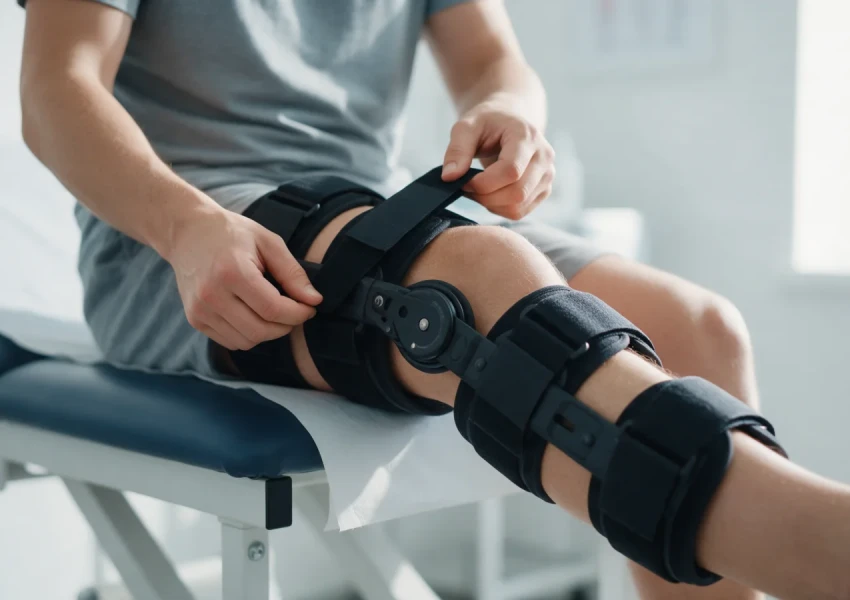
- Many repair protocols restrict knee bending to a set angle and may use a brace
Weeks 2–6: range of motion and controlled loading
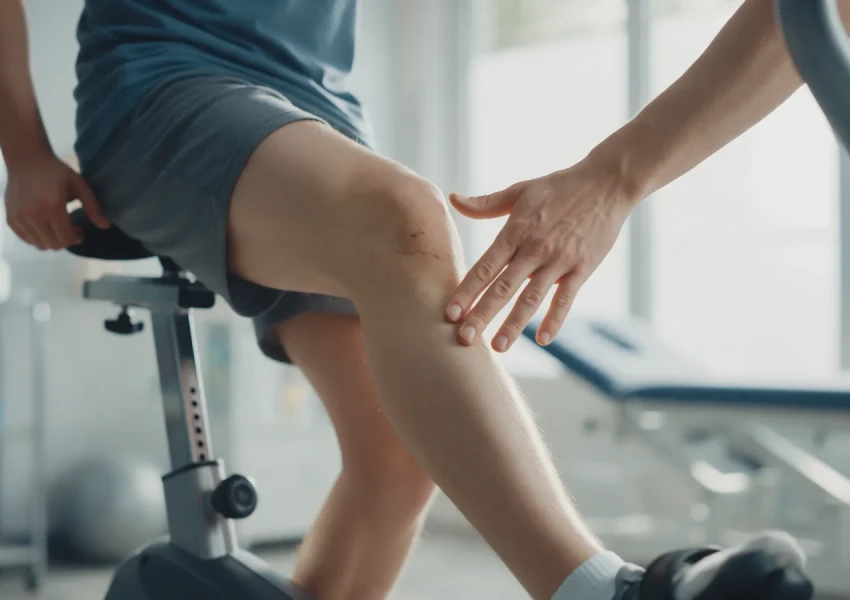
Bending is increased gradually and full weight-bearing begins. After a meniscus repair, deep squats and twisting are avoided for longer and crutches are often stopped a little later. Stationary cycling and closed-chain strengthening are added.
Week 6 to month 3: strength and balance
Strengthening of the thigh, hip and calf muscles and balance training intensify, and daily activities largely return to normal. Deep squatting and loaded pivoting are introduced gradually with your surgeon's approval after a repair.
Months 3–6: running and agility
Once strength and knee control are adequate, straight-line running begins, followed by jumping, landing and agility work, progressed according to strength and function tests rather than the calendar.
Month 6 onwards: sport-specific return
Return to pivoting and contact sports is usually planned when strength and hop tests show little difference between the legs, the athlete feels ready and sport-specific training goes smoothly. This often falls around month nine or later, and varies between individuals. See our guide to returning to sport after ACL surgery.
When should you contact your orthopedic surgeon?
- Pain and swelling that increase rather than settle
- Redness, warmth or discharge at the wound, or fever
- One-sided calf swelling, tightness and pain
- No progress in straightening or bending the knee over several weeks
- New catching, locking or giving way
- A new twist during rehab followed by swelling
Signs of wound infection and calf swelling need same-day assessment. At Prof. Dr. Gökhan Polat's clinic, treatment of combined ligament and meniscus injuries is planned around the MRI and examination findings, the tear type, age, activity level and sporting goals. Learn more on our ACL injury page.
In summary
- Meniscus tears often accompany ACL injuries, and meniscus damage can increase over time if the ACL is left untreated.
- The ACL is usually reconstructed arthroscopically and the meniscus repaired whenever possible.
- After a meniscus repair, weight-bearing and bending progress more cautiously in the early weeks.
- Return to sport is individual and based on strength and function testing, not a fixed date.
This article is for general information only; diagnosis and treatment decisions are made individually after examination and the necessary tests.
Frequently asked questions
When can I walk after ACL and meniscus surgery?
Most patients start walking with crutches soon after surgery. If the meniscus was repaired, weight-bearing may be limited in the early weeks and crutches may be stopped a little later; timing depends on the surgeon's protocol and individual healing.
Are ACL and meniscus surgery done at the same time?
Yes, in combined injuries ACL reconstruction and meniscus treatment are usually performed in the same arthroscopic operation. Whether the meniscus is repaired or the torn part trimmed is often decided during surgery once the tear can be seen directly.
Does a meniscus repair make recovery longer?
A meniscus repair means weight-bearing and knee bending are progressed more cautiously, especially in the first six weeks, and deep squatting and pivoting may return later. In exchange, preserving the meniscus is important for the long-term health of the knee.
Can an ACL and meniscus tear heal without surgery?
A torn ACL does not heal on its own, although some people with low sporting demands and no episodes of giving way can be managed with physiotherapy. If the meniscus tear causes mechanical symptoms or the knee keeps giving way, surgery is usually advised to prevent further damage.
When can I return to sport after ACL and meniscus surgery?
Running usually starts after a few months of rehabilitation, once strength and knee control are adequate. Return to pivoting and contact sports is planned according to strength and hop tests and often falls around month nine or later, varying from person to person.