
Kneecap Pain: Causes and Patellofemoral Pain Syndrome
What causes kneecap pain? Symptoms and risk factors of patellofemoral pain syndrome, the most common cause of anterior knee pain, plus diagnosis, exercise treatment and the warning signs to act on.
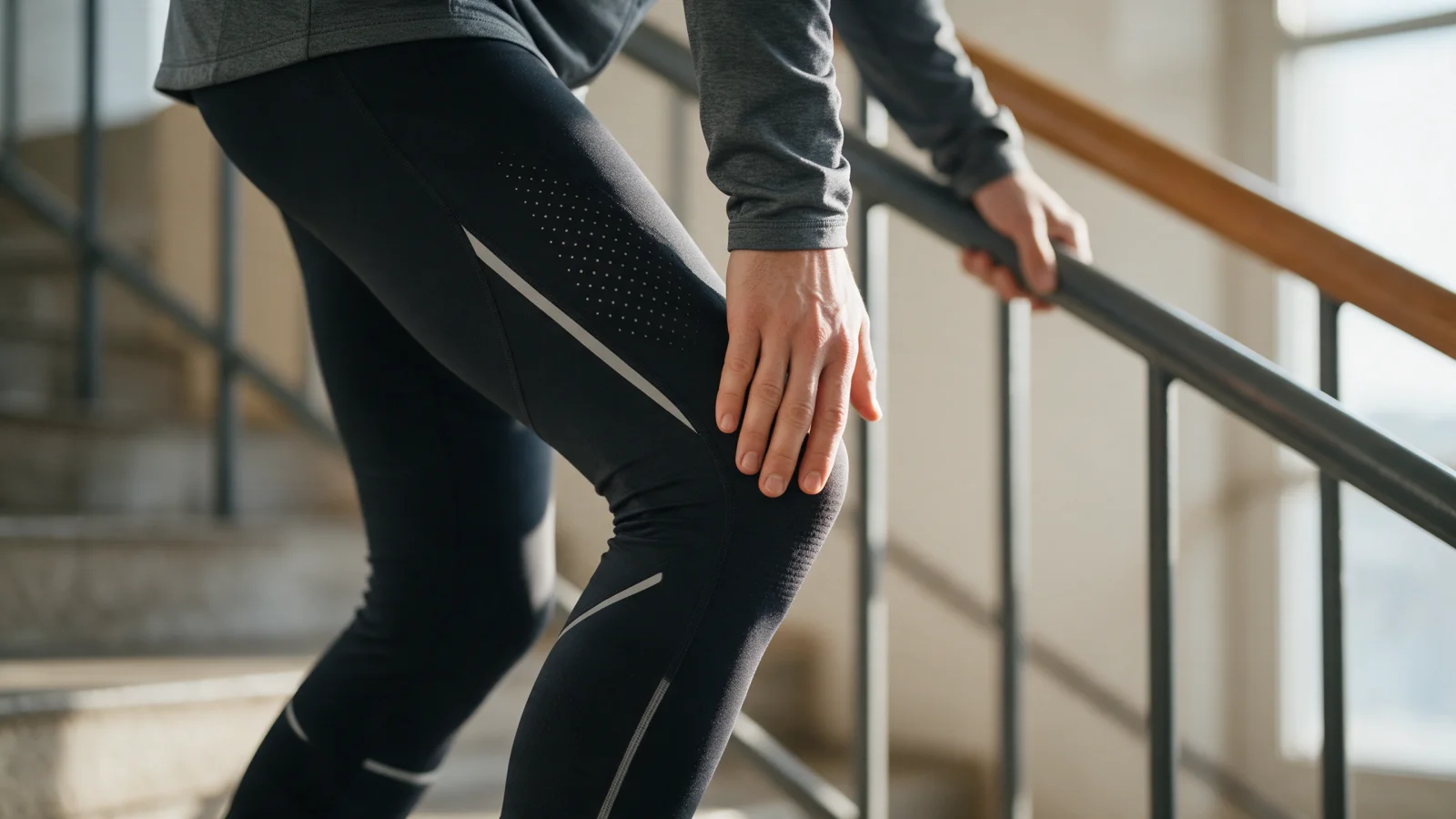
The most common cause of kneecap pain is patellofemoral pain syndrome, often simply called anterior knee pain or "runner's knee". The pain is felt around or behind the kneecap and typically gets worse when going downstairs, squatting and standing up after sitting with bent knees for a long time. It is usually linked to excessive or unbalanced loading of the joint between the kneecap and the thighbone, and most people improve with exercises that strengthen the thigh and hip muscles combined with sensible changes to activity. Kneecap pain can, however, also come from tendon problems, cartilage damage, bursitis or arthritis.
This article covers the possible causes of kneecap pain, the symptoms and risk factors of patellofemoral pain syndrome, how it is diagnosed, the treatment and exercise approach, and the signs that mean you should see an orthopedic surgeon.
How does the kneecap work, and why does it hurt?
The kneecap (patella) is a small bone that sits within the tendon of the thigh muscle and glides in a groove at the front of the thighbone. It works like a pulley, transferring the power of the quadriceps to the knee. The back of the kneecap is covered with some of the thickest cartilage in the body, because this joint is subjected to very high pressures when you climb stairs, squat and jump.
The load on the kneecap depends on muscle strength, the alignment of the hip and foot, training volume and body weight. When that balance is disturbed, pressure on the joint surfaces and surrounding soft tissues rises and pain can develop. Kneecap pain is therefore often less about a single structural injury and more about a mismatch between load and what the tissues can tolerate.
What causes kneecap pain?
- Patellofemoral pain syndrome: diffuse, dull pain around and behind the kneecap; the most common cause in young people and athletes.
- Chondromalacia patellae: a term often seen on MRI reports, describing softening or wear of the cartilage behind the kneecap.
- Patellar tendinitis: pain localised just below the kneecap where the tendon attaches, common in jumping sports.
- Prepatellar bursitis: a soft, obvious swelling in front of the kneecap, often from prolonged kneeling.
- Kneecap instability: pain with a feeling that the kneecap slips or dislocates.
- Patellofemoral arthritis: wear of the joint behind the kneecap, usually from middle age.
- Growth-related problems: strain of growth areas around the kneecap in children and teenagers.
- Plica and fat pad problems: pinching of folds of joint lining or the fat pad under the kneecap.
For a broader look at knee pain, see our article on the most common causes of knee pain.
Patellofemoral pain syndrome: symptoms and risk factors
The pain usually comes on gradually and is felt as a diffuse ache around the kneecap that can be hard to pinpoint. Typical features are:
- Front-of-knee pain going downstairs, walking downhill or running
- Pain when squatting, kneeling or getting up from a low chair
- Pain and stiffness on standing after sitting with bent knees, for example in a cinema, on a flight or on a long drive
- A grinding feeling or noise behind the kneecap
- Occasionally a feeling of the knee giving way
Common risk factors include a rapid increase in training, especially running and jumping, weak thigh and hip muscles, reduced flexibility, movement habits in which the knees collapse inwards, flat or rolling-in feet and excess weight. It is more common in teenagers, young adults, runners and women. Whether it affects the right or left knee does not change the causes; it may favour the dominant leg or affect both knees.
How is it diagnosed?
Diagnosis relies largely on the history and examination. Your doctor will ask where the pain is and which movements make it worse, and will assess how the kneecap moves and sits, tender spots around it, muscle strength and flexibility, and the mechanics of the hip and foot. A single-leg squat shows whether the knee drifts inwards.
X-rays may be used to check the position of the kneecap and look for arthritis. If swelling, locking, catching or an injury suggests another problem, MRI is used to examine cartilage, menisci and ligaments. Mild cartilage changes on MRI are not always the cause of the pain, so findings are interpreted together with the examination. We discuss cartilage problems further in our article on cartilage damage in the knee.
Treating kneecap pain
For patellofemoral pain syndrome, treatment is built on exercise and load management. Surgery is rarely needed and is reserved for specific structural problems.
Adjusting activity
- Cutting back for a while on activities that clearly aggravate the pain, such as deep squats, kneeling, downhill running and long flights of stairs
- Temporarily reducing running distance and frequency, then building back up gradually
- Stretching the legs out and getting up for a short walk during long periods of sitting
- Keeping fit with cycling and swimming, which load the kneecap less
Exercise therapy
Programmes that strengthen both the thigh and the hip muscles are among the most widely recommended treatments for patellofemoral pain. Common exercises include:
- Quadriceps sets and straight leg raises to work the thigh without loading the kneecap heavily
- Side-lying leg raises and clamshells for the hip muscles that stop the knee collapsing inwards
- Bridges for the hip and hamstrings
- Partial squats and wall sits, starting in a comfortable range and deepening gradually
- Low step-ups and step-downs, keeping the knee in line with the foot
- Stretches for the front and back of the thigh and the calf
Mild discomfort that settles by the next day is acceptable; a clear increase in pain means the load should be reduced. It is a good idea to plan the programme with a physiotherapist. Improvement usually appears over weeks to months and varies between people.
Supporting measures
- Taping and patellar braces may reduce pain in the short term for some people, making exercise easier.
- Footwear and insoles can help selected people with marked rolling-in of the feet.
- Weight control, since extra weight increases kneecap load.
- Ice and short-term pain relief after activity; ask your doctor about medication.
Night pain and kneecap pain in children
Patellofemoral pain is usually activity-related, but some people feel discomfort at night after lying with bent knees for a long time; a pillow between the knees when lying on your side can help. Pain that does not ease with rest, wakes you at night and keeps getting worse may have a different cause and should always be assessed.
In growing children the causes of pain around the kneecap can differ from those in adults, and hip problems can also be felt as knee pain. Read more in our article on knee pain in children.
When should you see an orthopedic surgeon?
- Kneecap pain that has not settled within a few weeks of reducing activity, or keeps getting worse
- Marked swelling, redness or warmth
- Locking, catching or being unable to straighten the knee fully
- A feeling that the kneecap slips or comes out of place
- Pain after a fall or blow, especially if you cannot bear weight
- Pain that wakes you at night and does not ease with rest, or knee pain with fever
At Prof. Dr. Gökhan Polat's clinic, anterior knee pain is assessed by considering the location and character of the pain, examination findings, activity level and any imaging results together, and treatment usually begins with non-surgical methods. For more on knee conditions and treatment options, see our knee joint diseases page.
In summary
- The most common cause of kneecap pain is patellofemoral pain syndrome, which worsens on stairs, when squatting and after long sitting.
- Tendinitis, bursitis, cartilage problems, instability and arthritis can also cause pain around the kneecap.
- Treatment rests on activity adjustment and exercises that strengthen the thigh and hip muscles.
- Swelling, locking, a slipping sensation or persistent pain needs an examination.
This article is for general information only; diagnosis and treatment decisions are made individually after examination and the necessary tests.
FAQ
-
What causes pain around the kneecap?
The most common cause is patellofemoral pain syndrome, linked to excessive or unbalanced loading of the joint between the kneecap and thighbone. Patellar tendinitis, bursitis, softening of the kneecap cartilage, instability and arthritis can also cause pain there. An examination is needed to tell them apart.
-
Why does my kneecap hurt going downstairs?
Going downstairs, the thigh muscle works hard to brake the knee, raising the pressure in the joint behind the kneecap. That is why descending stairs typically aggravates patellofemoral pain. Strengthening the thigh and hip muscles can help the knee cope with this load.
-
Does patellofemoral pain syndrome go away?
Most people improve clearly with activity changes and a regular exercise programme. Improvement usually appears over weeks to months and varies between people. Because symptoms can return if exercise stops, continuing strength work is recommended.
-
Which exercises help kneecap pain?
Quadriceps sets, straight leg raises, side-lying leg raises, clamshells, bridges and partial squats are commonly used. The aim is to strengthen the thigh and hip muscles together. The programme should progress gradually according to pain, ideally with a physiotherapist.
-
Should I wear a brace for kneecap pain?
Patellar braces and taping may ease pain in the short term for some people, making exercise easier. A brace does not strengthen muscles, though, so it should be used alongside an exercise programme rather than instead of one. The right type is chosen after examination.