
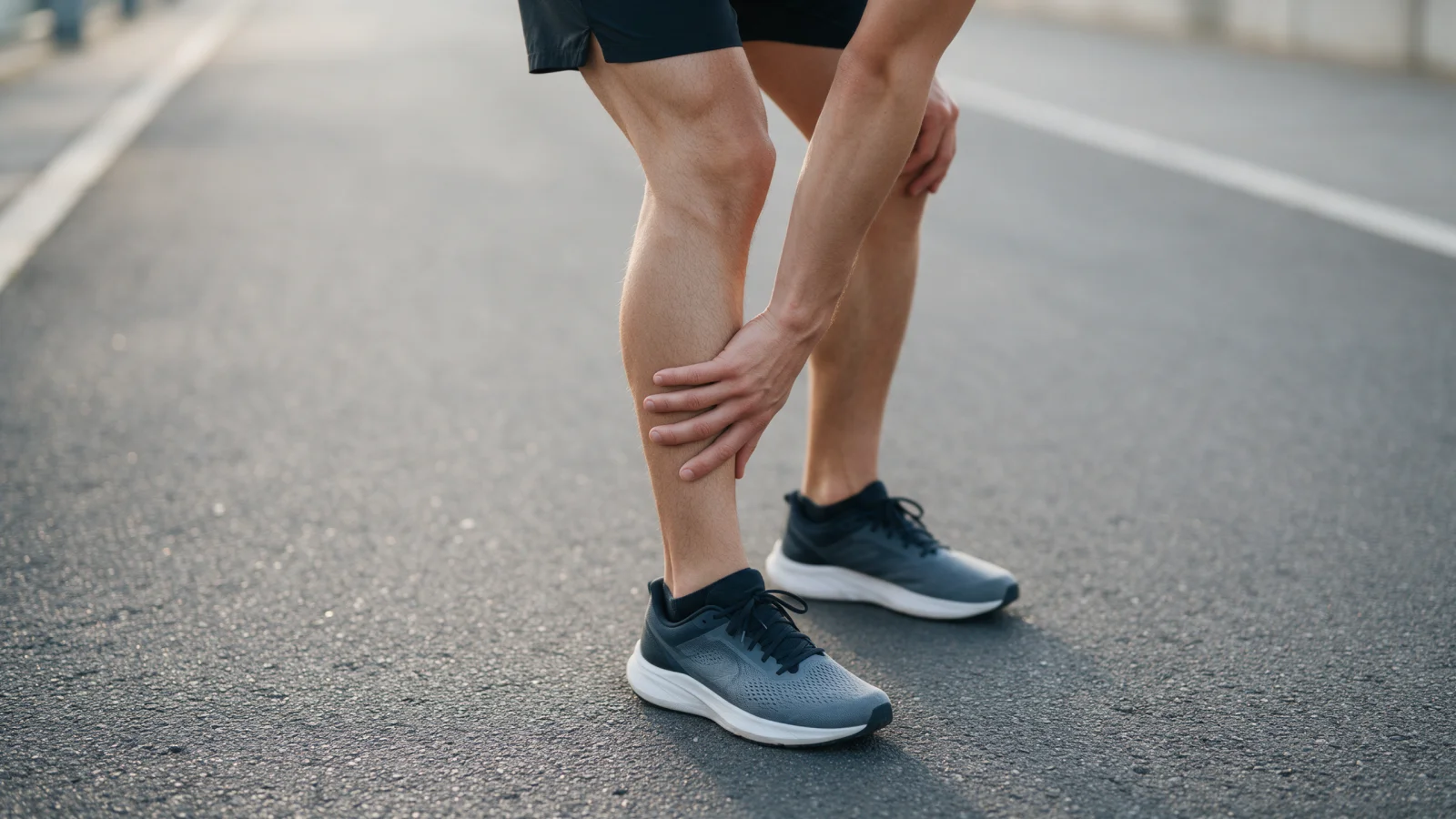
Shin Splints: Why Your Shins Hurt When You Start Running
Why do your shins hurt when you start running? The symptoms and causes of shin splints, how they differ from a stress fracture, what helps at home and during treatment, and how to prevent them.
The most common cause of pain along the inner edge of the shin in new runners is medial tibial stress syndrome, better known as shin splints. It develops when the shin bone and the muscle attachments around it are exposed to repetitive loads they are not yet used to. The pain is usually spread along a few centimetres of bone, is most noticeable at the start of a run, and often settles within weeks once training is adjusted. It is important, though, to tell shin splints apart from more serious causes such as a stress fracture.
This article explains why shins hurt, the typical symptoms of shin splints, who gets them, which other conditions can feel similar, what helps at home and during treatment, and when you should see an orthopedic surgeon.
What are shin splints?
The tibia runs from the knee to the ankle and carries most of your body weight. With every running stride, load passes through the bone and the calf muscles attached to it. Bone and muscle adapt to regular training, but when running time, frequency or intensity rises faster than that adaptation, the inner edge of the bone and its outer lining become overloaded. The result is medial tibial stress syndrome.
Shin splints can be seen as a reaction to a load the bone is not ready for. That is why they are most common in beginners, in people returning after a long break and in anyone who ramps up their programme quickly.
What are the symptoms of shin splints?
- A dull ache along the inner edge of the shin, usually in its lower half
- Tenderness spread along several centimetres rather than at one point
- Pain at the start of a run that eases a little as you warm up, then returns afterwards
- In more advanced cases, pain throughout the run and the next morning
- Sometimes mild swelling
- Often symptoms in both legs
The pain usually improves clearly with rest. Pain at rest, at night or during everyday walking should raise the possibility of another cause, especially a stress fracture.
Who is more likely to get shin splints?
- Training errors: increasing distance or frequency quickly, skipping rest days, adding hills and speed work too early.
- Surfaces: running constantly on asphalt, concrete or cambered roads.
- Footwear: worn-out shoes that have lost their support and cushioning.
- Foot type: flat arches and excessive inward rolling of the foot.
- Muscle weakness: weak calves, hips and core can shift more load onto the bone.
- Previous shin splints.
Our article on common exercise mistakes among athletes covers many of these pitfalls.
Shin splints or something else?
Stress fracture
With shin splints the pain runs along a line; with a stress fracture it is usually concentrated on one spot you can point to. Pain at rest and at night, sharp pain when hopping on one leg and steady worsening suggest a stress fracture. Untreated shin splints can also progress to a bone stress reaction. MRI may be needed if a stress fracture is suspected.
Chronic exertional compartment syndrome
Here pressure inside the muscle compartments of the leg rises excessively during exercise. Tightness, burning and sometimes numbness or weakness in the foot start after a predictable running time and fade soon after stopping. Special pressure measurements may be needed to confirm it.
Other causes
- Muscle and tendon strains at the front of the shin
- Bruising of the bone lining after a knock
- Referred pain from nerve compression in the lower back
- One-sided calf swelling and tightness, which may signal a blood clot and needs urgent care
What happens at the examination?
The doctor asks about your training history and recent changes, then feels along the shin to see whether tenderness is spread out or focused on one spot, and checks hopping, foot shape and muscle strength. The diagnosis is often clinical; X-ray or MRI is used when a stress fracture or another cause is suspected.
What helps shin splints?
The aim is to let the bone and surrounding tissue recover while keeping fit and correcting the causes. Most people recover without surgery.
- Relative rest: pause running or cut mileage substantially for a few weeks; complete inactivity is not necessary.
- Cross-training: swimming, pool running and cycling maintain fitness without impact on the shin.
- Ice: a towel-wrapped ice pack for 15–20 minutes after activity can ease pain.
- Painkillers: may be used briefly, but not to mask pain so you can keep running; check with a doctor or pharmacist before regular use.
- Strength work: calf raises and exercises for the hips and core help spread load more evenly.
- Shoes and technique: suitable, non-worn shoes and a slightly shorter, quicker stride can reduce the load on the shin.
Once the pain has gone, return to running gradually with a walk-run programme, increasing time and distance slowly over weeks. If pain returns during a run or the next day, step back to the previous stage. Recovery time depends on how long symptoms have been present and on the individual.
If the pain has not eased within a few weeks or keeps coming back, physiotherapy, gait analysis and imaging may be considered. In Prof. Dr. Gökhan Polat's clinic, the assessment brings together the location and character of the pain, the training history and the examination, and rules out conditions such as a stress fracture.
Prevention tips for new runners
- Alternate walking and running in the early weeks and build up time and distance gradually.
- Avoid big jumps in weekly mileage; follow harder weeks with easier ones.
- Keep one or two rest or low-impact days each week.
- Vary your surfaces and choose softer ones such as trails or a track where possible.
- Replace running shoes regularly.
- Add two strength sessions a week for the calves, hips and core.
For broader advice, see our article on exercising without injury.
When should you see an orthopedic surgeon?
- Pain concentrated on one spot on the bone that clearly worsens when pressed
- Pain at rest, at night or during everyday walking
- Sharp pain when hopping on one leg
- Pain that persists or keeps returning despite a few weeks of rest and training changes
- Tightness in the leg during exercise, or numbness or weakness in the foot
- One-sided calf swelling, redness and tightness, which needs urgent assessment
To learn more about overuse injuries linked to running and other sports, visit our sports injuries page.
In summary
- Shin splints are a common overload problem along the inner shin, especially in new runners.
- The pain usually runs along a line and eases with rest; pinpoint pain that persists at night suggests a stress fracture.
- Treatment is based on relative rest, cross-training, strengthening and a gradual return to running.
- Building up slowly and choosing the right shoes and surfaces help prevention; recovery time varies between individuals.
This article is for general information only; diagnosis and treatment decisions are made individually after examination and the necessary tests.
FAQ
-
Why do my shins hurt?
The most common cause, especially in new runners, is shin splints, an overload problem along the inner edge of the bone. Stress fractures, exercise-related compartment pressure, muscle and tendon strains and knocks can also cause shin pain. The cause is clarified by examination and, if needed, imaging.
-
How long do shin splints take to heal?
Symptoms often ease within a few weeks once training load is reduced and you switch to cross-training. Recovery can take longer if the pain has been present for a long time or you kept running through it. Timing varies from person to person, and running should be reintroduced gradually once pain-free.
-
Can I keep running with shin splints?
Running at the same level despite pain can prolong symptoms and lead to a bone stress reaction. With mild symptoms, distance and pace can be cut substantially; if pain builds during runs, take a few weeks off and use alternatives such as swimming or cycling.
-
How do you tell shin splints from a stress fracture?
With shin splints, pain runs along several centimetres of the inner shin and eases with rest. A stress fracture usually causes pain concentrated on one spot, which may continue at rest and at night and worsens sharply when hopping. The distinction is made by examination, with MRI if needed.
-
What helps shin pain?
Pausing or reducing running for a few weeks, ice after activity, low-impact exercise such as swimming and cycling, and strengthening the calves, hips and core usually help. Suitable shoes and a gradual return to running matter too. Persistent or night-time pain calls for an orthopedic examination.