
What Helps Knee Pain? Home Remedies and When to See a Doctor
What helps knee pain? A practical guide to relative rest, using ice and heat safely, weight control, low-impact exercise and the warning signs that mean you should see an orthopedic surgeon.
For most everyday knee pain, what helps is a short break from the movements that aggravate it, ice for new pain with swelling and gentle heat for long-standing stiffness, losing excess weight, and strengthening the muscles around the knee with low-impact exercise. These steps often ease mild to moderate pain, but pain that lasts more than a few weeks, or comes with swelling, locking or an inability to bear weight, needs an orthopedic examination to find the cause.
Below you will find safe home measures, how to use ice and heat, why weight and exercise matter, and the warning signs that should not wait.
Why the cause of knee pain matters
The knee relies on bone, ligaments, the menisci and cartilage, and each can hurt in its own way, so what helps depends on the cause. Regular movement usually helps arthritis, for example, while some movements can aggravate a fresh meniscus tear. Common causes include:
- Osteoarthritis: morning stiffness and pain after long walks, usually from middle age.
- Meniscus tears: often after a twist; may cause catching, locking or pain on one side of the knee.
- Ligament injuries: ACL or collateral ligament sprains during sport.
- Kneecap problems: front-of-knee pain on stairs, when squatting or after sitting with bent knees.
The measures below are a safe starting point for most of these, but pain that does not settle needs a proper diagnosis.
First steps at home: relative rest
Keeping a painful knee completely still is rarely right, because inactivity weakens the muscles. The aim is "relative rest": cutting back on what clearly worsens the pain while staying active.
- Avoid deep squats, kneeling and sitting cross-legged for a while.
- Limit stairs and use the handrail.
- Pause running, jumping and sports with sudden changes of direction until the pain calms down.
- If the knee is swollen, raise your leg on a pillow when lying down.
Rule of thumb: if an activity clearly increases your pain during it or the next day, do less of it.
Ice or heat? How to use them safely
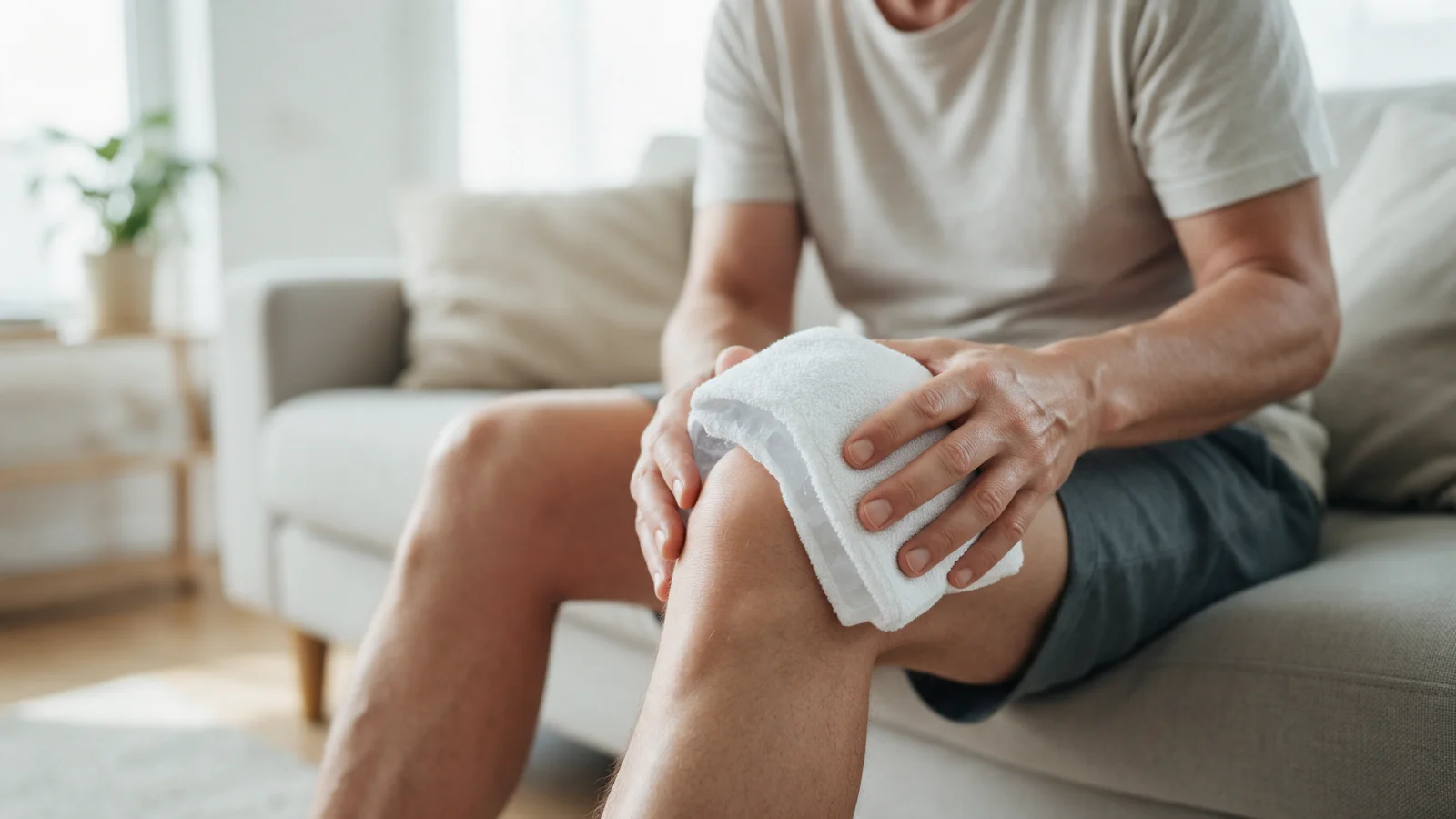
As a general guide, use cold for new pain after a knock or twist, especially when the knee is swollen and warm, and gentle heat for long-standing pain dominated by stiffness. Our article on choosing ice or heat for joint pain goes into more detail.
Cold therapy
- Wrap an ice pack or a bag of frozen peas in a thin towel; never put ice directly on the skin.
- Apply for 15–20 minutes at a time, a few times a day, especially in the first 48–72 hours and after activity.
Heat therapy
- A warm towel, hot water bottle or warm shower for 15–20 minutes can ease morning stiffness or serve as a warm-up before exercise.
- It should feel soothing, not burning; never heat a knee that is swollen, red or hot.
If you have diabetes, poor circulation or reduced sensation, keep sessions short and check your skin often, and never fall asleep on a heating pad.
Weight management: taking load off the knee
Walking, climbing stairs and squatting put several times your body weight through the knee, so extra weight is a major factor in knee pain, particularly with arthritis and cartilage problems. For people who are overweight, losing even a few kilos can noticeably reduce that load. Sustainable habits, such as smaller portions, fewer sugary drinks and regular joint-friendly exercise, work better than crash diets; if you have a chronic condition, plan the changes with your doctor.
Which exercises help knee pain?
The quadriceps at the front of the thigh and the hip muscles act like shock absorbers for the knee. Stronger muscles spread load more evenly, which makes regular exercise one of the most useful long-term measures. Read more in our article on why strengthening the muscles around the knee matters. Low-impact options such as walking on flat ground, stationary cycling, swimming or pool walking, and controlled Pilates are usually well tolerated.
Simple exercises to do at home
- Quad sets: Lie on your back with a rolled towel under your knee, press the knee down and tighten your thigh for 5 seconds. Repeat 10 times.
- Straight leg raises: With one knee bent, lift the other, straight leg about a hand's length off the floor and hold for 3–5 seconds. Repeat 10 times.
- Hamstring stretch: Sit with one leg out in front and lean forward gently with a straight back for 20–30 seconds.
- Wall mini-squats: With your back against a wall, bend your knees slightly, staying in a range that does not increase pain, and hold for a few seconds.
Mild effort is normal; sharp pain or a flare lasting into the next day means the load is too much for now. If a meniscus or ligament injury is suspected, plan exercise after an examination.
Supportive measures: braces, footwear and painkillers
These aids complement the steps above rather than replace them.
- Knee sleeves and elastic bandages: helpful for short-term support; wearing one all day for months may let the muscles weaken, so ask your doctor which type to use and for how long.
- Footwear and a stick: wear cushioned shoes; if limping, hold a stick in the hand opposite the painful knee.
- Painkillers and gels: can bring short-term relief but carry risks with stomach, kidney, blood pressure or heart problems and blood thinners; ask your doctor or pharmacist before regular use.
- Supplements: many lack solid evidence, and some interact with medicines.
If you have been relying on painkillers for weeks, the pain may be masking a problem that needs assessment.
When should you see an orthopedic surgeon?
Home care is often enough for mild knee pain, but see an orthopedic specialist if you notice:
- Sudden pain and rapid swelling after a fall, blow or twist, or a "pop" at the moment of injury
- Inability to put weight on the leg or to take more than a few steps
- A knee that locks, or that you cannot fully straighten or bend
- A feeling of the knee giving way when you walk
- Pain that wakes you at night or does not ease with rest, or a visible deformity
- Pain that has not improved, or is getting worse, after 2–3 weeks of home care
Seek urgent care the same day if the knee is red, hot and swollen with fever or chills, as this may signal a joint infection. One-sided swelling, tightness and pain in the calf can point to a blood clot and also needs prompt assessment.
At the examination, the knee's movement, ligaments and menisci are tested, and an X-ray, ultrasound or MRI may be used to confirm the diagnosis. At Prof. Dr. Gökhan Polat's clinic, treatment is planned around the cause, your age, activity level and goals, often starting with non-surgical options such as physiotherapy and exercise; responses vary from person to person. Learn more on our knee joint diseases page.
In summary
- Relative rest, well-timed ice or heat, weight control and low-impact exercise help most everyday knee pain.
- Braces, painkillers and gels are supportive; ask your doctor before using them long term.
- Swelling, locking, giving way or pain that persists for weeks needs investigating.
This article is for general information only; diagnosis and treatment decisions are made individually after examination and the necessary tests.
FAQ
-
What should I do for knee pain?
For new, mild knee pain, start by cutting back on the movements that make it worse, use cold packs for 15–20 minutes in the first few days and raise the leg if it is swollen. As the pain settles, stay active with walking and simple strengthening exercises. Swelling, locking, being unable to bear weight or pain that has not eased within a few weeks all call for an orthopedic examination.
-
Is heat or ice better for knee pain?
Ice is usually the better choice for new pain after a knock or twist, especially when the knee is swollen and warm. For long-standing pain dominated by stiffness, such as osteoarthritis, gentle heat can relax the muscles and make movement easier. Either way, keep each session to 15–20 minutes and protect the skin with a towel.
-
What medicine is good for knee pain?
Over-the-counter painkillers and anti-inflammatory gels can give short-term relief, but the right choice depends on your age, other health conditions and the medicines you already take. Because they carry risks for people with stomach, kidney, blood pressure or heart problems, check with a doctor or pharmacist before using them regularly. Medication can ease the pain, but it does not treat the underlying cause.
-
When is knee pain serious?
A red, hot, swollen knee with fever, one-sided swelling and pain in the calf, being unable to put any weight on the leg after an injury, or a visible deformity all need urgent assessment. Locking, a feeling of the knee giving way and pain that wakes you at night should also be checked by an orthopedic specialist without delay.
-
What helps knee osteoarthritis?
Regular low-impact exercise, strengthening the quadriceps and hip muscles, losing excess weight and using gentle heat for stiffness can all help ease osteoarthritis symptoms. Depending on the stage, physiotherapy, joint injections or, in advanced cases, surgical options may also be considered. The right approach is decided individually based on the examination and X-ray findings.