
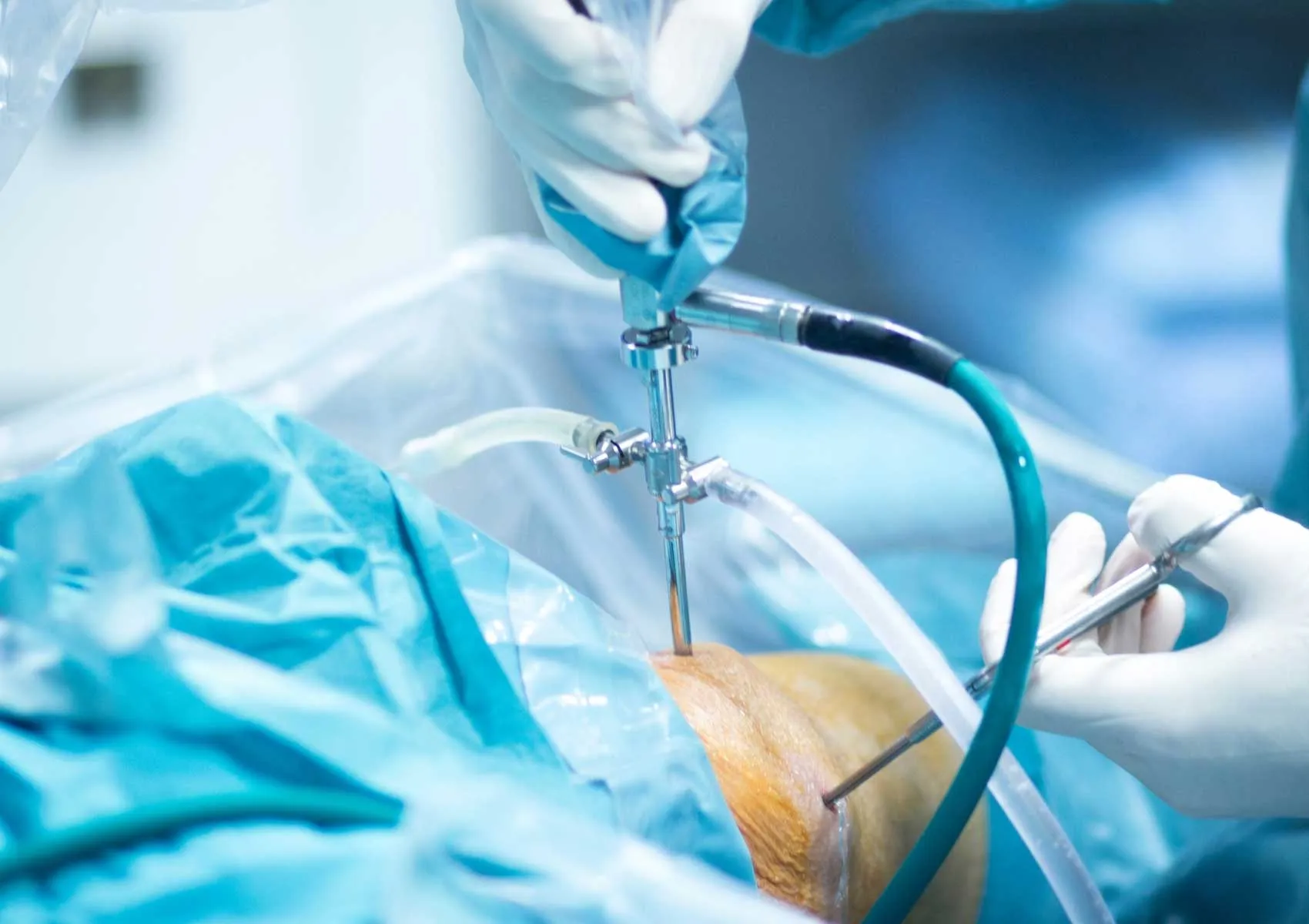
Arthroscopic Ligament Repairs
Arthroscopic ligament repairs hold a crucial place in the treatment of knee and other joint ligament injuries using minimally invasive techniques. This article explores the principles, application areas, advantages, and postoperative processes of arthroscopic ligament repairs in detail.
Arthroscopic ligament repair has become an indispensable technique in modern orthopedic surgery. Particularly common in sports injuries involving knee ligament problems, this minimally invasive method facilitates faster recovery and reduces surgical complications for patients. This article will elaborate on the fundamental principles of arthroscopic ligament repairs, their applications, and the benefits they provide to patients.
What is Arthroscopy and How is it Used in Ligament Repairs?
Arthroscopy is a type of closed surgery where a small camera and specialized surgical tools are inserted into the joint. It is applicable to joints such as the knee, hip, and shoulder, allowing direct visualization and repair of internal joint structures. In ligament repairs, the torn or damaged ligament tissue is reached through small incisions and repaired. This technique avoids the large incisions required in open surgery.
Application Areas of Arthroscopic Ligament Repairs
The knee joint is the most common site for arthroscopic ligament repair. Anterior cruciate ligament (ACL) injuries are frequently seen among athletes and arthroscopic repair or reconstruction is generally preferred. Besides this, posterior cruciate ligament (PCL) injuries, collateral ligament injuries, and meniscal tears can also be effectively treated using arthroscopic surgery. Arthroscopic interventions are also possible in hip joint problems such as femoroacetabular impingement and labral tears.
Advantages of Arthroscopic Ligament Repairs
There are numerous advantages to arthroscopic surgeries performed through minor incisions. Firstly, patients experience less pain compared to traditional surgery. The operation time is generally shorter, and the postoperative recovery period is quicker. The risk of infection is reduced and the aesthetic outcome is improved with minimal scarring. Additionally, during arthroscopy, cartilage, meniscus, and other structures around the joint can be evaluated and any accompanying issues can be identified and treated—this comprehensive approach supports functional recovery.
Postoperative Rehabilitation Process
A rehabilitation program is essential following arthroscopic ligament repair. Physiotherapy plays a central role in this process. Initially, movement restrictions and ice application help control joint swelling. Gradually, muscle strengthening and range-of-motion exercises are incorporated into the program. A personalized plan is prepared considering the patient’s overall health, age, and injury type. Early mobilization and controlled activities accelerate healing.
Recent Technological Advances in Arthroscopic Ligament Repairs
In recent years, instruments and techniques used in arthroscopic surgery have rapidly evolved. Improvements in imaging technology have enabled more precise operations. Moreover, biological support materials and tissue engineering practices have enhanced the quality of ligament repair. Notably, treatments such as platelet-rich plasma (PRP) and mesenchymal stem cell applications are innovative therapies that accelerate healing.
Arthroscopic ligament repairs enable patients to return to daily life and sports with less pain and faster recovery. However, not every injury type or patient is suitable for this method. Therefore, surgical decisions should be made in consultation with specialist orthopedic surgeons and based on a personalized evaluation.
FAQ
-
Who is suitable for arthroscopic ligament repair?
Arthroscopic ligament repair is generally recommended for young and active individuals when the ligament tissue can be repaired. It is preferable when the ligament is not completely torn and the tissue quality is sufficient. In cases of severe degeneration or for older patients, alternative treatments are considered.
-
How long is the recovery period after arthroscopic ligament repair?
Recovery duration depends on the type of injury, extent of repair, and rehabilitation program. Typically, patients can return to daily activities within six weeks, while full functional recovery and return to sports may take up to six months.
-
What advantages does arthroscopic surgery have over open surgery?
Since it is minimally invasive, incision size is smaller, the risk of infection is reduced, postoperative pain is less, and recovery is faster. Additionally, concurrent problems within the joint can be easily identified and treated during the procedure.
-
What exercises are recommended post-surgery?
Initially, passive and active exercises to maintain joint range of motion are recommended, followed by muscle strengthening and balance work. The exercise regimen should always be supervised by a physiotherapist.
-
What is the success rate of ligament repair?
With proper patient selection and surgical technique, success rates range between 80% and 95%. Early treatment and appropriate rehabilitation are critical factors that improve outcomes.