
Can a Hip Labral Tear Heal Without Surgery?
A hip labral tear rarely heals by itself, but symptoms often improve without surgery. Learn what non-surgical treatment involves, who responds better and when hip arthroscopy is considered.
A torn hip labrum usually does not knit back together on its own, because its blood supply is limited. That does not mean every labral tear needs surgery. In many patients, activity changes, a consistent physiotherapy programme and, when needed, medication or an injection reduce pain considerably and allow normal daily life to continue. Surgical options are considered for patients whose symptoms persist after roughly three months of consistent non-surgical care, who have catching and locking, or who have underlying hip impingement driving the tear.
This article explains why the labrum struggles to heal by itself, the difference between "healing" and "symptoms settling", what non-surgical treatment involves, who tends to respond better and how the decision about surgery is made.
What is the labrum, and why does it heal poorly?
The labrum is a tough, cartilage-like ring around the rim of the hip socket. It deepens the socket, helps maintain the pressure of the fluid inside the joint and keeps the femoral head stable. It acts as both a stabiliser and a protector of the joint.
Its blood supply is relatively better at the outer edge, where it attaches to bone, and poor at the free inner edge facing the joint. This limited supply reduces the chance that a tear will heal back to its original structure. Many labral tears also result not from a single injury but from repeated stress caused by an underlying bone shape problem, such as impingement or a shallow socket (dysplasia). As long as the cause remains, the load on the tissue continues. For more on the anatomy and tear types, see our hip anatomy and labrum tears page.
Is "healing" the same as "the pain going away"?
These are two different things. The tear knitting together as tissue is relatively unlikely, but symptoms settling, and a return to daily activities or even sport with much less pain, is achievable for many people.
There are several reasons. Much of the pain comes from irritation and inflammation in the joint rather than from the tear itself, and as this settles the pain can ease. Stronger hip muscles and better movement habits reduce the positions that stress the joint. In addition, not every labral tear seen on MRI causes pain; tears are also found in people with no symptoms at all. That is why treatment decisions are based on symptoms and examination rather than on the MRI image alone.
What does non-surgical treatment involve?
Activity modification
- Cutting back on positions that bend and turn the hip inward, such as deep squats, sitting cross-legged, low chairs and crossing the legs
- Breaking up long periods of sitting and setting seat height so the hips sit slightly above the knees
- Pausing sporting movements that trigger pain while keeping fit with low-impact options such as swimming (avoiding breaststroke) and a well-adjusted exercise bike
Physiotherapy and exercise
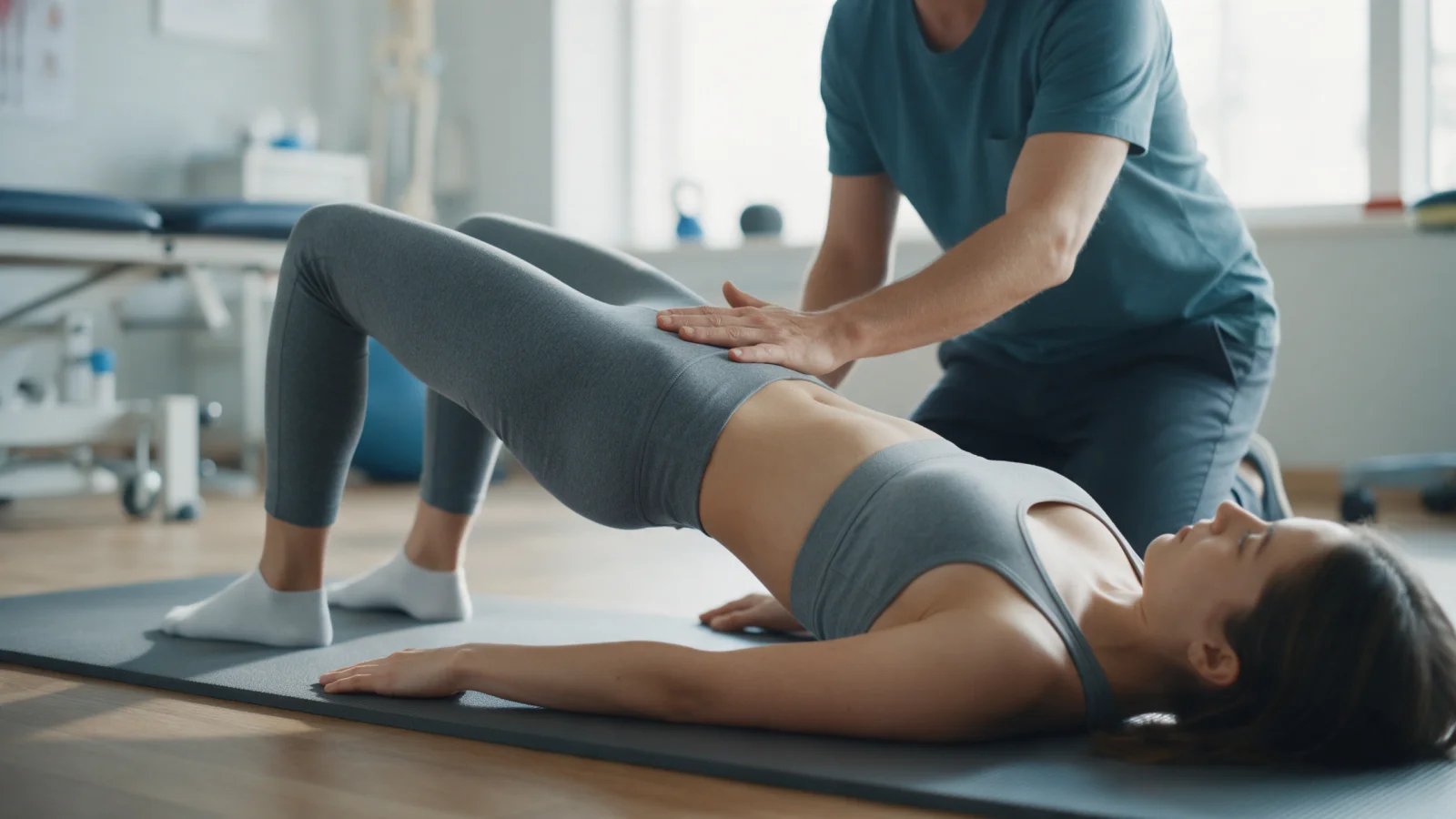
A physiotherapist-guided exercise programme is the foundation of non-surgical care. It focuses on strengthening the side and back hip muscles and the core, improving hip movement control and correcting movement patterns that provoke pain. Exercises start at a level that does not increase pain and progress gradually. To judge whether it is working, the programme generally needs to be followed consistently for 6–12 weeks, often around three months.
Medication and injections
- Pain relief and anti-inflammatories: Can be used briefly during painful periods, with caution in people with stomach, kidney, blood pressure or heart problems.
- Steroid and local anaesthetic injection into the joint: Helps show whether the pain is coming from inside the joint and can give some patients enough relief to engage with physiotherapy. How long the effect lasts varies.
- Biological injections such as PRP: Used in some patients, but scientific evidence for labral tears is still limited. Our article on whether PRP is effective in the hip joint looks at this in more detail.
Follow-up during treatment
Non-surgical care is not something you start and then leave to run. At regular reviews, the course of the pain, the movements that still cause symptoms, strength gains and limits on daily life are assessed, and the exercise programme is updated accordingly. Return to sport is planned in stages as pain settles, because an early, uncontrolled return can bring symptoms back. If symptoms worsen or new ones appear, reassessment before the planned period ends is sensible.
Who tends to respond better to non-surgical care?
It is not possible to predict the response with certainty, but some features are associated with a better course:
- Pain as the main complaint, without prominent catching or locking
- No significant impingement or other bone shape problem
- Symptoms that started relatively recently
- Consistent participation in the exercise programme and adherence to activity changes
- No intense sporting demands that force the hip into deep flexion and rotation
By contrast, young, active people with a clear impingement shape, frequent catching or locking and sports that heavily load the hip may find it harder to control symptoms fully without surgery.
When is surgery considered?
The decision is based not just on the presence of a tear but on symptom severity and duration, the underlying cause and the overall condition of the joint. Hip arthroscopy may be considered when:
- Pain that limits daily life or sport persists after about three months of consistent non-surgical treatment
- There is frequent catching, locking or giving way
- Impingement is present and examination and imaging suggest it is the source of pain
- The joint space is preserved, meaning there is no significant arthritis
During arthroscopy the labrum is repaired whenever possible. If it is too damaged, the damaged part is trimmed or, in selected patients, the labrum is reconstructed. Any underlying impingement is corrected as well; otherwise the same stress may continue. In patients with significant arthritis, arthroscopy offers limited benefit and other options are discussed. In people with a shallow socket, arthroscopy alone may not be enough, and this is assessed separately. For what to expect afterwards, see recovery and rehabilitation after labral tear surgery.
At Prof. Dr. Gökhan Polat's clinic, treatment generally starts without surgery. Any decision about surgery is made together with the patient, taking into account the course of symptoms, examination findings, MR arthrography and X-ray results, age, activity level and personal goals. Outcomes vary from person to person.
When should you see an orthopedic surgeon?
- Groin pain lasting several weeks that is worse when sitting, driving or bending the hip
- Catching, locking or sharp pain with a clicking sensation in the hip
- Symptoms that have not eased, or are getting worse, despite physiotherapy for a diagnosed labral tear
- Hip pain that limits sporting performance or wakes you at night
Seek urgent care if: you cannot bear weight after a fall or knock, or you have hip pain with fever, chills and an inability to move the joint. These point to serious causes other than a labral tear and need same-day assessment.
In summary
- Because of its limited blood supply, a torn labrum usually does not heal on its own, but symptoms improve considerably with non-surgical care in many patients.
- Non-surgical treatment combines activity changes, several months of consistent physiotherapy and, when needed, medication or injections.
- Persistent pain despite consistent treatment, mechanical symptoms and underlying impingement are the main reasons to consider hip arthroscopy.
- Decisions are based on symptoms, examination and the condition of the joint, not on the MRI image alone.
This article is for general information only; diagnosis and treatment decisions are made individually after examination and the necessary tests.
FAQ
-
Does a labral tear go away on its own?
Because the labrum has a limited blood supply, a tear usually does not knit back together on its own. Pain and other symptoms, however, often improve considerably with activity changes, consistent physiotherapy and, when needed, medication or an injection. The response varies from person to person.
-
Can a labral tear be treated without surgery?
Most symptomatic labral tears are treated without surgery first, and many patients can carry on with daily life comfortably this way. Surgery is considered for those with persistent pain after about three months of consistent treatment, frequent catching or locking, or underlying hip impingement driving the tear.
-
Does a hip labral tear ever heal?
The outer edge of the labrum has a slightly better blood supply, so some tears in that area may heal to a limited extent, but a full return to the original structure is not expected. What matters most for patients is symptom relief and protection of the joint. When surgery is needed, the labrum is repaired whenever possible to support healing.
-
How is a hip labral tear treated?
Treatment usually begins with activity changes, a physiotherapy programme to strengthen the hip and core muscles and, when needed, medication or a joint injection. In suitable patients who do not respond, hip arthroscopy can repair the labrum and correct any underlying impingement.
-
How long should physiotherapy be tried for a labral tear?
To judge its effect, a physiotherapy programme generally needs to be followed consistently for 6–12 weeks, often around three months. Exercises start at a level that does not increase pain and progress gradually. Symptoms are then reassessed and the treatment plan reviewed.