
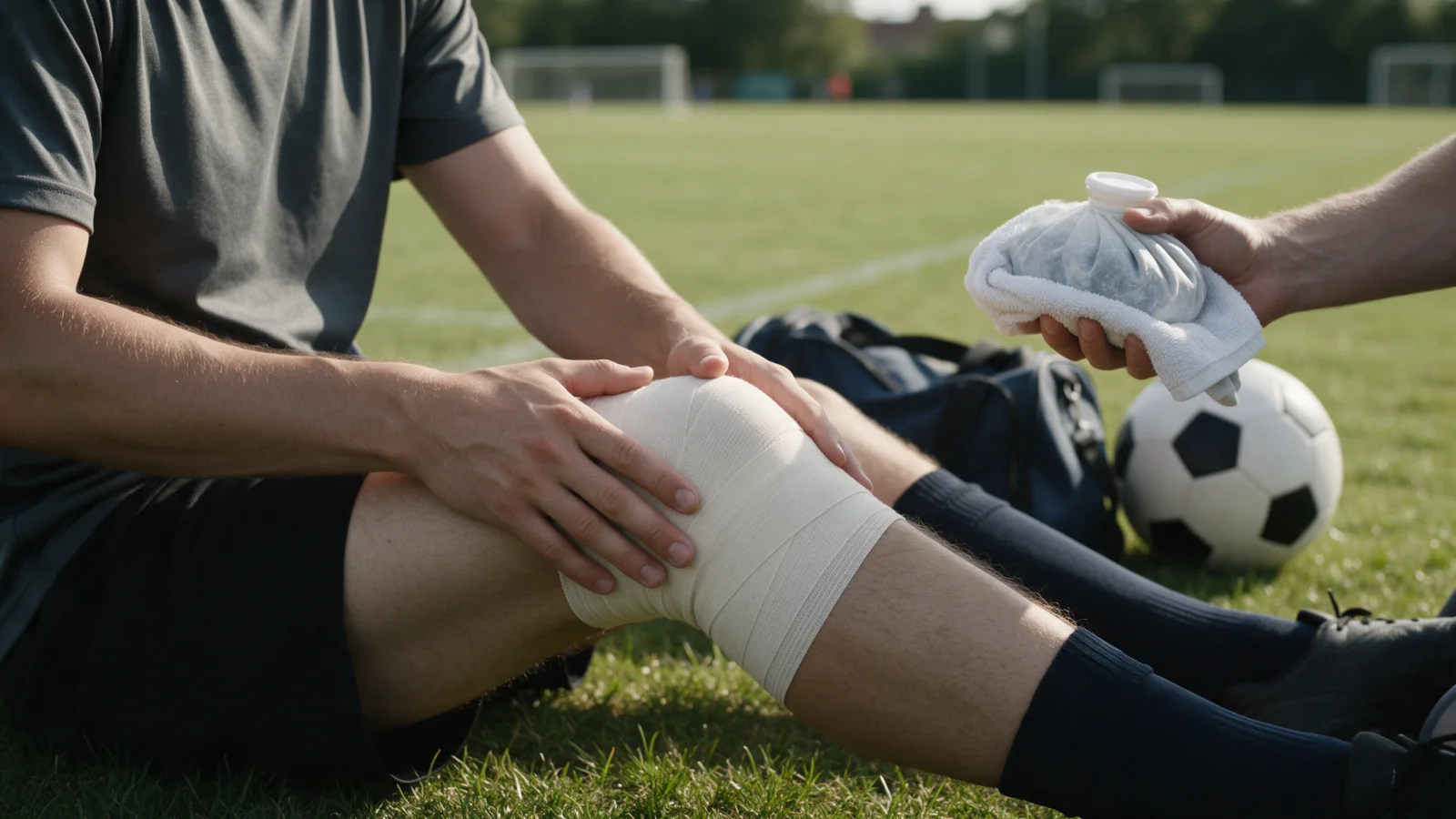
Sports Medicine Doctor or Orthopedic Surgeon: Who to See?
Which doctor treats sports injuries? The difference between a sports medicine physician and an orthopedic surgeon, who performs surgery, and which specialist suits which injury.
Sports injuries are treated by both sports medicine physicians and orthopedic surgeons. The key difference is that a sports medicine physician specialises in diagnosis, non-surgical treatment and exercise planning and does not operate, while an orthopedic surgeon can also take on surgical treatment when needed. For muscle strains and overuse pain, either can make the first assessment. For injuries that may need surgery, such as a suspected ligament rupture, a locked knee, a dislocation or a fracture, going straight to an orthopedic surgeon tends to shorten the journey.
This article explains what each specialist does, the roles of rehabilitation physicians and physiotherapists, which injury suits which specialist, how to prepare for your appointment and when to go straight to the emergency department. It is written for readers in Turkey, so local terms are explained where they differ.
What is a sports medicine physician?
In Turkey, a sports medicine physician ("spor hekimi") is a doctor who has completed specialist training in sports medicine after medical school. So yes, a sports medicine physician is a medical doctor, focused on the health of athletes and people who exercise regularly. Sports medicine departments are found mainly in university hospitals and some private centres.
- Diagnosis and non-surgical treatment of muscle strains, tendon problems and overuse injuries
- Pre-participation health screening and exercise testing
- Individual exercise prescriptions, including safe exercise for people with chronic illness
- Assessment of performance, nutrition and training load
- Planning rehabilitation and return-to-sport decisions
- Injection treatments in some cases
Do sports medicine physicians perform surgery?
No. Sports medicine is not a surgical specialty. When surgery is needed, the sports medicine physician refers the patient to an orthopedic surgeon and often stays involved during rehabilitation and the return to sport.
What does an orthopedic surgeon do?
Orthopedics and traumatology is the surgical specialty that treats diseases and injuries of the musculoskeletal system, both with and without surgery. Bones, joints, ligaments, menisci, cartilage, tendons and muscles all fall within its scope. Many orthopedic surgeons start with non-surgical treatment, with surgery as one option when it is needed.
Within orthopedics, surgeons who focus on sports injuries and arthroscopic (keyhole) surgery work in what is often called sports surgery: ACL reconstruction, meniscus repair, cartilage procedures and hip arthroscopy, among others. Our article on sports surgery specialties and treatment approaches describes this field in more detail.
For example, Prof. Dr. Gökhan Polat is an orthopedic and trauma surgeon working in sports injuries, arthroscopic surgery and hip preservation surgery, with a focus on the knee and hip; in 2015 he completed a fellowship at the Sports Medicine and Hip Preservation Center of the Hospital for Special Surgery in New York.
Does seeing an orthopedic surgeon mean having surgery?
Some people delay an appointment because they fear it will automatically lead to an operation. In reality, many sports injuries are treated in orthopedic practice with medication, exercise, physiotherapy, activity changes or injections. Surgery is usually discussed with the patient when a ligament or tendon is completely torn, a joint locks, instability clearly affects daily life or sport, or non-surgical treatment has not been enough.
Rehabilitation physicians and physiotherapists
- Physical medicine and rehabilitation physician: a doctor specialising in non-surgical diagnosis and treatment of musculoskeletal pain and in planning rehabilitation. They do not operate.
- Physiotherapist: a non-physician health professional who delivers rehabilitation through exercise, manual therapy and physical modalities, based on the doctor's diagnosis. During recovery, the physiotherapist is often the team member you spend the most time with.
Good sports injury care is usually teamwork: the doctor makes the diagnosis and treatment decision, rehabilitation is carried out with a physiotherapist, and return to sport is decided together.
Who decides when you can return to sport?
Return to sport is not decided by the calendar alone. It depends on pain, range of motion, how much strength has recovered compared with the other side, and whether sport-specific movements can be performed safely. After surgery the surgeon's view of the healing tissue is central; without surgery, the diagnosing doctor leads, and the physiotherapist's functional tests contribute a great deal. Return usually starts with gradual participation in training before moving up to full competition. Timing varies with the injury and the individual, and returning too early can increase the risk of re-injury.
Which doctor should you see? A practical guide
The list below is a general guide; whoever you see first will refer you on if needed.
Either specialist is suitable
- Muscle soreness that does not settle and mild muscle strains
- Tendon problems around the kneecap, Achilles or elbow
- Overuse problems such as shin pain in runners
- Pre-sport check-ups, exercise programmes and training load planning
Orthopedic surgeon first
- A pop and rapid swelling after a twisting knee injury (suspected ACL or meniscus injury)
- A knee that locks, will not straighten or keeps giving way
- A dislocated shoulder, kneecap or other joint
- Suspected fracture: marked bone pain, deformity or inability to bear weight
- A blow sensation behind the heel with inability to rise onto the toes (suspected Achilles rupture)
- Groin or hip pain with catching or locking (suspected hip impingement or labral tear)
- Joint problems that have not improved after weeks of non-surgical care
Go straight to the emergency department
- A fracture with an open wound, obvious deformity or a dislocated joint
- Numbness, coldness or colour change in the limb
- Head injury or loss of consciousness
- Complete inability to bear weight with severe pain
How to prepare for your appointment
- Note how and when the injury happened and what you felt at the time (a pop, swelling, giving way).
- Write down which movements make it worse or better, and whether it hurts at night.
- Bring any X-ray, MRI or ultrasound images with their reports.
- List your medicines, long-term conditions and previous operations.
- Share your sport, training frequency and goals (competition, hobby, everyday life).
- Wear clothing that lets the doctor examine the joint easily.
Our article on when to consult an orthopedic specialist covers joint problems beyond sport.
When should you see an orthopedic surgeon?
- A pop or snap at the time of injury with joint swelling within a few hours
- Locking, catching or giving way of a joint
- Inability to bear weight or a marked limp
- Pain that has not eased within one to a few weeks, keeps getting worse or wakes you at night
- New pain, swelling or instability in a joint that has had surgery before
The examination looks at how the injury happened and the clinical findings, with imaging where needed; a firm diagnosis comes from this assessment. In Prof. Dr. Gökhan Polat's clinic, treatment is planned around the type of injury and the patient's sporting goals, starting with non-surgical options where appropriate; response varies from person to person. Visit our sports injuries page to learn more.
In summary
- A sports medicine physician specialises in diagnosis, non-surgical treatment and exercise planning, and does not operate.
- An orthopedic surgeon covers the full range of musculoskeletal treatment, including arthroscopic and open surgery when needed.
- Either is suitable for mild muscle and tendon problems; for suspected ligament ruptures, locking, dislocations and fractures, an orthopedic surgeon is the more direct route.
- Successful recovery is usually a team effort between doctor, physiotherapist and athlete.
This article is for general information only; diagnosis and treatment decisions are made individually after examination and the necessary tests.
FAQ
-
Which doctor treats sports injuries?
Sports injuries are treated by sports medicine physicians, orthopedic surgeons and physical medicine and rehabilitation physicians. Any of them can assess muscle strains and overuse pain. For problems that may need surgery, such as a suspected ligament rupture, a locked knee, a dislocation or a fracture, an orthopedic surgeon is the more direct route.
-
What conditions does a sports medicine physician treat?
Sports medicine physicians diagnose and treat muscle strains, tendon problems and overuse injuries without surgery. Their work also includes pre-participation screening, exercise testing, individual exercise prescriptions, training load and nutrition assessment, and planning the return to sport after injury.
-
Is a sports medicine physician a real doctor?
Yes. A sports medicine physician is a medical doctor who has completed specialist training in sports medicine after medical school. Physiotherapists, by contrast, are not physicians; they are health professionals who deliver rehabilitation based on the doctor's diagnosis.
-
Do sports medicine physicians perform surgery?
No, sports medicine is not a surgical specialty. If an injury needs surgery, the sports medicine physician refers the patient to an orthopedic surgeon. Procedures such as arthroscopic ligament, meniscus and cartilage surgery are performed by orthopedic surgeons.
-
How do I get an appointment with a sports medicine physician?
In Turkey, sports medicine clinics are mostly found in university hospitals and some private centres. Public hospital appointments are usually booked through the central appointment system (MHRS), and private centres through their own booking lines. If your injury may need surgery, you can also go directly to an orthopedic clinic.