
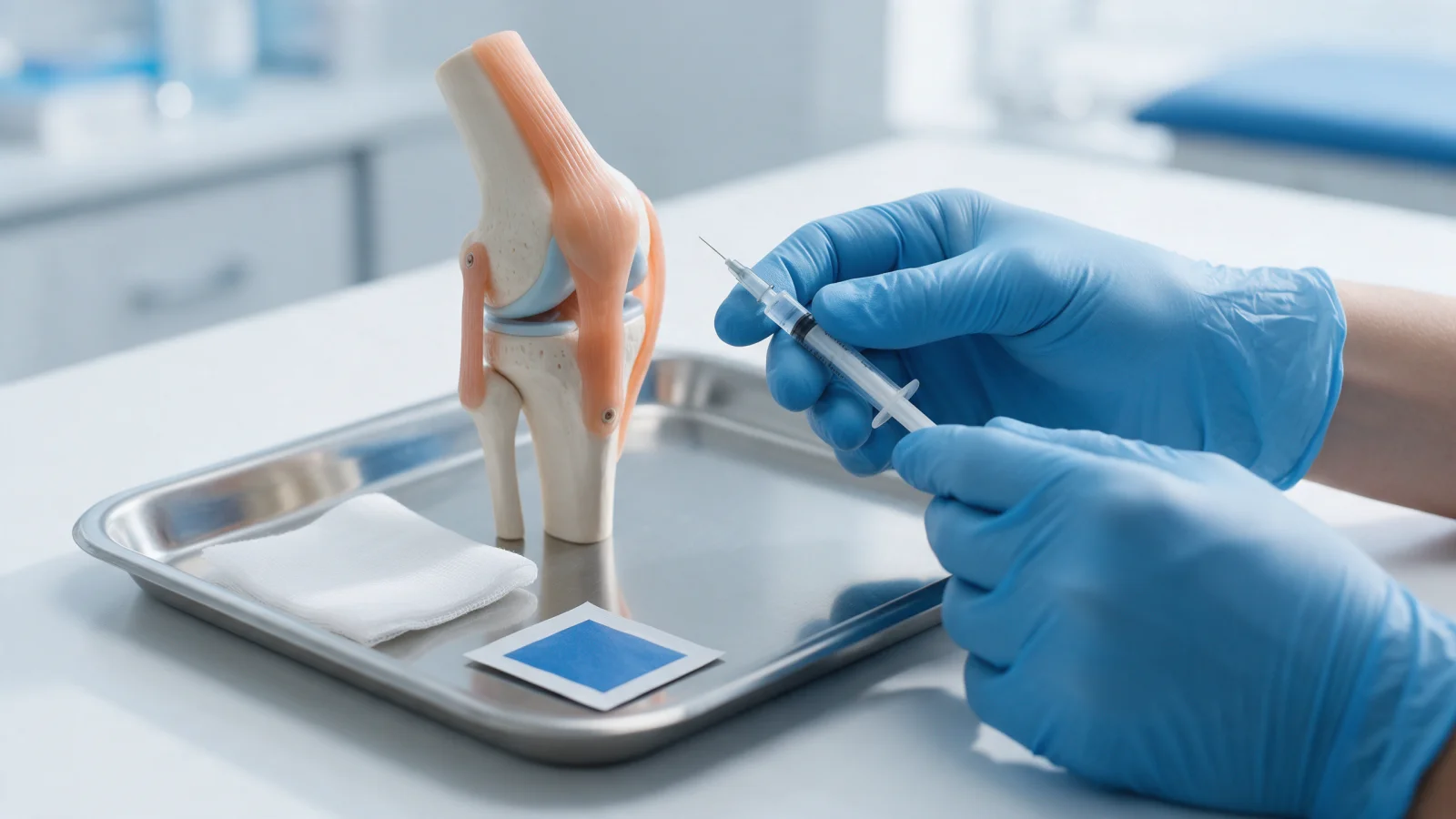
What Does a Cortisone Shot Do? A Joint Injection Guide
What does a joint cortisone injection do and when is it used? How it is given, how long it lasts, side effects, how many times it can be repeated, who should not have one and aftercare.
A joint cortisone injection delivers a corticosteroid, a powerful anti-inflammatory medicine, directly into a painful joint or the tissue around it. Its aim is to calm inflammation quickly and so reduce the pain and swelling it causes. It can provide relief lasting from a few weeks to a few months, particularly during flare-ups of osteoarthritis with fluid on the knee and in soft-tissue inflammation such as bursitis. It does not treat the underlying disease, however, its effect varies from person to person, and because the risk of side effects rises with frequent use, it is given a limited number of times and at intervals.
This article explains what a cortisone shot does, when it is used, how it is given, possible side effects, how many times it can be repeated and who should not have one.
Is a joint injection the same as a cortisone shot in the buttock?
"Cortisone shot" can mean two different things. An injection into a buttock muscle spreads the medicine through the bloodstream to the whole body and is used for systemic problems such as allergic reactions or widespread inflammatory disease. A joint or soft-tissue injection places the medicine directly where the problem is, aiming for a local effect with a lower dose and less effect on the rest of the body.
Here we discuss the joint and soft-tissue injections used in orthopedics, into a joint, a bursa or a tendon sheath. The steroid is usually mixed with a local anaesthetic that gives short-term relief during and after the procedure.
What does a cortisone injection do, and when is it used?
Its main job is to suppress inflammation. This reduces pain, swelling and warmth, helps the joint move more easily and makes it easier to take part in physiotherapy and exercise. Common uses in orthopedics include:
- Osteoarthritis flare-ups, especially knee pain with fluid in the joint
- Bursitis, such as trochanteric bursitis on the outside of the hip or pes anserine bursitis on the inner knee
- Shoulder problems such as impingement and frozen shoulder
- Tendon sheath inflammation such as trigger finger and de Quervain's tenosynovitis
- Selected cases of carpal tunnel syndrome
- Flaring joints in inflammatory arthritis such as rheumatoid arthritis
It is not right for every painful joint. For a meniscus tear that mechanically locks the knee, or some tendon problems where the tendon itself is damaged, other treatments may be more appropriate. We look at the wider picture in our article on joint pain that does not respond to painkillers.
How is the injection given?
- Your doctor first decides, based on examination and any tests, whether an injection is appropriate.
- The skin is cleaned with an antiseptic and the procedure is carried out under sterile conditions.
- If the knee is swollen with fluid, it may be drained first and, if needed, sent for analysis.
- The medicine is injected through a fine needle. For deep joints such as the hip, ultrasound or X-ray guidance may be used to place the needle accurately.
- The procedure takes a few minutes, and you can usually go home after a short observation period.
The local anaesthetic may ease pain within the first hours, while the steroid itself usually starts to work within a few days. How long the effect lasts depends on the condition and its stage: a few weeks for some people, a few months for others, and little noticeable benefit for some.
What are the side effects?
Given to the right patient with the right technique, joint steroid injections are generally well tolerated, but like any procedure they carry some risks:
- Post-injection flare: pain may temporarily increase in the first 24–48 hours; ice and rest usually help.
- Raised blood sugar: in people with diabetes, glucose may run high for a few days, so more frequent monitoring is advised.
- Facial flushing and a feeling of warmth, usually temporary.
- Skin lightening and thinning of fat at the injection site, mainly after superficial injections.
- Tendon weakening: injecting into a tendon can weaken it and raise the risk of rupture, so this is avoided.
- Joint infection: rare but serious; sterile technique is used to keep this risk low.
- Possible effects on cartilage: there is evidence that frequent, repeated injections may harm cartilage, which is one of the main reasons the number of injections is limited.
Temporary menstrual changes, poor sleep or short-lived mood changes are also reported. If you are comparing injection treatments, our article on side effects of PRP therapy may be useful.
How many cortisone injections can you have?
There is no single number that applies to everyone; the decision depends on the site, how well previous injections worked and your general health. As a general approach:
- Injections into the same joint are usually spaced at least a few months apart.
- Many doctors recommend limiting injections into the same joint, often to no more than 3–4 a year.
- If an injection did not help, or the benefit is getting shorter each time, the treatment plan should be reviewed rather than simply repeating it.
For people planning joint replacement, a steroid injection into the same joint in the months before surgery has been linked with a higher risk of infection, so always tell your surgeon if you have had a recent injection.
Who should not have a cortisone injection?
- People with infection in the joint or in the skin over the injection site
- Anyone with an active infection or fever
- People with poorly controlled diabetes
- Those allergic to the medicine
- People with a fracture inside the joint
- People on blood thinners or with bleeding disorders, for whom timing and technique need to be discussed with the doctor
Aftercare
- Avoid heavy activity, long walks and sport for the first 24–48 hours.
- If pain increases, apply a towel-wrapped ice pack for 15–20 minutes.
- Even if the joint feels much better, do not overload it; use this window to start exercise and physiotherapy.
- If you have diabetes, check your blood sugar more often for a few days.
- Keep the injection site clean and dry on the first day and, unless told otherwise, avoid pools, hammams and saunas for a few days.
Cortisone is only one injection option. Depending on your situation, your doctor may also discuss hyaluronic acid or PRP; for an overview see our article on non-surgical knee treatments.
When should you seek medical help straight away?
- Increasing pain, swelling, redness and warmth in the joint
- Fever or chills
- Discharge from the injection site
- Being unable to move the joint at all
- High blood sugar that will not come down, in people with diabetes
Although rare, these signs can point to a joint infection and need urgent assessment. At Prof. Dr. Gökhan Polat's clinic, the decision to inject is based on the cause of the pain, the stage of the condition, previous treatments and your general health. For other injection options such as PRP and stem cell treatments, see our cellular therapies (PRP, stem cell) page.
In summary
- A joint cortisone injection aims to reduce pain and swelling by suppressing inflammation; it does not remove the underlying disease.
- Its effect usually begins within a few days and lasts for a period that varies between people.
- Side effects can include a temporary flare, raised blood sugar and, rarely, infection.
- Injections into the same joint are limited and spaced out, and the decision is made individually after examination.
This article is for general information only; diagnosis and treatment decisions are made individually after examination and the necessary tests.
FAQ
-
How long does a cortisone injection last?
The effect usually starts within a few days. How long it lasts depends on the condition and its stage: a few weeks for some people, a few months for others, and little noticeable benefit for some.
-
Does cortisone damage cartilage?
Occasional injections at appropriate intervals are generally well tolerated. However, there is evidence that frequent, repeated injections may harm cartilage, which is why the number of injections into the same joint is kept limited.
-
Why does pain sometimes get worse after a cortisone shot?
Some people have a temporary flare in the first 24–48 hours, thought to be a reaction to the medicine's crystals. Ice and rest usually help. If the pain comes with redness, marked swelling or fever, seek medical advice promptly to rule out infection.
-
Can people with diabetes have cortisone injections?
People whose diabetes is well controlled can have them when appropriate, but blood sugar may run high for a few days afterwards, so closer monitoring is advised. In people with poorly controlled diabetes the injection is usually postponed.
-
Cortisone or PRP: which is used when?
Cortisone aims to suppress inflammation quickly and is mainly used for short- to medium-term relief during flare-ups. PRP is prepared from your own blood and aims to support tissue healing. Which is suitable depends on the condition and its stage and is decided after examination.