
What is Knee Arthroscopy? Benefits and Applications
Knee arthroscopy is a minimally invasive technique used for diagnosing and treating joint issues.
The knee joint is one of the most complex and heavily burdened joints in the body. Injuries caused by sports trauma or degenerative processes can significantly affect patients’ quality of life. With advances in technology, knee arthroscopy has become the gold standard in diagnosing and treating these problems. This minimally invasive surgical technique is also commonly referred to as "closed knee surgery."
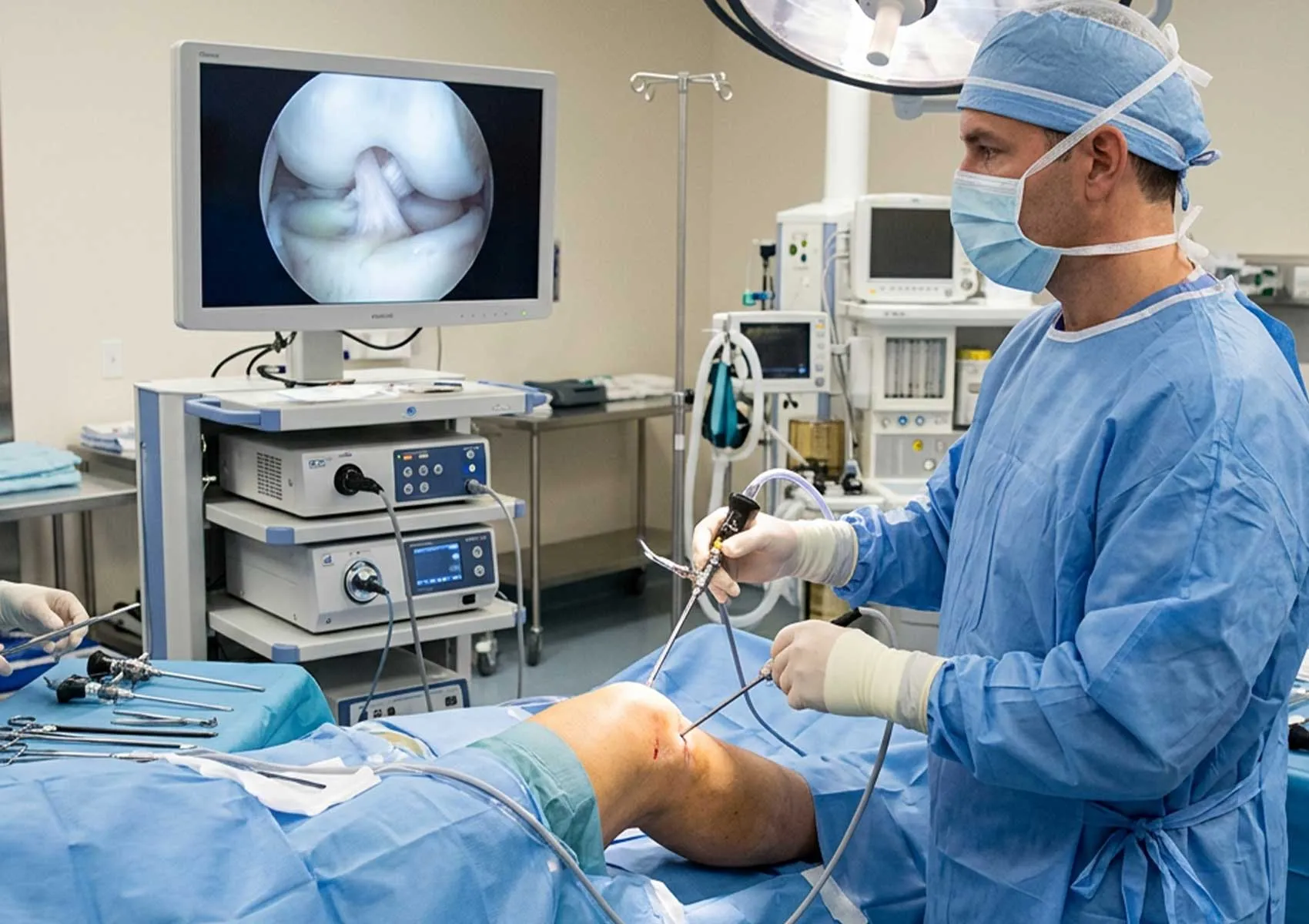
Knee arthroscopy is a modern procedure performed without large incisions, using fiberoptic cameras and specialized surgical instruments. This approach allows surgeons to visualize the inside of the joint on high-resolution monitors in detail and treat problems during the same session. Compared to traditional open surgery, this technique causes less tissue damage and significantly shortens the patient’s return to daily activities.
What is Knee Arthroscopy?
The term “arthroscopy” literally means “to look inside a joint” (arthro: joint, scopy: to look). In medical practice, it refers to using a pencil-thin camera system to view the inside of the knee joint and perform necessary surgical interventions. This procedure serves both diagnostic and therapeutic purposes.
The anatomical structure of the knee joint is complex and requires detailed imaging for accurate diagnosis. Similarly, arthroscopic methods are also important in differentiating orthopedic conditions such as hip and knee joint disorders.
When is it Applied?
Knee arthroscopy is an effective method applied to most mechanical problems within the knee joint. It is frequently used to treat injuries commonly seen in athletes and physically active individuals. According to data from the American Academy of Orthopaedic Surgeons (AAOS), arthroscopy is most commonly preferred for meniscal and ligament injuries.
Common applications include:
- Meniscal Tears: Cleaning or suturing tears caused by sudden twisting of the knee or age-related wear. Meniscal tear treatment is among the most common indications for arthroscopy.
- Anterior Cruciate Ligament (ACL) Injuries: Treatment of the ACL, critical for knee stability, usually involves arthroscopic graft reconstruction. ACL injury treatment is commonly performed arthroscopically.
- Cartilage Damage: Repair or transplantation procedures addressing cartilage loss on joint surfaces.
- Loose Bodies (Joint Mice): Removal of bone or cartilage fragments floating inside the joint.
- Synovial Disorders: Cleaning procedures for inflammation or thickening of the joint lining.
How is Knee Arthroscopy Performed?
Arthroscopic surgery is done under sterile conditions, typically under general or regional anesthesia. The procedure involves making two or three small incisions (portals) approximately 0.5 cm on the front of the knee. A camera (arthroscope) is inserted through one portal, while surgical instruments are introduced through the others.
The technical details and the surgeon’s approach are critical for the success of the operation. For more detailed information, please refer to our resource on the knee arthroscopy surgery process.
The surgeon monitors the internal structures on the screen and repairs or cleans the damaged tissues. The high-tech instruments used allow for millimeter precision during the operation.
What Are the Benefits?
Compared to traditional open surgery, knee arthroscopy offers several significant advantages. As a minimally invasive approach, it minimizes tissue trauma and interferes less with the body’s natural healing processes.
Recovery Process and Important Considerations
The post-surgical recovery period directly impacts the overall treatment outcome. Recovery speed varies according to the type of procedure (e.g., meniscal repair vs. meniscectomy), patient age, and general health. Patients are typically discharged on the day of surgery or the following day.
Physical therapy exercises are essential during rehabilitation. Adhering to rehabilitation protocols for sports injuries is crucial for regaining muscle strength and maintaining joint mobility. In some cases, biological therapies can support healing. The effects of PRP treatment may help accelerate tissue repair.
Possible Risks and Complications
As with any surgical procedure, knee arthroscopy carries some rare risks. Medical literature and PubMed studies report that the complication rate is significantly lower compared to open surgery. Still, patient awareness of potential issues is important.
Potential complications include:
- Infection
- Vascular or nerve injury
- Hematoma (blood accumulation)
- Anesthesia-related reactions
- Deep vein thrombosis (blood clots)
To minimize these risks, it is essential to follow your doctor’s recommendations strictly and avoid sudden movements during recovery. Incorrect movements can negatively affect healing; therefore, understanding common exercise mistakes and precautions is beneficial.
Medical Disclaimer and Expert Opinion
When performed under proper indications by experienced specialists, knee arthroscopy is a reliable method that improves quality of life. However, every patient’s anatomy and injury type are unique. Therefore, self-diagnosis based on online information is not recommended. It is essential to consult an orthopedics and traumatology expert who will evaluate you with physical examination and imaging methods (MRI, X-ray) to develop the most appropriate treatment plan. The most accurate information about treatment options and processes will come from your physician.
This content is intended for general informational purposes only and does not substitute professional medical advice, diagnosis, or treatment. Always consult a physician or qualified healthcare professional regarding any health concerns. Do not attempt to self-diagnose or self-treat using the information provided on this site. If you believe you are experiencing a medical emergency, contact your doctor or emergency services immediately.
FAQ
-
What is knee arthroscopy and when is it used?
Knee arthroscopy is a minimally invasive surgical procedure performed through small incisions to diagnose and treat problems within the knee joint. It is commonly used for meniscus tears, ligament injuries (such as anterior cruciate ligament), and cartilage damage. It allows detailed visualization and repair of joint issues.
-
How is knee arthroscopy performed?
The procedure is usually done under general or spinal anesthesia. Small incisions, about half a centimeter each, are made in the knee to insert a camera (arthroscope) and specialized surgical instruments into the joint. The surgeon monitors the joint on a high-resolution screen to carry out necessary repairs, sutures, or cleaning.
-
What are the advantages of knee arthroscopy compared to traditional open surgery?
Arthroscopy involves smaller incisions, resulting in less tissue damage and reduced post-operative pain compared to open surgery. It carries a lower risk of infection and generally allows for a faster recovery. The smaller incisions also provide better cosmetic outcomes and usually shorten hospital stay.
-
How long is the recovery period after knee arthroscopy and what should be considered?
Recovery time varies depending on the procedure performed (for example, cleaning alone versus ligament repair), usually ranging from a few weeks to several months. It is important to follow the prescribed physical therapy program, avoid placing excessive strain on the knee, apply ice, and rest. The time to return to full sports activity is determined by the physician.
-
Are there risks or possible complications associated with knee arthroscopy?
As with any surgical procedure, knee arthroscopy carries low risks such as infection, bleeding, nerve injury, or reactions to anesthesia. Rarely, blood clots may occur. While complications are uncommon, signs such as excessive swelling, redness, or fever should prompt immediate medical attention.