
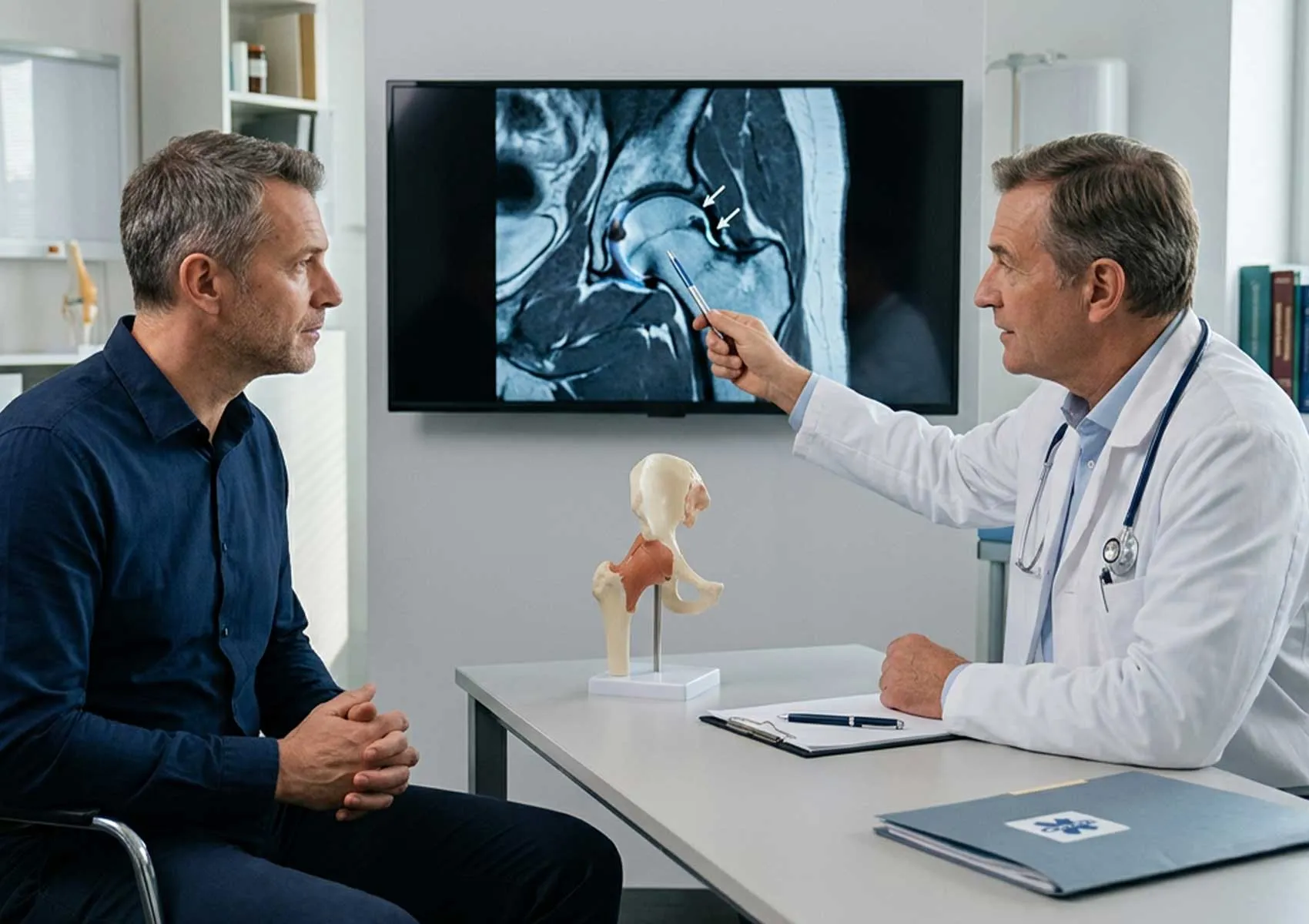
Hip Labrum Tear Surgery Over 40: Decision Guide
The decision for hip labrum tear surgery in patients over 40 should be based on the patient’s activity level and pain severity.
Hip joint issues tend to become more apparent as active individuals age. Especially in patients over 40, hip labrum tear surgery emerges as an important treatment option to maintain quality of life and regain pain-free mobility. When deciding on surgery in middle-aged patients, careful analysis of the tear’s characteristics, the extent of accompanying osteoarthritis, and the patient’s expectations is essential.
This guide is prepared based on scientific evidence for patients considering surgery. Our goal is to transparently present treatment options, potential risks, and the recovery process to support your decision-making. Below, you will find a comprehensive overview from the nature of hip labrum tears to long-term postoperative expectations.
What is a Hip Labrum Tear?
The hip labrum is a cartilage-like ring surrounding the socket (acetabulum) of the hip joint. This structure provides joint stability and helps maintain the joint fluid. Labrum tears can result from traumatic events or develop gradually due to degenerative changes.
When the labrum tears, patients may experience groin pain, catching sensations, and limited motion. Damage to the labrum disrupts the load distribution in the joint cartilage, increasing the risk of osteoarthritis over time. Correct diagnosis and understanding of the anatomical condition are critical for treatment planning.
Incidence and Causes in Individuals Over 40
In people over 40, hip labrum tears are usually linked to underlying structural abnormalities rather than isolated issues. Conditions like femoroacetabular impingement (FAI) or hip dysplasia chronically stress the labrum, predisposing it to tears. Additionally, age-related tissue changes can weaken the labrum’s resistance to tearing.
Unlike acute traumatic tears in younger athletes, labrum tears in this age group often carry a degenerative pattern. Patients typically complain of long-standing groin pain that worsens with activity. The presence and extent of accompanying cartilage damage significantly influence the treatment approach.
When is Surgery Necessary?
The decision to proceed with surgery is based on the patient’s clinical picture, not solely on MRI findings. Surgery for hip labrum tears over age 40 is considered when pain significantly impacts daily life and conservative treatments have failed. Mechanical symptoms such as joint catching or locking strongly indicate the need for surgical intervention, as seen in the context of hip arthroscopy indications.
Accurate patient selection is a key factor affecting surgical success in middle-aged patients. Patients with advanced osteoarthritis generally do not benefit sufficiently from labrum repair alone. Adhering to preoperative patient selection guidelines is crucial. Additionally, managing the influence of age on tissue healing is part of the surgical decision process for patients over 40.
Treatment Options: Conservative vs Surgical
Not all labrum tears require surgery. Treatment typically begins with non-surgical methods. Physical therapy, activity modification, and anti-inflammatory medications are first-line treatments. Regenerative medicine procedures like hip PRP therapy may support tissue healing and pain management.
If symptoms persist beyond 3-6 months despite these measures, surgery is considered. Surgical treatment aims not only to repair the tear but also to correct underlying mechanical causes such as impingement. For more details, visit our hip labrum tear treatment page.
Hip Arthroscopy Surgical Procedure
Hip arthroscopy is the gold standard for treating labrum tears today. This minimally invasive procedure involves inserting a camera into the joint through small incisions. The benefits of hip arthroscopy include less tissue damage and faster recovery.
During surgery, the torn labrum tissue is either repaired with specialized suture anchors or trimmed (debrided) if repair is not feasible. In patients over 40, repair is preferred if tissue quality allows; otherwise, debridement may be chosen due to degeneration. Bone spurs causing impingement are also shaved during the same procedure.
Potential Risks and Complications
Like any surgery, hip arthroscopy carries risks, though these are low in experienced hands. Detailed information is available on our hip arthroscopy risks page. Possible complications include temporary nerve damage, infection, or joint adhesions.
In particular, inadequate or excessive bone reshaping during femoroacetabular impingement surgery may affect outcomes. In patients over 40, a major risk is persistent pain due to existing osteoarthritis, underscoring the importance of realistic preoperative expectations.
Recovery Process and Return to Activity
Recovery after surgery requires patience and discipline. The hip arthroscopy recovery process varies per individual, with full return to sport generally taking 4 to 6 months. Crutches are typically used during the first weeks along with movement restrictions.
Physical therapy is critical for surgical success, helping to restore muscle strength and maintain joint mobility under professional supervision. Return to desk work often occurs within 2-3 weeks, while heavier physical jobs require longer recovery.
Long-Term Outcomes and Retear Risk
Successful labrum surgery in middle-aged patients can provide years of pain-free, active life. However, the progression of joint osteoarthritis may not fully stop. Maintaining quality of life post-surgery involves weight control and regular exercise, as discussed in life after hip surgery.
The risk of retear is low but not zero, and may increase if postoperative recommendations are not followed or after trauma. The primary goal in patients over 40 is to preserve the joint and delay the need for hip replacement as much as possible.
This content is provided for informational purposes only and is not a substitute for professional medical advice, diagnosis, or treatment. Always consult your doctor or a qualified healthcare professional with any questions you may have regarding your health. The information in this article is based on general medical literature and may not apply to your individual health circumstances. Do not delay seeking medical care or disregard professional advice because of content you have read here.
FAQ
-
When should surgery for a hip labral tear be considered in people over 40?
For individuals over 40, surgery should be considered if pain and loss of function persist despite conservative treatments, based on a specialist's assessment. The decision takes into account the size of the tear, degree of degeneration, and the patient's activity level. Consulting a specialist is important.
-
What are the risks and possible complications of hip labral tear surgery?
As with any surgery, risks include infection, bleeding, nerve damage, reactions to anesthesia, and limited mobility. Age-related differences in healing should also be considered. You should discuss these risks in detail with your doctor.
-
How long is the recovery period after surgery and what precautions should be taken?
Recovery time varies by individual but typically lasts between 3 to 6 months. During this time, it is crucial to follow the prescribed physical therapy program, adhere to movement restrictions set by your doctor, and gradually increase activity levels. Full recovery and return to sports may take longer.
-
Can a hip labral tear recur after surgery?
The risk of re-tearing the repaired labrum is low but not eliminated. This risk may increase with underlying structural issues or excessive strain. Discuss the possibility of recurrence and preventive measures with your doctor.
-
Is physical therapy as effective as surgery?
Physical therapy can effectively relieve symptoms in some cases of hip labral tear and is often the first treatment option before considering surgery. However, depending on the tear’s size, type, and symptom severity, surgery may be necessary. Consult a specialist to determine the most appropriate treatment plan.