
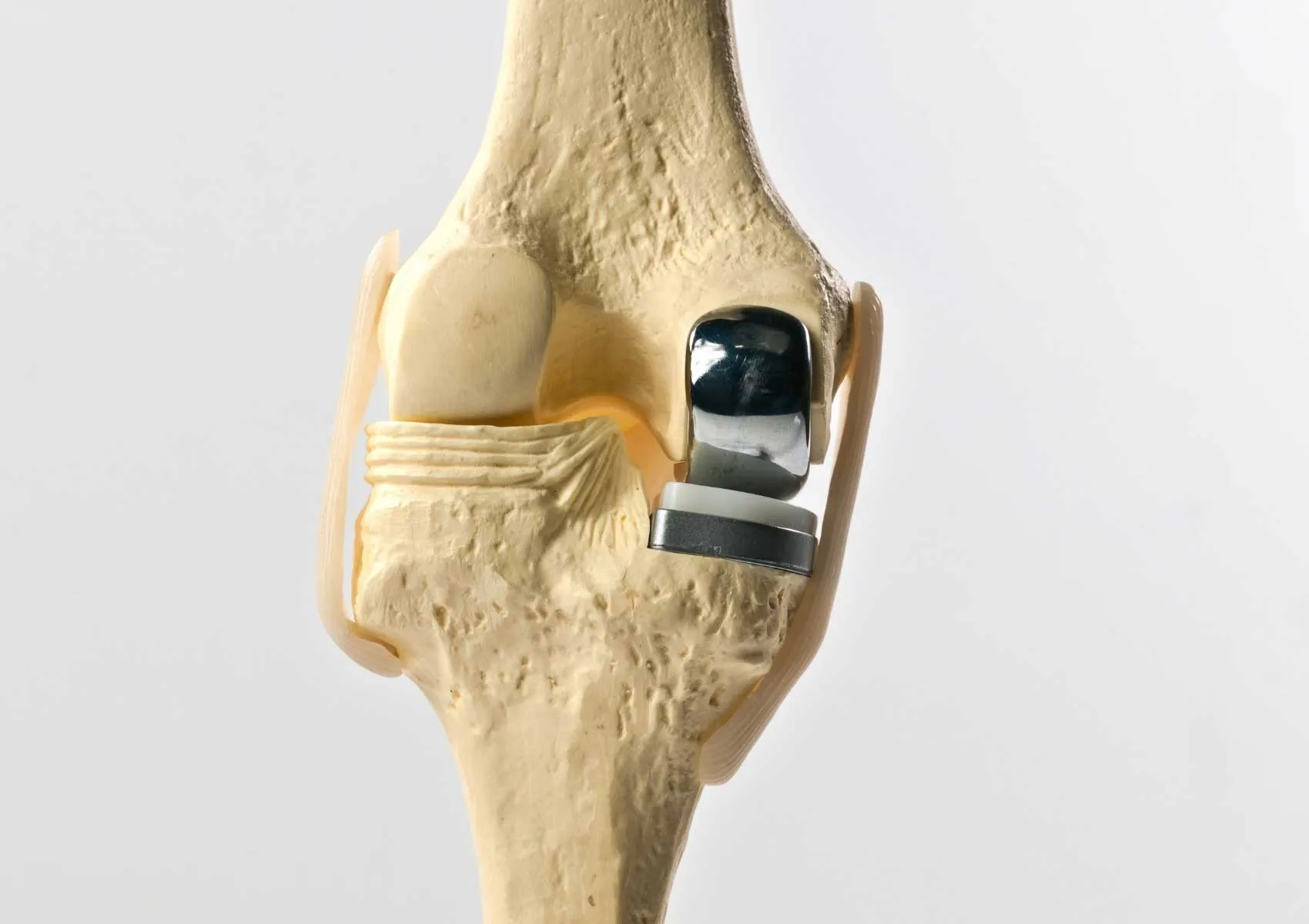
Who is Suitable for Partial Knee Replacement?
Partial knee replacement is a surgical method where only the damaged part of the knee joint is replaced. This treatment option is particularly effective in specific knee joint damages. We will examine in detail who is suitable for this procedure.
The knee joint is one of the most complex and heavily load-bearing joints of the human body. When arthritis, trauma, or various diseases cause degeneration and damage in the knee, joint function significantly decreases, and pain along with loss of mobility emerges. In such cases, knee replacement surgeries come into consideration. Knee replacements can be either total or partial. Partial knee replacement involves replacing only the damaged section of the knee joint and can be advantageous for certain patients. So, who is suitable for partial knee replacement? Let’s explore this topic in detail.
What is Partial Knee Replacement?
Partial knee replacement, also known as unicondylar knee replacement, involves replacing only one section of the knee joint, either the medial (inner) or lateral (outer) condyle. Unlike total knee replacement, this procedure does not replace the entire surface of the knee but only a part of it. This approach results in a less extensive surgical procedure, a shorter recovery time, and better preservation of the natural knee structure.
This surgery is typically chosen when cartilage damage is limited to one side of the knee joint, often the inner or outer side. Additionally, if the ligaments and surrounding structures of the knee are intact, partial knee replacement can be an ideal solution.
Criteria for Partial Knee Replacement Eligibility
Partial knee replacement is not suitable for every patient but succeeds in those who meet specific criteria. These criteria include:
1. Unilateral Knee Arthritis: Arthritis or degeneration should primarily affect only one side of the knee, usually the medial condyle. If both sides are affected, total knee replacement is preferred.
2. Intact Ligaments: The anterior cruciate ligament (ACL) and other knee ligaments must be healthy. Patients with ligament insufficiency may experience stability problems after partial knee replacement.
3. Preserved Range of Motion: Candidates should have maintained knee motion without significant reductions in flexion (bending) and extension (straightening) functions.
4. Absence of Extensive Arthritis or Deformities: Patients with widespread cartilage loss, deformities (such as severe varus or valgus angles), and bone spurs (osteophytes) are better suited for total knee replacement.
5. Age and Activity Level: Partial knee replacement is generally suitable for middle-aged and older patients. Younger patients may require total knee replacement due to long-term durability concerns.
In Which Patients is Partial Knee Replacement Preferred?
Partial knee replacement offers advantages particularly for the following groups:
- Patients with localized arthritis and pain in the medial (inner) or lateral (outer) region of the knee
- Patients who can maintain knee stability with supportive ligaments like the ACL and preserve range of motion
- Those seeking quicker recovery and preservation of their natural knee after surgery
- Patients who require a less invasive operation due to health considerations or lifestyle factors
- Athletes and active individuals who need to maintain knee function as much as possible
Compared to total knee replacement, this method involves less surgical intervention, helps preserve knee function, and provides a more natural feeling postoperatively.
Rehabilitation and Expectations After Partial Knee Replacement
The postoperative process varies depending on the patient’s overall health and preoperative knee condition. However, rehabilitation after partial knee replacement is typically faster. Pain and swelling decrease during the early postoperative period, and patients usually begin to regain knee range of motion within 1 to 2 weeks. Physical therapy programs are designed to increase muscle strength, restore joint mobility, and support return to normal functions.
Most patients with partial knee replacement can walk, climb stairs, and engage in light sports activities without pain. One of the advantages of this surgery is the preservation of the natural knee structure, which allows patients to use their knee movements more naturally and comfortably.
Differences Between Partial Knee Replacement and Total Knee Replacement
There are several key surgical and functional differences between partial and total knee replacement:
- Surgical Extent: Partial knee replacement is performed on a smaller area, resulting in less surgical trauma and tissue damage.
- Surgery Duration: The operation time for partial knee replacement is generally shorter.
- Movement Preservation: Partial replacement preserves the undamaged parts of the knee, allowing for more natural movement.
- Rehabilitation: Partial knee replacement often leads to quicker recovery and shorter rehabilitation periods.
- Indications: Total knee replacement is suitable for patients with widespread knee problems, whereas partial knee replacement is preferred for those with localized cartilage damage.
Both prostheses have their advantages and disadvantages. Treatment decisions are personalized, considering the patient’s specific condition, the nature of knee damage, age, and lifestyle.
FAQ
-
How long does partial knee replacement surgery take?
It usually lasts between 1 to 2 hours. The duration may vary depending on the patient’s condition and the surgeon’s experience.
-
How long does it take to fully recover after partial knee replacement?
On average, patients can comfortably return to daily activities within 6 to 12 weeks. However, full recovery and strength regain require a rehabilitation program lasting 3 to 6 months.
-
When is total knee replacement preferred over partial knee replacement?
Total knee replacement is recommended if there is widespread arthritis or significant deformity on both sides of the knee, weak anterior cruciate ligaments, or evident movement restrictions.
-
How soon can patients with partial knee replacement engage in sports?
After completing rehabilitation and with doctor approval, patients can start light exercises and low-impact sports within 3 to 6 months. High-impact or advanced-level activities should be evaluated under medical supervision.
-
What are the risks associated with partial knee replacement surgery?
Risks include infection, bleeding, thromboembolism, prosthesis loosening, and knee pain. Generally, these risks are lower than those associated with total knee replacement. Surgical expertise and appropriate patient selection help minimize these risks.