
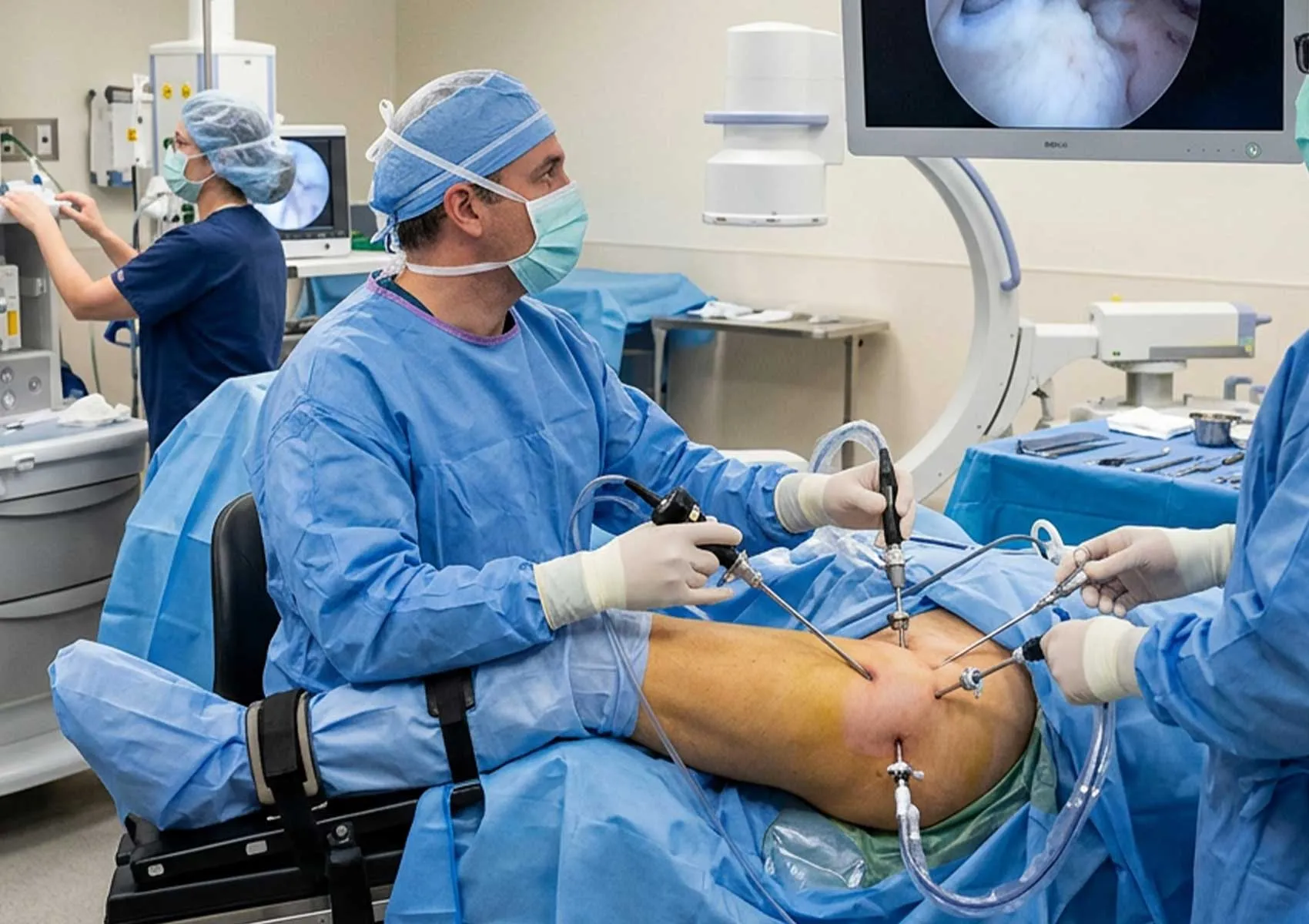
Hip Arthroscopy: What It Is, Procedure, and Benefits
Hip arthroscopy is a minimally invasive (closed) surgical technique used for diagnosing and treating problems in the hip joint.
Hip joint pain and restricted movement significantly impact quality of life and represent common orthopedic problems. Advances in technology have enabled many hip conditions, which previously required open surgery, to be treated with hip arthroscopy. This minimally invasive approach offers surgeons considerable advantages in both diagnosis and treatment.
Hip arthroscopy is a closed surgical technique used to visualize the internal structures of the hip joint and address related pathologies. During this procedure, a thin camera called an "arthroscope" and specialized surgical instruments are inserted into the joint through small incisions in the skin. Compared to traditional open surgery, the reduced tissue trauma accelerates patients’ return to daily activities. According to the American Academy of Orthopaedic Surgeons (AAOS), arthroscopic techniques are effective options that enhance patient comfort.
What Is Hip Arthroscopy?
Hip arthroscopy is an advanced surgical method used for diagnosing and treating diseases affecting the hip joint without opening it completely. The procedure uses high-resolution cameras that allow the surgeon to closely examine the cartilage, labrum, and ligament structures inside the joint.
For more detailed information, please see our article What is Hip Arthroscopy?. The procedure is usually performed under general or epidural anesthesia, with traction applied to expand the joint space according to the patient’s anatomy.
Difference From Open Hip Surgery
Commonly known as "closed hip surgery," arthroscopy differs fundamentally from open surgery. Open surgery requires larger incisions and muscle cutting to expose the joint, while arthroscopy uses only several 1-centimeter incisions. This results in less postoperative pain, lower infection risk, and better cosmetic outcomes.
When Is Hip Arthroscopy Applied?
Hip arthroscopy is not suitable for every case of hip pain. It is generally preferred for patients with mechanical problems who did not benefit from conservative (non-surgical) treatments.
For more detailed indications, you can review the uses of hip arthroscopy and visit the general hip joint diseases and treatment options page. Hip problems often seen in athletes are also commonly treated under sports injury management.
Femoroacetabular Impingement (FAI)
Femoroacetabular Impingement (FAI) occurs when abnormal shapes of the hip bone (femoral head and pelvic socket) cause friction during movement. This friction can lead to cartilage damage and labral tears over time.
Treatment of femoroacetabular impingement aims to shave down bony protrusions and restore joint congruity. Arthroscopic treatment for FAI seeks to resolve mechanical conflict, prolong joint longevity, and reduce the risk of osteoarthritis.
Labral Tears and Cartilage Damage
The labrum is cartilage-like tissue surrounding the acetabular socket that stabilizes the hip joint. Trauma or FAI can cause labral tears. During arthroscopy, these tears can be repaired or trimmed (debrided). Focal cartilage damage can also be treated with microfracture techniques or biological therapies to support tissue repair.
How Is Hip Arthroscopy Performed?
The surgical process is planned based on the patient’s overall health and severity of the pathology. Hip arthroscopy treatment methods are performed in sterile operating rooms using modern medical equipment.
Surgical Steps
First, the patient is positioned on the surgical table, and fluoroscopy (X-ray) is used to visualize the joint space. Safe entry points (portals) are established, and the arthroscope is inserted into the joint. The joint is inflated with fluid to improve visualization, and the surgical intervention is carried out.
Instruments and Technology Used
Due to the depth of the hip joint, longer and specially angled instruments are required compared to shoulder or knee arthroscopy. The design of these surgical tools and portal locations are shown in the following illustration.
Devices like radiofrequency units, powered shavers, and specialized suture anchors allow precise operations within the confined space of the joint.
Recovery and Rehabilitation
Recovery following successful surgery directly affects treatment outcomes.
Patients are typically discharged on the same day or the day after surgery. Use of crutches may be needed during the first few weeks.
Physical Therapy and Activity Restrictions
Postoperative rehabilitation is critical to maintain joint range of motion and regain muscle strength. Exercises supervised by a physiotherapist are gradually increased as tissue healing progresses. Deep squatting, crossing legs, and similar movements should be avoided for the first 3-4 weeks.
Alternative and Supplementary Treatments
To support surgical repair and accelerate healing, biological therapies may be used when appropriate. For example, PRP application in the hip joint can be integrated into the treatment plan during or after surgery to promote tissue regeneration.
Benefits and Limitations of Hip Arthroscopy
Given its minimally invasive nature, hip arthroscopy offers several advantages.
Benefits:
- Less tissue damage and bleeding
- Reduced postoperative pain
- Shorter hospital stay
- Smaller, more cosmetic scars
- Earlier start to rehabilitation
Limitations:
- Lower success in advanced osteoarthritis
- Technically demanding and requires high surgical expertise
- Complex bone deformities may require open surgery
Potential Risks and Complications
As with any surgery, there are risks associated with hip arthroscopy. Though rare, infections, deep vein thrombosis (DVT), nerve injury (especially temporary numbness due to traction), and instrument breakage can occur. For detailed information on risks, see hip arthroscopy complications. These risks can be minimized with experienced surgeons and proper techniques.
Hip Arthroscopy vs. Hip Replacement: Key Differences
Hip arthroscopy is considered a joint-preserving surgery focused on maintaining the natural joint. Hip replacement (arthroplasty) involves replacing the joint with a prosthesis. Arthroscopy is usually preferred for younger, active patients without advanced arthritis, while hip replacement is indicated for those with severe joint degeneration. Postoperative lifestyle expectations after hip replacement versus arthroscopy vary depending on age and disease stage.
This content is provided for informational purposes only and does not constitute professional medical advice, diagnosis, or treatment. Always consult a qualified healthcare provider regarding any health concerns or questions you may have. Do not delay or alter your treatment based on information found on the internet. While the information on this site is based on current scientific data, medicine is constantly evolving, and the content may become outdated over time.
FAQ
-
What is hip arthroscopy and when is it used?
Hip arthroscopy is a minimally invasive surgical technique that uses small incisions and a camera to diagnose and treat problems in the hip joint. It is commonly used for conditions such as femoroacetabular impingement, labral tears, and cartilage damage.
-
How is hip arthroscopy performed?
The surgery is typically done under general anesthesia through several small incisions (portals). A thin camera called an arthroscope and specialized surgical instruments are used to view inside the joint and repair or clean damaged tissues.
-
How long is the recovery period after surgery and what should be considered?
Recovery times vary by individual but generally involve several weeks of limited activity using crutches and physical therapy. Following your doctor's instructions and adhering to your rehabilitation program is important to promote healing.
-
Who is eligible for hip arthroscopy?
Hip arthroscopy may be recommended for patients with hip pain and functional impairment who have not improved with conservative treatments like physical therapy and who do not have advanced joint arthritis. It is important to consult a specialist for an accurate diagnosis and treatment plan.
-
Are there risks or complications associated with hip arthroscopy?
As with any surgery, hip arthroscopy carries some risks, including infection, bleeding, nerve injury, and reactions to anesthesia, although these are uncommon. Discuss these potential risks thoroughly with your doctor before the procedure.