
What is Knee Arthroscopy? Applications and Benefits
Knee arthroscopy is a minimally invasive surgical technique used to diagnose and treat joint problems.
Knee joint problems are common orthopedic issues that affect a wide range of people, from athletes to those leading active lifestyles. With technological advances, minimally invasive treatments have gained prominence over open surgery. Knee arthroscopy is a modern surgical technique used for the diagnosis and treatment of conditions affecting the knee joint, commonly known as "keyhole knee surgery" among the public. This method aims to enable patients to return to daily life more quickly while minimizing the risks associated with surgery.
What Is Knee Arthroscopy?
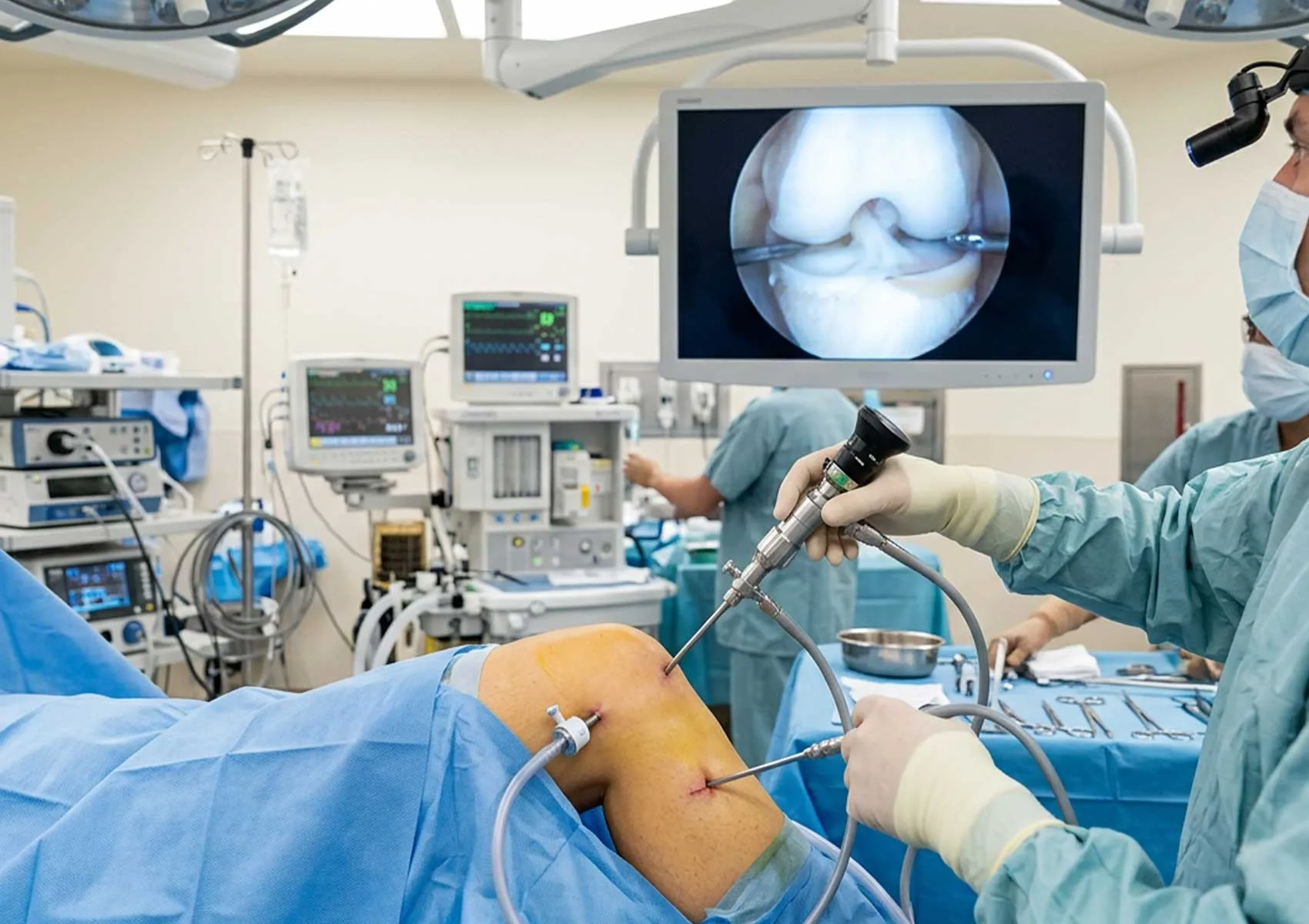
Knee arthroscopy is a minimally invasive procedure developed to visualize the inside of the knee joint and perform surgical interventions. During the procedure, a thin tube called an "arthroscope," equipped with a high-resolution camera and light source, is inserted into the joint through small incisions. This device, about the size of a pen tip, transmits images of the joint interior to a monitor, allowing the surgeon to examine the knee structures in detail.
This technique allows for the repair of damage to the meniscus, ligaments, and cartilage without large incisions. Thanks to arthroscopic surgery techniques, damage to surrounding tissues is minimized.
When Is Knee Arthroscopy Used?
Knee arthroscopy can be employed both diagnostically and therapeutically. With advances in imaging technologies such as MRI, it is now predominantly used for treatment purposes. Various pathologies causing knee pain, locking, swelling, or limited movement can be addressed with this method.
Common indications include:
- Meniscus Tears: Repair or removal of tears caused by sudden twisting of the knee or degenerative changes. Treatment of meniscus tears is the most frequent use of arthroscopy.
- Ligament Injuries: Especially common in athletes, including anterior cruciate ligament treatment and reconstruction.
- Cartilage Damage: Repair or cartilage transplantation for joint cartilage injuries.
- Loose Bodies in the Joint: Removal of free-floating bone or cartilage fragments inside the joint.
- Synovial (Joint Lining) Disorders: Cleaning of inflamed or damaged joint lining.
Arthroscopy is a personalized procedure tailored for various knee joint diseases and treatments.
Knee Arthroscopy Procedure
Arthroscopic surgery is typically performed under spinal or general anesthesia. The duration ranges from 30 minutes to 2 hours depending on the complexity of the procedure. The process includes preparation, surgery, and closure phases.
During surgery, two or three small incisions about 0.5 cm in length are made on the front of the knee. The arthroscope (camera) is inserted through one portal, while surgical instruments (cutters, graspers, suture devices) are introduced through others. The surgeon repairs damaged tissues while watching the monitor. For more detailed information, consult the knee arthroscopy surgical procedure.
Benefits of Knee Arthroscopy
Compared to open surgery, knee arthroscopy offers significant advantages for patients and surgeons alike, contributing to its status as the gold standard:
1. Less Tissue Damage: Small incisions reduce damage to muscles and skin.
2. Reduced Pain: Postoperative pain is generally less than with open surgery.
3. Faster Recovery: Short hospital stays (often outpatient or one night) and quicker return to daily activities.
4. Lower Infection Risk: Smaller wounds reduce the chance of infection at the surgical site.
5. Better Cosmetic Results: Minimal scarring that fades over time.
Potential Risks and Complications
As with any surgery, knee arthroscopy carries some rare risks. When performed by an experienced team under sterile conditions, these risks are minimal.
Possible complications include:
- Infection: Infection inside the joint or at the incision sites.
- Blood Clotting (Thrombosis): Deep vein thrombosis (DVT) in the leg veins.
- Swelling and Bleeding: Accumulation of blood inside the joint (hemarthrosis).
- Nerve or Vessel Injury: Rare damage to surrounding nerves or vessels from surgical tools.
Authorities such as the Mayo Clinic and AAOS emphasize that with proper patient selection and experienced surgeons, complication risks can be minimized.
Recovery and Rehabilitation
The recovery timeline depends on the intervention type (e.g., meniscus trimming vs. ligament repair). Simple procedures often allow discharge the same or next day, with assisted walking starting early.
A rehabilitation program after knee arthroscopy is vital to restore joint mobility and strengthen muscles around the knee. Consistent knee muscle strengthening exercises should be part of physical therapy.
Comparison of Knee Arthroscopy with Other Treatments
The choice of treatment depends on the disease stage and patient expectations. Arthroscopy is preferred for mechanical problems and sports injuries. For advanced osteoarthritis, knee replacement candidates may require open surgery or prosthetic implants.
In summary, when performed with proper indications, knee arthroscopy is an effective method that can improve patients’ quality of life. Specialist evaluation is essential for treatment planning.
The content on this website is provided for informational purposes only and does not constitute medical advice. It is not intended to replace professional medical diagnosis or treatment. Always consult a qualified healthcare professional regarding any health concerns. Do not delay or discontinue any medical care based on information obtained from this site.
FAQ
-
What is knee arthroscopy?
Knee arthroscopy is a minimally invasive surgical procedure used to diagnose and treat problems within the knee joint. It involves inserting a small camera through tiny incisions to visualize the joint structures in detail and perform interventions with minimal damage to surrounding tissues.
-
When is knee arthroscopy performed?
This procedure is typically used for issues such as meniscus tears, anterior cruciate ligament and other ligament injuries, cartilage damage, and removal of loose bodies within the joint. It can also help diagnose synovial diseases and unexplained knee pain.
-
How long does knee arthroscopy surgery take?
The duration of knee arthroscopy varies depending on the complexity and extent of the procedure. A simple meniscus repair may take around 30 minutes, while ligament reconstruction procedures can last up to 2 hours. Typically, the surgery is completed within 30 minutes to 2 hours.
-
What is the recovery process after knee arthroscopy?
Recovery varies depending on the individual and the specific procedure performed. Most people can return to daily activities within a few weeks, but complete healing and return to sports often require several months of physical therapy and strengthening exercises.
-
What are the risks of knee arthroscopy?
Like any surgery, knee arthroscopy carries risks such as infection, bleeding, reactions to anesthesia, and rarely nerve damage. However, as a minimally invasive technique, it generally has lower risk compared to open surgery. It is important to discuss the potential risks and benefits with your doctor.