
Hip Arthroscopy: Comprehensive Guide and Technical Insights
Hip arthroscopy is a minimally invasive surgical technique used for diagnosing and treating hip joint disorders.
Hip joint problems can significantly affect the quality of life, especially in active individuals and athletes. With advances in medical technology, hip arthroscopy has emerged as an alternative to open surgery in treating these issues. This minimally invasive technique provides detailed visualization of the hip joint’s internal structures and allows treatment within the same procedure.
Patients presenting with hip pain, limited mobility, or catching sensations typically undergo thorough physical examinations and radiological imaging to assess the need for surgery. This guide explores the technical aspects of hip arthroscopy, the conditions it treats, and the recovery process in detail.
Introduction to Hip Arthroscopy
The hip joint is one of the largest weight-bearing joints in the body. Due to its deep location, traditional surgeries required wide incisions. However, modern arthroscopic methods allow access to the joint with minimal damage to surrounding tissues.
What Is Hip Arthroscopy?
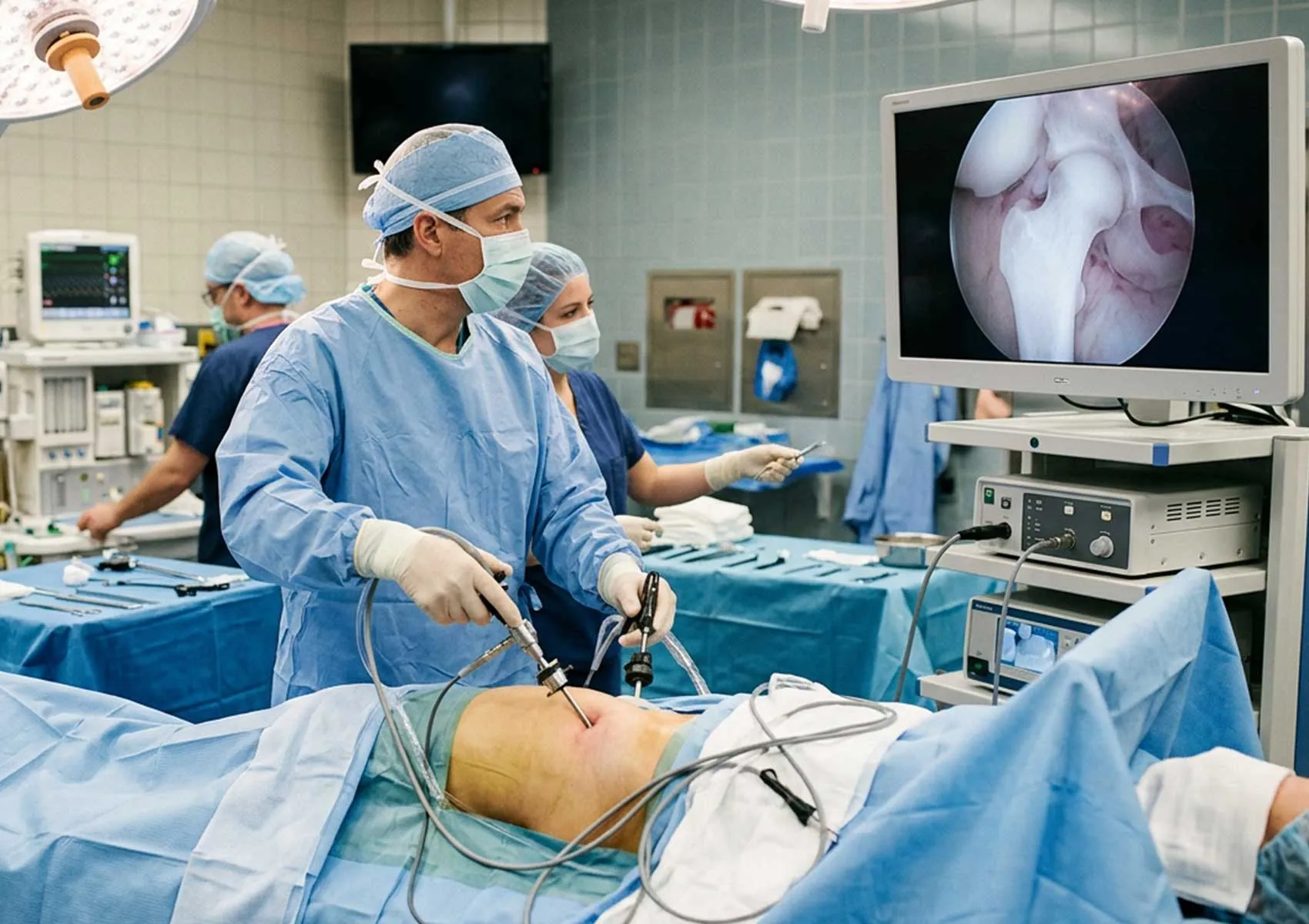
Hip arthroscopy involves inserting a camera and specialized surgical instruments into the joint through small incisions (portals) approximately 1 centimeter in size. The arthroscope—a tiny camera—provides high-resolution images of the joint interior, displayed on a monitor.
This method, especially for cases requiring hip arthroscopy surgery, can reduce pain and enable patients to return to daily activities more quickly.
Is Hip Arthroscopy the Same as Closed Hip Surgery?
Commonly referred to as "closed hip surgery," hip arthroscopy describes the same procedure in medical terminology. The term "closed" refers to performing the surgery without fully opening the joint, but rather through small incisions. Compared with open surgery, it results in less muscle and tissue trauma, lowering infection risk and leaving smaller, less noticeable scars.
When Is Hip Arthroscopy Performed?
Hip arthroscopy is not suitable for all causes of hip pain. It is primarily preferred for addressing mechanical problems and repairing intra-articular pathologies.
This approach is effective for many conditions considered within the scope of hip joint disorders.
Femoroacetabular Impingement Syndrome
Femoroacetabular Impingement (FAI) arises from a mismatch between the femoral head and the socket in the pelvis, causing bone surfaces to rub or impinge during movement. Arthroscopic surgery can shave down these bony prominences to restore the joint’s range of motion. For more details, visit our FAI syndrome page.
Labral Tears and Cartilage Damage
The labrum is a cartilage ring that surrounds the hip socket, acting as a seal. Labral tears may develop due to impingement or trauma. During arthroscopy, the torn labrum can be repaired or debrided. Surgical repair for patients diagnosed with labral tears is important to maintain joint stability.
Additionally, cartilage damage on the joint surface can also be treated arthroscopically. Techniques such as microfracture or cartilage transplantation may be applied during cartilage repair treatments.
How Is Hip Arthroscopy Performed?
The surgical procedure requires careful planning and technical expertise. Success directly hinges on proper patient selection and the surgeon’s experience.
Preoperative Preparation
Prior to surgery, the patient’s overall health is evaluated and necessary imaging tests (MRI, X-ray, CT) are completed. The checklist below summarizes important points patients should consider before and after the procedure.
Surgical Technique and Instruments
The operation takes place on a traction table designed to slightly separate the hip joint, enabling the surgeon to insert instruments into the joint. The steps of the surgery are illustrated in the flowchart below.
Specialized cameras and manual tools used during the procedure enable millimeter-precise work.
Thanks to modern arthroscopic surgical techniques, tissue trauma is minimized while maximizing therapeutic benefit.
Duration of the Surgery and Anesthesia
Hip arthroscopy is typically performed under general anesthesia. Surgery duration varies depending on the complexity but generally lasts between 1.5 to 3 hours. Patients are usually discharged one day after surgery.
Recovery Process and Rehabilitation
Postoperative rehabilitation is as important as the surgery itself for treatment success. Healing times vary individually.
Recovery Time and Physical Therapy
Patients may need crutches for several weeks after surgery. Exercises supervised by a physiotherapist are critical to strengthening muscles and maintaining joint mobility. The illustration below shows common rehabilitation exercises.
Especially in sports injury rehabilitation, the program is gradually planned to ensure safe return to sport.
Supportive Treatments Like PRP and Stem Cells
In some cases, biological therapies such as Platelet-Rich Plasma (PRP) and stem cell treatments can be used to enhance tissue healing and cartilage repair. These regenerative therapies may be applied during or after surgery as part of cellular treatments.
Risks and Limitations of Hip Arthroscopy
As with any surgery, hip arthroscopy carries certain risks and limitations. Awareness of these factors is crucial for informed decision-making.
Possible Complications
Though rare, complications such as infection, bleeding, nerve injury (often temporary numbness), or anesthesia-related issues can occur. Patients with advanced osteoarthritis (joint degeneration) may experience limited benefits from arthroscopy; alternative treatments like hip replacement could be considered.
Considerations for Athletes
The time to resume sports varies by procedure type and sport-specific demands. Avoiding strenuous activities early on and strictly following the rehab program are essential to reduce re-injury risks.
In summary, hip arthroscopy is an effective treatment option for suitable patients to relieve hip pain and restore function. For the most accurate treatment advice, a consultation with a specialist is recommended.
This content is intended for informational purposes only and does not substitute professional medical advice, diagnosis, or treatment. If you have any concerns or questions regarding your health, please consult a qualified healthcare professional. The information provided on this site should not be used to make medical decisions without a thorough examination by a physician. Do not delay seeking medical care based on the content presented here.
FAQ
-
What is hip arthroscopy?
Hip arthroscopy is a minimally invasive surgical technique that uses small incisions and a special camera (arthroscope) to diagnose and treat hip joint problems. It causes less tissue damage compared to open surgery.
-
When is hip arthroscopy performed?
This procedure is typically used for diagnosing and treating hip impingement syndrome, labral tears, cartilage damage, removal of loose bodies, and certain unexplained hip pains.
-
How is hip arthroscopy performed?
The surgery is done under general anesthesia on a traction table. Two to three small incisions of about 1 cm each are made to insert the camera and surgical instruments, allowing repair of internal joint issues.
-
How long is the recovery period after surgery?
Recovery time varies depending on the procedure, but patients usually use crutches for a few weeks. Full return to sports and healing typically takes between 3 to 6 months with regular physical therapy.
-
What are the risks of hip arthroscopy?
As with any surgery, there is a risk of infection, bleeding, and blood clots. Specific to this procedure, rare complications such as temporary nerve numbness or instrument breakage may occur. Always consult your healthcare provider for personalized advice.