
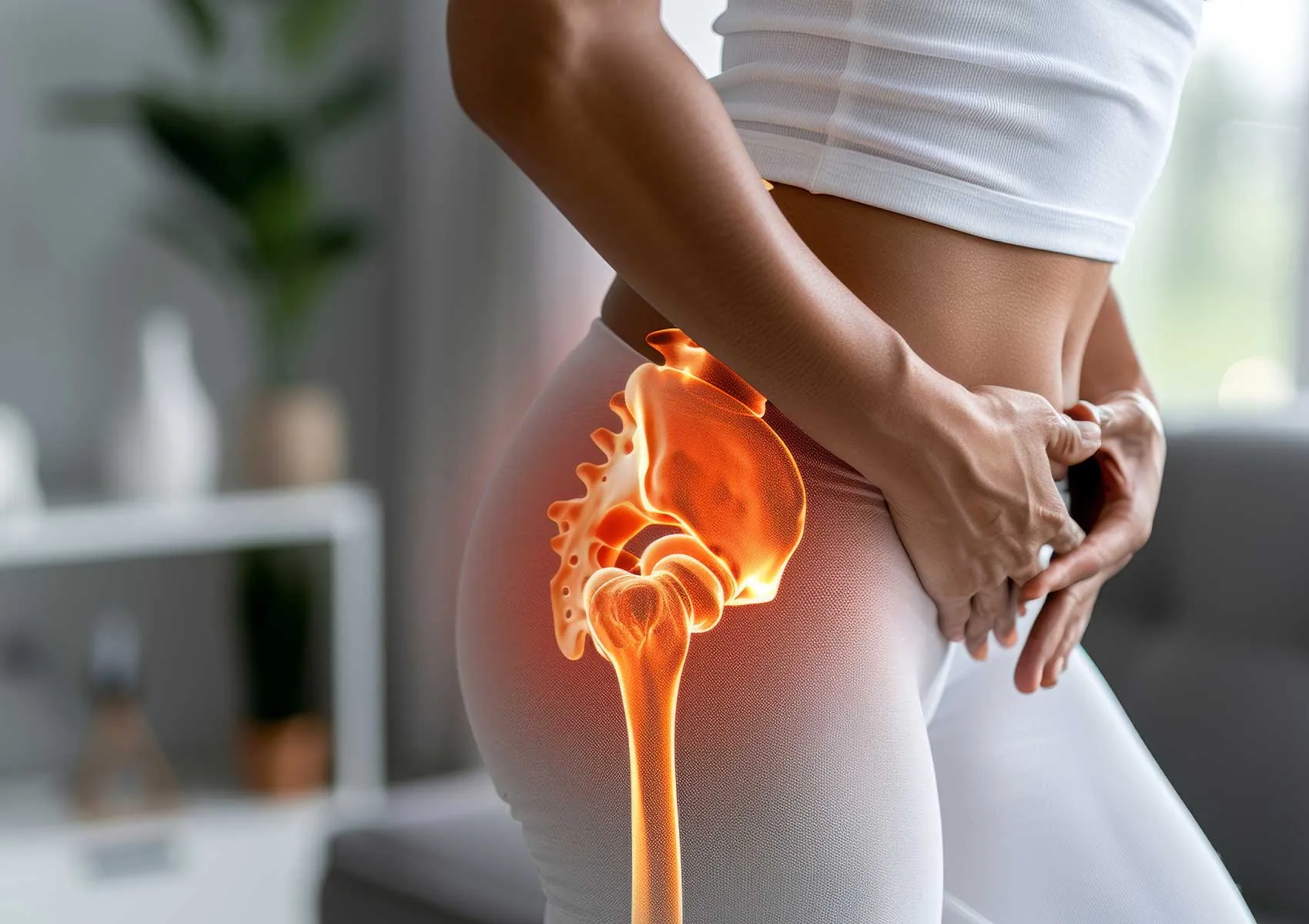
What Is Femoroacetabular Impingement? A Hidden Cause of Hip Pain
Femoroacetabular impingement (FAI) is a mechanical problem caused by a mismatch of the bones in the hip joint.
Femoroacetabular impingement (FAI) occurs when abnormal contact happens between the bones forming the hip joint due to their structural irregularities during movement. This hidden cause of hip pain, particularly seen in young and active individuals, can progressively damage intra-articular structures if left untreated. The problem stems from a mismatch between the femoral head (top of the thigh bone) and the acetabulum (hip socket), leading to potential cartilage degradation over time.
Early diagnosis is essential for preserving the hip joint. Patients often present with groin pain, limited mobility, and a sensation of catching or locking. This article examines the causes, symptoms, and current treatment strategies for femoroacetabular impingement syndrome in detail.
What Is Femoroacetabular Impingement?
Femoroacetabular impingement is a mechanical disorder that disrupts the smooth movement of the hip joint. In a normal hip, the femoral head glides smoothly within the acetabulum without friction. However, in FAI, bony abnormalities cause impingement during certain movements, especially hip flexion and internal rotation. These repetitive microtraumas damage the joint cartilage and the labrum, a ring of cartilage that cushions the socket.
Hip Joint Anatomy and the Mechanism of FAI
The hip joint is a ball-and-socket joint, where the acetabulum forms the socket and the femoral head is the ball. The congruency between these two ensures joint stability and range of motion. FAI arises from developmental or acquired morphological changes in these bony structures.
The impingement mechanism particularly damages the labrum. For more on the labrum’s structure and injury mechanisms, visit the hip anatomy and labral tears page. Continued friction and impingement may cause the labrum to detach or tear.
Types of FAI: CAM, Pincer, and Mixed
Femoroacetabular impingement is classified into three main types depending on the location of the bony abnormality. Correct treatment planning depends on identifying the specific type.
1. CAM Type: Caused by excess bone growth at the junction of the femoral head and neck, sometimes called "pistol-grip deformity." This bump rubs against the acetabular cartilage during movement, causing damage. It is more common in young male athletes.
2. Pincer Type: Arises when the acetabulum is abnormally deep or retroverted, excessively covering the femoral head and causing collision with the femoral neck. This type is more frequently seen in middle-aged women.
3. Mixed Type: A combination of both CAM and Pincer deformities. This is observed in over 80% of cases.
Understanding these structural issues and their relation to sports injuries and treatment options, described in sports injuries and treatment options, is important for preventive strategies.
Symptoms of Femoroacetabular Impingement
Symptoms often start insidiously and worsen with activity. The hallmark symptom is pain in the groin region, which may radiate toward the thigh. Patients commonly describe the pain while placing their hand in a “C” shape on the side of their hip (the “C sign”).
Common symptoms include:
- Pain when standing up after prolonged sitting
- Sharp discomfort in the groin when getting out of a car or squatting
- Reduced range of hip motion and stiffness
- Increased pain after walking or running
- Sensation of locking or catching in the joint
These symptoms can significantly impair quality of life. For more details, visit our article on the impact of hip impingement on daily life.
How Is FAI Diagnosed?
Diagnosis begins with a detailed patient history and physical examination. The physician evaluates hip range of motion and performs specific provocative tests; the most well-known being the FADIR test (Flexion, Adduction, Internal Rotation).
Radiological imaging is essential for a definitive diagnosis. Initial assessment involves X-rays to evaluate bony structures for CAM or Pincer deformities. Magnetic resonance imaging (MRI) provides detailed visualization of labral and cartilage damage.
Other hip joint pathologies should be ruled out by a comprehensive evaluation as described in hip joint diseases and treatments.
Treatment Methods for Femoroacetabular Impingement
FAI treatment is customized based on patient age, activity level, and the extent of cartilage damage. Options include non-surgical and surgical approaches.
Non-Surgical Treatments:
In mild cases, activity modification, anti-inflammatory medications, and physical therapy may be recommended. While these do not correct structural abnormalities, they can help manage symptoms. Regenerative treatments such as PRP and stem cell therapies may be considered as adjuncts to support tissue healing.
Surgical Treatment:
Surgery is considered when symptoms persist and the structural problem is pronounced. Detailed information on femoroacetabular impingement is important for making informed surgical decisions. Hip arthroscopy is currently the standard surgical treatment.
Hip Arthroscopy:
This minimally invasive procedure uses a camera and specialized instruments to shave excess bone causing impingement and repair labral tears if present. Modern medicine recognizes hip arthroscopy and treatment options as an effective solution.
Postoperative rehabilitation plays a critical role in surgical success. After arthroscopic treatment for femoroacetabular impingement, patients usually follow a structured physical therapy protocol to return to sport and daily activities.
What Happens If Left Untreated?
If femoroacetabular impingement is left untreated, ongoing mechanical friction continues within the hip joint. This can cause irreversible cartilage damage and functional loss of the labrum. The most significant long-term risk of FAI is the early onset of hip osteoarthritis. Therefore, individuals experiencing hip pain should consult a specialist promptly to protect joint health.
This content is provided for general informational purposes only and does not constitute medical advice. Diagnosis and treatment should be determined by a qualified healthcare professional based on the individual circumstances of the patient. For any health-related questions or concerns, please consult a healthcare provider or specialist. Do not delay seeking medical advice or treatment based on this information.
FAQ
-
What is femoroacetabular impingement (FAI)?
Femoroacetabular impingement is a condition where abnormal contact occurs between the femoral head and the acetabulum due to a mismatch in the hip joint. This can cause pain and damage, especially during certain hip movements.
-
What are the symptoms of FAI?
The most common symptoms of FAI include groin pain, which worsens with activities like sitting, squatting, or getting out of a car. Restricted movement and a catching sensation in the hip may also occur. Pain typically increases with activity.
-
How is FAI diagnosed?
FAI is diagnosed through a physical examination, detailed patient history, and imaging studies. X-rays, magnetic resonance imaging (MRI), and sometimes computed tomography (CT) scans are used to identify abnormalities in bone structure and damage to the labrum.
-
What are the treatment options for FAI?
Treatment for FAI usually begins with non-surgical methods such as physical therapy, pain relief medications, and activity modification. If symptoms persist or in advanced cases, arthroscopic surgery may be performed to correct the bone deformities or repair the labrum.
-
What happens if FAI is left untreated?
Untreated femoroacetabular impingement can lead to progressive damage to the cartilage and labrum in the hip joint. Over time, this can accelerate joint degeneration, causing osteoarthritis and significant movement limitations. Please consult a specialist for an accurate diagnosis and appropriate treatment.